
About This Book
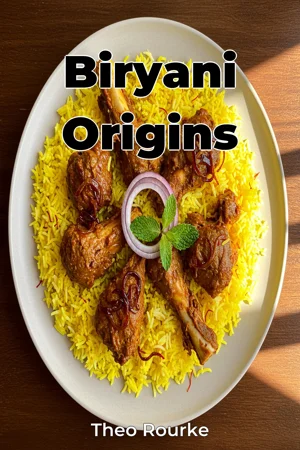
Is biryani simply a dish, or is it a culinary chronicle etched in rice and spices, reflecting centuries of cultural exchange and gastronomic innovation? "Biryani Origins" answers this by meticulously charting the historical trajectory of biryani, from its nascent stages under Persian influence to its celebrated status in South Asian cuisine. This book examines biryani not merely as a recipe, but as a vibrant tapestry woven with threads of history, culture, and culinary artistry. This book delves into three key areas. First, it investigates the formative Persian influences, scrutinizing ancient texts and archaeological findings to trace the dish’s likely predecessors. Second, it explores the pivotal transformations biryani underwent as it journeyed eastward, adapting to local ingredients, techniques, and palates within the Indian subcontinent. Finally, it documents the regional variations that burgeoned across South Asia, examining how distinct cultural identities shaped unique biryani styles. These topics are vital because they illuminate the dynamic interplay between culinary traditions and historical forces, revealing how food acts as a tangible link to the past. Understanding the evolution of biryani requires acknowledging the socio-political landscapes that fostered its development. The book provides concise yet comprehensive overviews of the Persian empires and the Mughal dynasty, illustrating how royal patronage and courtly cultures propelled culinary innovation. Additionally, it highlights the importance of trade routes in the dissemination of ingredients and cooking methods. "Biryani Origins" argues that the dish's enduring popularity stems from its remarkable adaptability and its capacity to embody diverse cultural narratives. This argument is crucial because it challenges the notion of a static, monolithic culinary tradition, emphasizing instead the fluid and ever-evolving nature of foodways. The book unfolds in three parts. Part I introduces the etymological roots of "biryani" and examines early forms of rice-based dishes in Persia. Part II explores the Mughal influence and the adaptation of biryani within various regional cuisines of India, focusing on specific ingredients and cooking styles. Part III examines the contemporary landscape of biryani, analyzing its global spread and ongoing innovations. The conclusion synthesizes these findings, reflecting on the future of biryani in a world increasingly shaped by culinary globalization and cultural fusion. Evidence presented within this book draws from a diverse range of sources, including historical cookbooks, travelogues, and scholarly articles on food history and South Asian culture. Original research involves analyzing archival recipes and conducting interviews with culinary historians and chefs specializing in biryani preparation. "Biryani Origins" interfaces with several disciplines. It connects to history by examining the socio-political contexts that influenced biryani's development. It engages with anthropology by exploring the cultural significance of food and its role in shaping identity. It also relates to gastronomy by celebrating the art and science of cooking. A unique feature of this book is its departure from purely recipe-driven narratives. Instead, it adopts a historical lens to dissect the cultural and social forces that have molded biryani into the dish we know today. The book adopts a narrative non-fiction style, blending rigorous research with engaging storytelling to make complex historical information accessible to a broad audience. "Biryani Origins" is mainly targeted at food enthusiasts, culinary students, and anyone interested in the history of food and South Asian culture. It also appeals to professional chefs and food writers seeking accurate and in-depth knowledge about this iconic dish. Adhering to the conventions of food writing and historical non-fiction, "Biryani Origins" provides extensively researched historical facts. While the book covers a broad geographical area, its primary focus remains on the evolution of biryani within Persia and South Asia, acknowledging the limitations of tracing every single regional variation. The information presented throughout this book can be practically applied by home cooks and professional chefs seeking to deepen their understanding of biryani's rich heritage and to innovate responsibly, respecting the dish’s historical roots while exploring new culinary horizons. "Biryani Origins" acknowledges the ongoing debates surrounding the precise origins of biryani, addressing conflicting claims and interpretations found in existing literature, ultimately offering a balanced and well-supported perspective.
Is biryani simply a dish, or is it a culinary chronicle etched in rice and spices, reflecting centuries of cultural exchange and gastronomic innovation? "Biryani Origins" answers this by meticulously charting the historical trajectory of biryani, from its nascent stages under Persian influence to its celebrated status in South Asian cuisine. This book examines biryani not merely as a recipe, but as a vibrant tapestry woven with threads of history, culture, and culinary artistry. This book delves into three key areas. First, it investigates the formative Persian influences, scrutinizing ancient texts and archaeological findings to trace the dish’s likely predecessors. Second, it explores the pivotal transformations biryani underwent as it journeyed eastward, adapting to local ingredients, techniques, and palates within the Indian subcontinent. Finally, it documents the regional variations that burgeoned across South Asia, examining how distinct cultural identities shaped unique biryani styles. These topics are vital because they illuminate the dynamic interplay between culinary traditions and historical forces, revealing how food acts as a tangible link to the past. Understanding the evolution of biryani requires acknowledging the socio-political landscapes that fostered its development. The book provides concise yet comprehensive overviews of the Persian empires and the Mughal dynasty, illustrating how royal patronage and courtly cultures propelled culinary innovation. Additionally, it highlights the importance of trade routes in the dissemination of ingredients and cooking methods. "Biryani Origins" argues that the dish's enduring popularity stems from its remarkable adaptability and its capacity to embody diverse cultural narratives. This argument is crucial because it challenges the notion of a static, monolithic culinary tradition, emphasizing instead the fluid and ever-evolving nature of foodways. The book unfolds in three parts. Part I introduces the etymological roots of "biryani" and examines early forms of rice-based dishes in Persia. Part II explores the Mughal influence and the adaptation of biryani within various regional cuisines of India, focusing on specific ingredients and cooking styles. Part III examines the contemporary landscape of biryani, analyzing its global spread and ongoing innovations. The conclusion synthesizes these findings, reflecting on the future of biryani in a world increasingly shaped by culinary globalization and cultural fusion. Evidence presented within this book draws from a diverse range of sources, including historical cookbooks, travelogues, and scholarly articles on food history and South Asian culture. Original research involves analyzing archival recipes and conducting interviews with culinary historians and chefs specializing in biryani preparation. "Biryani Origins" interfaces with several disciplines. It connects to history by examining the socio-political contexts that influenced biryani's development. It engages with anthropology by exploring the cultural significance of food and its role in shaping identity. It also relates to gastronomy by celebrating the art and science of cooking. A unique feature of this book is its departure from purely recipe-driven narratives. Instead, it adopts a historical lens to dissect the cultural and social forces that have molded biryani into the dish we know today. The book adopts a narrative non-fiction style, blending rigorous research with engaging storytelling to make complex historical information accessible to a broad audience. "Biryani Origins" is mainly targeted at food enthusiasts, culinary students, and anyone interested in the history of food and South Asian culture. It also appeals to professional chefs and food writers seeking accurate and in-depth knowledge about this iconic dish. Adhering to the conventions of food writing and historical non-fiction, "Biryani Origins" provides extensively researched historical facts. While the book covers a broad geographical area, its primary focus remains on the evolution of biryani within Persia and South Asia, acknowledging the limitations of tracing every single regional variation. The information presented throughout this book can be practically applied by home cooks and professional chefs seeking to deepen their understanding of biryani's rich heritage and to innovate responsibly, respecting the dish’s historical roots while exploring new culinary horizons. "Biryani Origins" acknowledges the ongoing debates surrounding the precise origins of biryani, addressing conflicting claims and interpretations found in existing literature, ultimately offering a balanced and well-supported perspective.
"Biryani Origins" explores the rich history of biryani, tracing its evolution from ancient Persia to its prominence in South Asian cuisine. The book reveals how this iconic rice dish is more than just a recipe; it's a reflection of cultural exchange, historical events, and culinary innovation. One intriguing fact is the influence of the Mughal dynasty, whose royal patronage significantly shaped biryani's development. Another is the dish's remarkable adaptability, allowing it to embody diverse cultural narratives across different regions. This culinary journey unfolds in three parts, beginning with the etymological roots and Persian influences, then examining the Mughal adaptation and regional variations. Finally, it explores biryani's contemporary global presence. Unlike typical recipe books, "Biryani Origins" adopts a historical lens, providing extensively researched facts and insights into the socio-political contexts that influenced biryani's evolution. The book highlights the importance of trade routes in the dissemination of ingredients and cooking methods, contributing to its unique flavor profiles. The book is a valuable resource for food enthusiasts, culinary students, and chefs alike, offering a deep understanding of biryani's heritage. By blending rigorous research with engaging storytelling, "Biryani Origins" makes complex historical information accessible, appealing to anyone interested in food history and South Asian culture.
Book Details
ISBN
9788235265647
Publisher
Publifye AS
Your Licenses
You don't own any licenses for this book
Purchase a license below to unlock this book and download the EPUB.
Purchase License
Select a tier to unlock this book
Need bulk licensing?
Contact us for enterprise agreements.