
About This Book
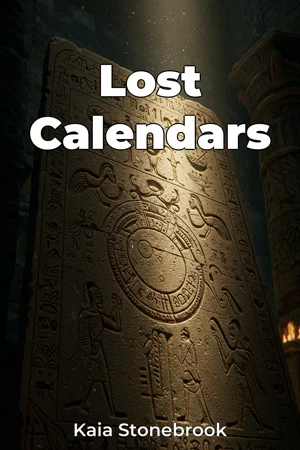
What if our understanding of time itself is incomplete, shaped by calendars that have long since faded from memory? "Lost Calendars" embarks on a journey to uncover the forgotten methods by which ancient civilizations tracked time, revealing the sophisticated science and profound cultural significance embedded within these vanished systems. This book explores not only the mechanics of these calendars but, more importantly, the worldviews they embodied and the reasons for their eventual abandonment. We will delve into two central themes: first, the technological and astronomical expertise required to construct accurate calendars in pre-modern societies; and second, the intricate relationship between these calendars and the social, religious, and agricultural practices of the cultures that created them. These topics are important because they challenge our current assumptions about the universality of timekeeping and highlight the diversity of human ingenuity in response to the natural world. Understanding the development and function of these calendars requires a grasp of basic astronomical principles, such as the cycles of the sun, moon, and stars, and the historical context of the societies that developed them. We'll explore the social structures and belief systems deeply intertwined with timekeeping, focusing on how calendars regulated agricultural cycles, religious festivals, and political events. The central argument of "Lost Calendars" is that the study of abandoned calendars provides invaluable insights into the intellectual, social, and spiritual lives of past civilizations, revealing alternative ways of understanding our place in the cosmos. By examining these diverse approaches to timekeeping, we can broaden our perspective on the nature of time itself and the human capacity for innovation. The book begins by introducing the fundamental concepts of calendrical systems, including solar, lunar, and lunisolar calendars, and their respective strengths and weaknesses. We will then focus on specific case studies, such as the intricate Mayan calendar system, its mathematical precision, and its connection to complex cosmological beliefs. Another major point will cover calendars in Mesopotamia and their relation to agriculture and early forms of record keeping. The argument culminates in a discussion of why these calendars were eventually replaced or abandoned, considering factors such as conquest, religious conversion, and the adoption of more standardized global timekeeping systems. Finally, we consider the implications of this historical analysis for contemporary understandings of time and culture. The book draws upon a wide range of evidence, including archaeological findings, deciphered inscriptions, historical texts, and astronomical data. We will analyze primary sources where available, such as ancient astronomical tables and religious texts describing calendrical rituals. "Lost Calendars" connects to other fields such as archaeology, anthropology, and the history of science. By integrating these perspectives, we gain a fuller appreciation of the social, cultural, and scientific factors that shaped the development and demise of these timekeeping systems. The book offers a fresh perspective by treating calendars not merely as technical instruments but as cultural artifacts that reflect deep-seated beliefs and values. The book presents information in a clear and engaging manner, suitable for a general audience with an interest in history, science, and ancient cultures. The target audience includes readers interested in history, archaeology, astronomy, and cultural studies. The book will appeal to anyone curious about the diverse ways humans have understood and measured time throughout history. As a work of non-fiction, "Lost Calendars" adheres to the standards of accuracy, objectivity, and rigorous research expected in the genre. While covering a broad range of historical periods and geographical regions, the book focuses primarily on calendars that are no longer in widespread use, acknowledging the limitations of available evidence and the ongoing nature of scholarly research in this field. The information presented in this book can be applied to contemporary discussions about cultural preservation, historical interpretation, and the impact of globalization on local traditions. By understanding the diversity of past timekeeping systems, we can better appreciate the richness and complexity of human history. While the study of ancient calendars is generally an academic pursuit, there are sometimes debates surrounding the interpretation of specific calendrical dates or their correlation with modern dating systems. The book will address these controversies in a balanced and objective manner, presenting different viewpoints and acknowledging the uncertainties inherent in historical reconstruction.
What if our understanding of time itself is incomplete, shaped by calendars that have long since faded from memory? "Lost Calendars" embarks on a journey to uncover the forgotten methods by which ancient civilizations tracked time, revealing the sophisticated science and profound cultural significance embedded within these vanished systems. This book explores not only the mechanics of these calendars but, more importantly, the worldviews they embodied and the reasons for their eventual abandonment. We will delve into two central themes: first, the technological and astronomical expertise required to construct accurate calendars in pre-modern societies; and second, the intricate relationship between these calendars and the social, religious, and agricultural practices of the cultures that created them. These topics are important because they challenge our current assumptions about the universality of timekeeping and highlight the diversity of human ingenuity in response to the natural world. Understanding the development and function of these calendars requires a grasp of basic astronomical principles, such as the cycles of the sun, moon, and stars, and the historical context of the societies that developed them. We'll explore the social structures and belief systems deeply intertwined with timekeeping, focusing on how calendars regulated agricultural cycles, religious festivals, and political events. The central argument of "Lost Calendars" is that the study of abandoned calendars provides invaluable insights into the intellectual, social, and spiritual lives of past civilizations, revealing alternative ways of understanding our place in the cosmos. By examining these diverse approaches to timekeeping, we can broaden our perspective on the nature of time itself and the human capacity for innovation. The book begins by introducing the fundamental concepts of calendrical systems, including solar, lunar, and lunisolar calendars, and their respective strengths and weaknesses. We will then focus on specific case studies, such as the intricate Mayan calendar system, its mathematical precision, and its connection to complex cosmological beliefs. Another major point will cover calendars in Mesopotamia and their relation to agriculture and early forms of record keeping. The argument culminates in a discussion of why these calendars were eventually replaced or abandoned, considering factors such as conquest, religious conversion, and the adoption of more standardized global timekeeping systems. Finally, we consider the implications of this historical analysis for contemporary understandings of time and culture. The book draws upon a wide range of evidence, including archaeological findings, deciphered inscriptions, historical texts, and astronomical data. We will analyze primary sources where available, such as ancient astronomical tables and religious texts describing calendrical rituals. "Lost Calendars" connects to other fields such as archaeology, anthropology, and the history of science. By integrating these perspectives, we gain a fuller appreciation of the social, cultural, and scientific factors that shaped the development and demise of these timekeeping systems. The book offers a fresh perspective by treating calendars not merely as technical instruments but as cultural artifacts that reflect deep-seated beliefs and values. The book presents information in a clear and engaging manner, suitable for a general audience with an interest in history, science, and ancient cultures. The target audience includes readers interested in history, archaeology, astronomy, and cultural studies. The book will appeal to anyone curious about the diverse ways humans have understood and measured time throughout history. As a work of non-fiction, "Lost Calendars" adheres to the standards of accuracy, objectivity, and rigorous research expected in the genre. While covering a broad range of historical periods and geographical regions, the book focuses primarily on calendars that are no longer in widespread use, acknowledging the limitations of available evidence and the ongoing nature of scholarly research in this field. The information presented in this book can be applied to contemporary discussions about cultural preservation, historical interpretation, and the impact of globalization on local traditions. By understanding the diversity of past timekeeping systems, we can better appreciate the richness and complexity of human history. While the study of ancient calendars is generally an academic pursuit, there are sometimes debates surrounding the interpretation of specific calendrical dates or their correlation with modern dating systems. The book will address these controversies in a balanced and objective manner, presenting different viewpoints and acknowledging the uncertainties inherent in historical reconstruction.
"Lost Calendars" explores the fascinating history of timekeeping by delving into ancient and often forgotten calendrical systems. It reveals how civilizations tracked time, embedding sophisticated science and deep cultural significance into their methods. These lost calendars offer insights into the worldviews of past societies and challenge our assumptions about the universality of time. For example, the intricate Mayan calendar system showcased remarkable mathematical precision linked to complex cosmological beliefs. Similarly, Mesopotamian calendars were closely tied to agriculture and early record-keeping practices, demonstrating the vital role of timekeeping in daily life. The book examines the technological and astronomical expertise needed to construct these calendars and their connection to social, religious, and agricultural practices. It progresses from introducing fundamental concepts like solar and lunar calendars to specific case studies, ultimately discussing why these systems were abandoned due to factors like conquest or the adoption of standardized timekeeping. By treating calendars as cultural artifacts, "Lost Calendars" provides invaluable insights into the intellectual and spiritual lives of past civilizations, offering alternative ways of understanding our place in the cosmos.
Book Details
ISBN
9788235265630
Publisher
Publifye AS
Your Licenses
You don't own any licenses for this book
Purchase a license below to unlock this book and download the EPUB.
Purchase License
Select a tier to unlock this book
Need bulk licensing?
Contact us for enterprise agreements.