
About This Book
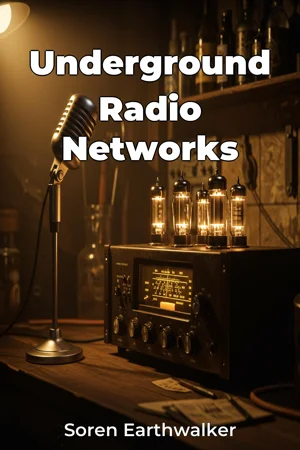
In a world saturated with regulated media, what thrives in the shadows, challenging established norms and operating beyond the reach of legal frameworks? "Underground Radio Networks" dives into the clandestine world of unlicensed broadcasting, revealing the who, how, and why behind these persistent challengers to media regulations across the globe. This book explores two core topics: the technological infrastructure that enables these networks and the socio-political motivations driving their existence. Understanding these elements is crucial because they highlight the tension between freedom of expression and governmental control, a conflict that resonates far beyond the airwaves. From the early days of pirate radio ships in international waters to modern-day digital networks, the book traces the history of illegal broadcasting, providing context for understanding its resurgence in the digital age. A basic understanding of radio technology, media regulation, and political activism will enhance the reader's appreciation of the book's arguments. The central argument posits that while governments seek to control the information landscape through licensing and regulation, the inherent human desire for free expression, coupled with advancements in accessible technology, ensures the continued existence and evolution of underground radio networks. This argument is important because it challenges the assumption that regulated media is the only or even the best way to inform and empower citizens. The book unfolds in three major sections. First, it introduces the fundamental concepts of radio technology, media regulation, and the historical precedents of underground broadcasting. Second, it delves into case studies from diverse regions, illustrating the strategies, motivations, and technologies employed by various illegal networks. These examples are structured around major themes like political dissent, cultural preservation, and community empowerment. Finally, the book examines the future of underground radio in the face of ever-evolving technology and regulatory landscapes, discussing the implications for freedom of speech and the role of media in democratic societies. The book draws upon a variety of evidence, including interviews with operators of underground radio stations, analysis of regulatory documents, and technical assessments of broadcasting equipment. Data from spectrum monitoring and network traffic analysis will also be presented to illustrate the scale and scope of these operations. "Underground Radio Networks" connects to fields such as media studies, political science, and technology policy. By examining the intersection of these disciplines, the book provides a holistic understanding of the complex dynamics at play. It also touches on sociological aspects of subcultures and movements which find their voice in underground radio. The book stands out by providing a detailed examination of previously under-documented phenomena, offering insights into the motivations and operations of individuals and groups who actively defy media regulations. The tone is analytical and informative, aiming to present a balanced perspective on a complex issue and the writing style is accessible to a broad audience while maintaining academic rigor. The target audience includes students and scholars in media studies, political science, and technology policy, as well as anyone interested in the dynamics of free speech, media regulation, and the role of technology in shaping society. This book will appeal to those seeking a deeper understanding of the challenges and opportunities presented by the ever-evolving media landscape. As a work of non-fiction, this book adheres to standards of factual accuracy and unbiased reporting. While exploring controversial topics, it strives to present multiple perspectives and avoid sensationalism. The scope of the book is global, examining case studies from various regions. However, it acknowledges that some regions are underrepresented due to limitations in data availability and access to sources. The information provided can be applied by policymakers seeking to understand the motivations and impact of illegal broadcasting, as well as by activists and media professionals interested in exploring alternative models of media production and distribution. The book addresses ongoing debates surrounding the role of government in regulating media, the balance between freedom of speech and national security, and the ethical considerations of operating outside legal frameworks. It provides a nuanced perspective on these issues, encouraging readers to critically evaluate their own assumptions and beliefs.
In a world saturated with regulated media, what thrives in the shadows, challenging established norms and operating beyond the reach of legal frameworks? "Underground Radio Networks" dives into the clandestine world of unlicensed broadcasting, revealing the who, how, and why behind these persistent challengers to media regulations across the globe. This book explores two core topics: the technological infrastructure that enables these networks and the socio-political motivations driving their existence. Understanding these elements is crucial because they highlight the tension between freedom of expression and governmental control, a conflict that resonates far beyond the airwaves. From the early days of pirate radio ships in international waters to modern-day digital networks, the book traces the history of illegal broadcasting, providing context for understanding its resurgence in the digital age. A basic understanding of radio technology, media regulation, and political activism will enhance the reader's appreciation of the book's arguments. The central argument posits that while governments seek to control the information landscape through licensing and regulation, the inherent human desire for free expression, coupled with advancements in accessible technology, ensures the continued existence and evolution of underground radio networks. This argument is important because it challenges the assumption that regulated media is the only or even the best way to inform and empower citizens. The book unfolds in three major sections. First, it introduces the fundamental concepts of radio technology, media regulation, and the historical precedents of underground broadcasting. Second, it delves into case studies from diverse regions, illustrating the strategies, motivations, and technologies employed by various illegal networks. These examples are structured around major themes like political dissent, cultural preservation, and community empowerment. Finally, the book examines the future of underground radio in the face of ever-evolving technology and regulatory landscapes, discussing the implications for freedom of speech and the role of media in democratic societies. The book draws upon a variety of evidence, including interviews with operators of underground radio stations, analysis of regulatory documents, and technical assessments of broadcasting equipment. Data from spectrum monitoring and network traffic analysis will also be presented to illustrate the scale and scope of these operations. "Underground Radio Networks" connects to fields such as media studies, political science, and technology policy. By examining the intersection of these disciplines, the book provides a holistic understanding of the complex dynamics at play. It also touches on sociological aspects of subcultures and movements which find their voice in underground radio. The book stands out by providing a detailed examination of previously under-documented phenomena, offering insights into the motivations and operations of individuals and groups who actively defy media regulations. The tone is analytical and informative, aiming to present a balanced perspective on a complex issue and the writing style is accessible to a broad audience while maintaining academic rigor. The target audience includes students and scholars in media studies, political science, and technology policy, as well as anyone interested in the dynamics of free speech, media regulation, and the role of technology in shaping society. This book will appeal to those seeking a deeper understanding of the challenges and opportunities presented by the ever-evolving media landscape. As a work of non-fiction, this book adheres to standards of factual accuracy and unbiased reporting. While exploring controversial topics, it strives to present multiple perspectives and avoid sensationalism. The scope of the book is global, examining case studies from various regions. However, it acknowledges that some regions are underrepresented due to limitations in data availability and access to sources. The information provided can be applied by policymakers seeking to understand the motivations and impact of illegal broadcasting, as well as by activists and media professionals interested in exploring alternative models of media production and distribution. The book addresses ongoing debates surrounding the role of government in regulating media, the balance between freedom of speech and national security, and the ethical considerations of operating outside legal frameworks. It provides a nuanced perspective on these issues, encouraging readers to critically evaluate their own assumptions and beliefs.
"Underground Radio Networks" explores the hidden world of unlicensed broadcasting, examining both the technology that enables these operations and the political and social motivations behind them. These underground networks challenge conventional media regulations and raise important questions about freedom of expression versus governmental control. From pirate radio ships to modern digital networks, the history of illegal broadcasting reveals a persistent tension between the desire for unrestricted communication and the efforts to regulate the airwaves. The book presents case studies from around the world, highlighting how various underground radio stations use technology to challenge political norms, preserve cultural heritage, and empower local communities. For instance, some stations act as vital channels for political dissent, while others serve as platforms for marginalized voices excluded from mainstream media. By examining the strategies and technologies these networks employ, the book sheds light on the ongoing struggle to balance media regulation with freedom of expression. Ultimately, the book argues that the human desire for free expression, coupled with increasingly accessible technology, ensures the continued existence and evolution of underground radio. It delves into the future of these networks, considering the implications for freedom of speech and the role of media in democratic societies, offering a nuanced perspective on the complex dynamics between technology, politics, and media regulation.
Book Details
ISBN
9788235265623
Publisher
Publifye AS
Your Licenses
You don't own any licenses for this book
Purchase a license below to unlock this book and download the EPUB.
Purchase License
Select a tier to unlock this book
Need bulk licensing?
Contact us for enterprise agreements.