
About This Book
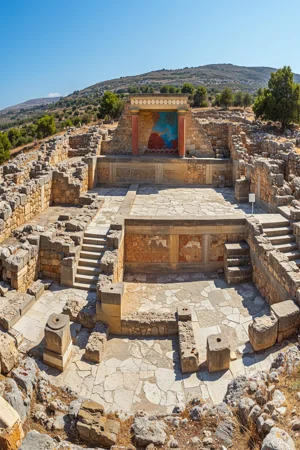
What can the enigmatic ruins of Crete tell us about a civilization that flourished for centuries, only to seemingly vanish from the historical record? “Minoan Society” delves into the complex world of the Minoans, exploring their daily routines, economic systems, and spiritual beliefs to reconstruct a comprehensive portrait of this Bronze Age culture. These aspects are critical to understanding not only the Minoan civilization itself but also its profound influence on subsequent cultures in the Aegean and broader Mediterranean world. This book offers a multifaceted examination of Minoan life, set against the backdrop of the archaeological discoveries that have shaped our understanding of this society. It presumes a basic familiarity with the geography of the Mediterranean and the general timeline of the Bronze Age but aims to be accessible to readers without specialized knowledge of archaeology. The central argument of "Minoan Society" is that the Minoans, far from being a simple precursor to other Bronze Age cultures, developed a unique and sophisticated societal structure characterized by a centralized palatial economy, a complex religious system centered on female deities, and a vibrant artistic tradition. This argument challenges previous interpretations that portrayed the Minoans as merely a precursor to the Mycenaeans or as a purely peaceful society. The book is structured to guide the reader through a progressive understanding of Minoan civilization. First, it introduces the geographical and chronological context of Minoan Crete, outlining the major archaeological sites and periods. Second, it explores the economic foundations of Minoan society, examining the role of the palaces as centers of storage, redistribution, and craft production, discussing agricultural practices based on archaeological finds and Linear A texts. Third, the book delves into the religious practices of the Minoans, analyzing the imagery of goddesses, sacred symbols like the double axe, and ritual sites in caves and peak sanctuaries, with an eye to broader theories about Minoan religion. Finally, it considers the factors that may have contributed to the decline and eventual disappearance of Minoan civilization, including natural disasters, invasions, and internal social changes. The analysis will rely on a range of evidence, including archaeological finds from sites such as Knossos, Phaistos, and Akrotiri; Linear A and Linear B texts (with translations and interpretations); fresco paintings; pottery; and burial sites. It incorporates recent scholarship and previously published data to offer an updated and comprehensive perspective. "Minoan Society" also connects to other fields such as art history, religious studies, and economics. By examining Minoan art, we gain insights into their aesthetic values and social hierarchies. Studying their religious beliefs provides a window into their worldview and moral framework. Analyzing their economic system helps us understand the organization of labor and resource management in the Bronze Age. These interdisciplinary connections enrich our understanding and demonstrate the relevance of Minoan society to broader discussions of human history. This book adopts an academic yet accessible tone, using clear language and avoiding jargon wherever possible. It is intended for students, researchers, and anyone interested in ancient history, archaeology, or Aegean civilization. It will be especially valuable for those seeking a comprehensive overview of Minoan society based on the latest research. This study is limited to the geographical region of Crete and the chronological period of the Bronze Age (approximately 3000-1100 BCE). While it acknowledges the influence of other cultures on Minoan civilization and vice versa, its primary focus is on the internal dynamics of Minoan society. The study of Minoan society offers valuable insights into the development of complex societies, the role of religion in shaping social structures, and the factors that contribute to the rise and fall of civilizations. It also sheds light on the origins of European culture and the interconnectedness of the ancient world. This book addresses the ongoing debates about the nature of Minoan political organization (e.g., whether Crete was unified under a single ruler or divided into independent city-states) and the causes of the Minoan collapse (e.g., whether it was primarily due to natural disasters or human actions). By presenting different perspectives and evaluating the evidence, it encourages readers to engage critically with these complex issues.
What can the enigmatic ruins of Crete tell us about a civilization that flourished for centuries, only to seemingly vanish from the historical record? “Minoan Society” delves into the complex world of the Minoans, exploring their daily routines, economic systems, and spiritual beliefs to reconstruct a comprehensive portrait of this Bronze Age culture. These aspects are critical to understanding not only the Minoan civilization itself but also its profound influence on subsequent cultures in the Aegean and broader Mediterranean world. This book offers a multifaceted examination of Minoan life, set against the backdrop of the archaeological discoveries that have shaped our understanding of this society. It presumes a basic familiarity with the geography of the Mediterranean and the general timeline of the Bronze Age but aims to be accessible to readers without specialized knowledge of archaeology. The central argument of "Minoan Society" is that the Minoans, far from being a simple precursor to other Bronze Age cultures, developed a unique and sophisticated societal structure characterized by a centralized palatial economy, a complex religious system centered on female deities, and a vibrant artistic tradition. This argument challenges previous interpretations that portrayed the Minoans as merely a precursor to the Mycenaeans or as a purely peaceful society. The book is structured to guide the reader through a progressive understanding of Minoan civilization. First, it introduces the geographical and chronological context of Minoan Crete, outlining the major archaeological sites and periods. Second, it explores the economic foundations of Minoan society, examining the role of the palaces as centers of storage, redistribution, and craft production, discussing agricultural practices based on archaeological finds and Linear A texts. Third, the book delves into the religious practices of the Minoans, analyzing the imagery of goddesses, sacred symbols like the double axe, and ritual sites in caves and peak sanctuaries, with an eye to broader theories about Minoan religion. Finally, it considers the factors that may have contributed to the decline and eventual disappearance of Minoan civilization, including natural disasters, invasions, and internal social changes. The analysis will rely on a range of evidence, including archaeological finds from sites such as Knossos, Phaistos, and Akrotiri; Linear A and Linear B texts (with translations and interpretations); fresco paintings; pottery; and burial sites. It incorporates recent scholarship and previously published data to offer an updated and comprehensive perspective. "Minoan Society" also connects to other fields such as art history, religious studies, and economics. By examining Minoan art, we gain insights into their aesthetic values and social hierarchies. Studying their religious beliefs provides a window into their worldview and moral framework. Analyzing their economic system helps us understand the organization of labor and resource management in the Bronze Age. These interdisciplinary connections enrich our understanding and demonstrate the relevance of Minoan society to broader discussions of human history. This book adopts an academic yet accessible tone, using clear language and avoiding jargon wherever possible. It is intended for students, researchers, and anyone interested in ancient history, archaeology, or Aegean civilization. It will be especially valuable for those seeking a comprehensive overview of Minoan society based on the latest research. This study is limited to the geographical region of Crete and the chronological period of the Bronze Age (approximately 3000-1100 BCE). While it acknowledges the influence of other cultures on Minoan civilization and vice versa, its primary focus is on the internal dynamics of Minoan society. The study of Minoan society offers valuable insights into the development of complex societies, the role of religion in shaping social structures, and the factors that contribute to the rise and fall of civilizations. It also sheds light on the origins of European culture and the interconnectedness of the ancient world. This book addresses the ongoing debates about the nature of Minoan political organization (e.g., whether Crete was unified under a single ruler or divided into independent city-states) and the causes of the Minoan collapse (e.g., whether it was primarily due to natural disasters or human actions). By presenting different perspectives and evaluating the evidence, it encourages readers to engage critically with these complex issues.
"Minoan Society" explores the fascinating world of the Minoans, a Bronze Age civilization that thrived on ancient Crete. This book delves into their daily life, economic systems, and spiritual beliefs, offering a comprehensive look at their unique culture. The Minoans developed a sophisticated palatial economy, where palaces served as centers for storage, redistribution, and craft production, showcasing a complex societal structure. Intriguingly, their religious practices centered on female deities, setting them apart from other Bronze Age cultures. The book challenges previous interpretations, arguing that the Minoans were not merely a precursor to the Mycenaeans but a distinct civilization with a vibrant artistic tradition. Examining archaeological finds from sites like Knossos and Akrotiri, alongside Linear A texts, it provides an updated perspective on Minoan life. The book progresses by first introducing the geographical and chronological context, then exploring the economic foundations, delving into religious practices, and finally considering factors leading to their decline. This approach connects Minoan society to broader themes of art history, religious studies, and economics.
Book Details
ISBN
9788235265616
Publisher
Publifye AS
Your Licenses
You don't own any licenses for this book
Purchase a license below to unlock this book and download the EPUB.
Purchase License
Select a tier to unlock this book
Need bulk licensing?
Contact us for enterprise agreements.