
About This Book
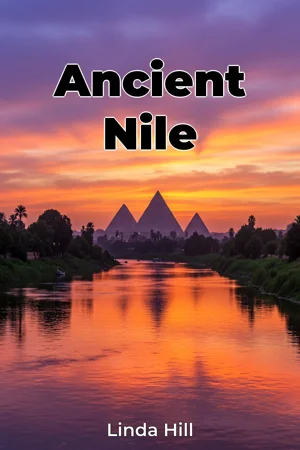
How did a single river give rise to a civilization that would shape the course of human history? "Ancient Nile" delves into the multifaceted world of ancient Egypt, exploring its profound impact on trade, politics, and culture across millennia. This book argues that the Nile River was not merely a geographical feature, but the central catalyst for the development of a uniquely resilient and influential society, whose innovations and ideologies continue to resonate today. The book begins by setting the geographical and environmental stage, detailing the crucial role of the Nile's annual floods in creating fertile land and facilitating transportation. Understanding the river's rhythm is prerequisite to grasping the foundations of Egyptian agriculture, resource management, and societal structure. We then explore the evolution of Egyptian political organization, from the early dynastic period to the rise of the Old, Middle, and New Kingdoms. This section examines the pharaohs' roles as divine rulers, the development of a complex bureaucratic system, and the dynamics of power that shaped Egypt's interactions with neighboring civilizations. Special attention is paid to the development of hieroglyphic writing as a tool for record-keeping, communication, and the assertion of royal authority. Next, the book assesses the cultural and religious landscape of ancient Egypt. We examine the intricate pantheon of gods and goddesses, the elaborate rituals and ceremonies that governed daily life, and the profound beliefs about death and the afterlife that led to the construction of monumental tombs and the practice of mummification. The book analyzes the social hierarchy, the roles of different social classes, and the status of women in Egyptian society, challenging common misconceptions and presenting nuanced interpretations based on archaeological evidence and textual sources. The evidence presented draws heavily on archaeological findings, including inscriptions, papyri, and artifacts recovered from tombs, temples, and settlements. We also utilize textual sources, such as the Pyramid Texts, the Book of the Dead, and administrative documents, to provide insights into Egyptian beliefs, practices, and social organization. The book incorporates recent scholarship and debates within Egyptology, offering a balanced and critical perspective on the available evidence. "Ancient Nile" connects to broader fields of study such as anthropology, religious studies, and political science. By examining the origins of state formation in Egypt, the book informs anthropological theories of societal development. The analysis of Egyptian religious beliefs and practices contributes to the understanding of the evolution of religious thought and ritual. The book's exploration of Egyptian political structures provides valuable insights into the dynamics of power and governance in ancient societies. This book distinguishes itself by adopting a holistic approach, integrating environmental, political, social, and cultural factors to provide a comprehensive portrait of ancient Egypt. It avoids romanticized or simplistic interpretations, instead offering a nuanced and evidence-based analysis of this complex civilization. The writing style is accessible and engaging, while maintaining scholarly rigor. "Ancient Nile" is targeted towards students, general readers interested in ancient history, and those seeking a deeper understanding of ancient Egypt's enduring legacy. This book will be valuable to those looking to understand the trajectory of one of the first major civilizations. While the book encompasses the major periods of ancient Egyptian history, it focuses primarily on the period from the Early Dynastic Period through the New Kingdom, acknowledging the limitations of fully exploring later periods of Egyptian history within a single volume. The book aims to provide a thorough and accessible overview of ancient Egypt's formative centuries, laying the groundwork for further exploration of specific aspects of Egyptian civilization. The lessons from "Ancient Nile" have real-world applications. Understanding how the ancient Egyptians managed their resources, organized their society, and developed their political systems can provide valuable insights into contemporary challenges of governance, sustainability, and social cohesion. Furthermore, the study of ancient Egyptian art, architecture, and literature offers a window into the human capacity for creativity, innovation, and cultural expression. This civilization's capacity to adapt and thrive in a challenging environment offers lessons applicable to modern challenges.
How did a single river give rise to a civilization that would shape the course of human history? "Ancient Nile" delves into the multifaceted world of ancient Egypt, exploring its profound impact on trade, politics, and culture across millennia. This book argues that the Nile River was not merely a geographical feature, but the central catalyst for the development of a uniquely resilient and influential society, whose innovations and ideologies continue to resonate today. The book begins by setting the geographical and environmental stage, detailing the crucial role of the Nile's annual floods in creating fertile land and facilitating transportation. Understanding the river's rhythm is prerequisite to grasping the foundations of Egyptian agriculture, resource management, and societal structure. We then explore the evolution of Egyptian political organization, from the early dynastic period to the rise of the Old, Middle, and New Kingdoms. This section examines the pharaohs' roles as divine rulers, the development of a complex bureaucratic system, and the dynamics of power that shaped Egypt's interactions with neighboring civilizations. Special attention is paid to the development of hieroglyphic writing as a tool for record-keeping, communication, and the assertion of royal authority. Next, the book assesses the cultural and religious landscape of ancient Egypt. We examine the intricate pantheon of gods and goddesses, the elaborate rituals and ceremonies that governed daily life, and the profound beliefs about death and the afterlife that led to the construction of monumental tombs and the practice of mummification. The book analyzes the social hierarchy, the roles of different social classes, and the status of women in Egyptian society, challenging common misconceptions and presenting nuanced interpretations based on archaeological evidence and textual sources. The evidence presented draws heavily on archaeological findings, including inscriptions, papyri, and artifacts recovered from tombs, temples, and settlements. We also utilize textual sources, such as the Pyramid Texts, the Book of the Dead, and administrative documents, to provide insights into Egyptian beliefs, practices, and social organization. The book incorporates recent scholarship and debates within Egyptology, offering a balanced and critical perspective on the available evidence. "Ancient Nile" connects to broader fields of study such as anthropology, religious studies, and political science. By examining the origins of state formation in Egypt, the book informs anthropological theories of societal development. The analysis of Egyptian religious beliefs and practices contributes to the understanding of the evolution of religious thought and ritual. The book's exploration of Egyptian political structures provides valuable insights into the dynamics of power and governance in ancient societies. This book distinguishes itself by adopting a holistic approach, integrating environmental, political, social, and cultural factors to provide a comprehensive portrait of ancient Egypt. It avoids romanticized or simplistic interpretations, instead offering a nuanced and evidence-based analysis of this complex civilization. The writing style is accessible and engaging, while maintaining scholarly rigor. "Ancient Nile" is targeted towards students, general readers interested in ancient history, and those seeking a deeper understanding of ancient Egypt's enduring legacy. This book will be valuable to those looking to understand the trajectory of one of the first major civilizations. While the book encompasses the major periods of ancient Egyptian history, it focuses primarily on the period from the Early Dynastic Period through the New Kingdom, acknowledging the limitations of fully exploring later periods of Egyptian history within a single volume. The book aims to provide a thorough and accessible overview of ancient Egypt's formative centuries, laying the groundwork for further exploration of specific aspects of Egyptian civilization. The lessons from "Ancient Nile" have real-world applications. Understanding how the ancient Egyptians managed their resources, organized their society, and developed their political systems can provide valuable insights into contemporary challenges of governance, sustainability, and social cohesion. Furthermore, the study of ancient Egyptian art, architecture, and literature offers a window into the human capacity for creativity, innovation, and cultural expression. This civilization's capacity to adapt and thrive in a challenging environment offers lessons applicable to modern challenges.
"Ancient Nile" explores how the Nile River shaped Ancient Egypt, impacting its trade, politics, and culture. The book argues the river was central to the development of this influential society. Intriguingly, the pharaohs were considered divine rulers, and hieroglyphic writing served as a tool for royal authority. The civilization's capacity to adapt and thrive in a challenging environment offers lessons applicable to modern challenges. The book examines the evolution of Egyptian political organization, from the early dynastic period to the rise of the Old, Middle, and New Kingdoms. It also assesses the cultural and religious landscape, including the pantheon of gods and beliefs about the afterlife. The book adopts a holistic approach, integrating environmental, political, social, and cultural factors. It focuses on the period from the Early Dynastic Period through the New Kingdom.
Book Details
ISBN
9788235265609
Publisher
Publifye AS
Your Licenses
You don't own any licenses for this book
Purchase a license below to unlock this book and download the EPUB.
Purchase License
Select a tier to unlock this book
Need bulk licensing?
Contact us for enterprise agreements.