
About This Book
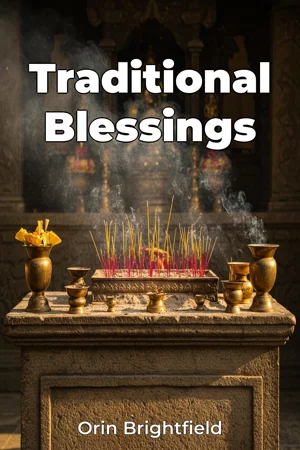
Have you ever wondered about the power behind a simple blessing, a wish for well-being, or a ritual that marks a significant life event? "Traditional Blessings" explores the diverse and profound ways different cultures across the globe bestow blessings, offering insight into the human need to invoke prosperity, protection, and divine favor. This book examines how these practices shape communities, provide comfort, and reflect core cultural values. This exploration centers on understanding the diverse forms blessings take, the historical context shaping their development, and their enduring relevance in contemporary society. These topics are important because they illuminate the shared human experience of seeking meaning and connection through ritual and tradition. Understanding these traditions fosters cross-cultural awareness and appreciation for the varied ways humans express hope and goodwill. Blessings arose from humanity's earliest attempts to understand and influence the world. Early societies relied on oral traditions and animistic beliefs, where blessings were often directed at natural forces. As societies evolved, blessings became integrated into organized religions and codified ethical systems, reflecting increasingly complex social structures and moral codes. No specific prerequisite knowledge is needed to appreciate the content of this book; however, a general interest in cultural studies, world religions, or anthropology will enhance the reading experience. The central argument of "Traditional Blessings" is that these seemingly disparate practices reveal a universal human desire for hope, connection, and meaning during significant life moments. By examining the common threads and unique expressions of blessings worldwide, we gain a deeper understanding of cultural values and the human condition. The book begins by introducing the core concepts of blessings, defining their scope, and establishing a framework for comparative analysis. It then develops these ideas across three major sections. The first section examines spoken blessings, analyzing prayers, invocations, and pronouncements of goodwill from various religious and secular traditions. The second section discusses ceremonial blessings, focusing on rituals associated with birth, marriage, death, and other key life transitions. The third section considers object-based blessings, analyzing the use of amulets, talismans, and sacred objects believed to confer protection or good fortune. The book culminates by synthesizing these diverse examples to reveal the underlying principles and commonalities that unite them. It also explores the practical implications of understanding blessings in promoting intercultural understanding and personal well-being. The analysis in "Traditional Blessings" is supported by a range of evidence, including ethnographic studies, historical texts, religious scriptures, and linguistic analysis of blessing formulas. Primary source materials, gathered from various cultural archives and field research accounts, provide firsthand perspectives on the meaning and function of blessings in different communities. This work connects to several other fields, including religious studies, anthropology, and sociology. Religious studies provide insight into the theological underpinnings of blessings, while anthropology offers a framework for understanding their cultural context. Sociology helps analyze the social function of blessings in reinforcing community bonds and social norms. These interdisciplinary connections enrich the book's argument by providing a holistic understanding of blessings as both religious and cultural phenomena. "Traditional Blessings" offers a unique perspective by moving beyond a purely theological or anthropological approach. It seeks to identify universal patterns in the human experience of bestowing blessings, providing a framework for comparative analysis across cultures and traditions. The tone and writing style are accessible and engaging, aiming to inform and inspire a broad audience. The target audience includes readers interested in cultural studies, world religions, anthropology, and anyone seeking a deeper understanding of human traditions. This book will be valuable to those seeking to understand different cultures, appreciate diverse spiritual practices, and explore the common ground that unites humanity. As a work of non-fiction in the areas of World History, Religion, and History World, this book adheres to the standards of scholarly rigor and factual accuracy. It offers a comprehensive overview of its subject, drawing on diverse sources and perspectives to present a balanced and nuanced analysis. The book's scope is broad, encompassing a wide range of cultural traditions, but it intentionally focuses on blessings as they are practiced within established cultural frameworks, rather than exploring contemporary or syncretic forms. Understanding the principles behind traditional blessings can be applied in various ways. It can help individuals develop a deeper appreciation for their own cultural heritage, foster greater empathy for people of different backgrounds, and provide a framework for creating more meaningful and culturally sensitive interactions. While blessings are generally viewed positively, debates sometimes arise concerning cultural appropriation, the commercialization of spiritual practices, and the potential for blessings to reinforce social inequalities. "Traditional Blessings" addresses these controversies by examining the ethical implications of studying and engaging with blessings from different cultural contexts. Avoiding sensationalism, the book maintains academic rigor while remaining engaging for a general audience.
Have you ever wondered about the power behind a simple blessing, a wish for well-being, or a ritual that marks a significant life event? "Traditional Blessings" explores the diverse and profound ways different cultures across the globe bestow blessings, offering insight into the human need to invoke prosperity, protection, and divine favor. This book examines how these practices shape communities, provide comfort, and reflect core cultural values. This exploration centers on understanding the diverse forms blessings take, the historical context shaping their development, and their enduring relevance in contemporary society. These topics are important because they illuminate the shared human experience of seeking meaning and connection through ritual and tradition. Understanding these traditions fosters cross-cultural awareness and appreciation for the varied ways humans express hope and goodwill. Blessings arose from humanity's earliest attempts to understand and influence the world. Early societies relied on oral traditions and animistic beliefs, where blessings were often directed at natural forces. As societies evolved, blessings became integrated into organized religions and codified ethical systems, reflecting increasingly complex social structures and moral codes. No specific prerequisite knowledge is needed to appreciate the content of this book; however, a general interest in cultural studies, world religions, or anthropology will enhance the reading experience. The central argument of "Traditional Blessings" is that these seemingly disparate practices reveal a universal human desire for hope, connection, and meaning during significant life moments. By examining the common threads and unique expressions of blessings worldwide, we gain a deeper understanding of cultural values and the human condition. The book begins by introducing the core concepts of blessings, defining their scope, and establishing a framework for comparative analysis. It then develops these ideas across three major sections. The first section examines spoken blessings, analyzing prayers, invocations, and pronouncements of goodwill from various religious and secular traditions. The second section discusses ceremonial blessings, focusing on rituals associated with birth, marriage, death, and other key life transitions. The third section considers object-based blessings, analyzing the use of amulets, talismans, and sacred objects believed to confer protection or good fortune. The book culminates by synthesizing these diverse examples to reveal the underlying principles and commonalities that unite them. It also explores the practical implications of understanding blessings in promoting intercultural understanding and personal well-being. The analysis in "Traditional Blessings" is supported by a range of evidence, including ethnographic studies, historical texts, religious scriptures, and linguistic analysis of blessing formulas. Primary source materials, gathered from various cultural archives and field research accounts, provide firsthand perspectives on the meaning and function of blessings in different communities. This work connects to several other fields, including religious studies, anthropology, and sociology. Religious studies provide insight into the theological underpinnings of blessings, while anthropology offers a framework for understanding their cultural context. Sociology helps analyze the social function of blessings in reinforcing community bonds and social norms. These interdisciplinary connections enrich the book's argument by providing a holistic understanding of blessings as both religious and cultural phenomena. "Traditional Blessings" offers a unique perspective by moving beyond a purely theological or anthropological approach. It seeks to identify universal patterns in the human experience of bestowing blessings, providing a framework for comparative analysis across cultures and traditions. The tone and writing style are accessible and engaging, aiming to inform and inspire a broad audience. The target audience includes readers interested in cultural studies, world religions, anthropology, and anyone seeking a deeper understanding of human traditions. This book will be valuable to those seeking to understand different cultures, appreciate diverse spiritual practices, and explore the common ground that unites humanity. As a work of non-fiction in the areas of World History, Religion, and History World, this book adheres to the standards of scholarly rigor and factual accuracy. It offers a comprehensive overview of its subject, drawing on diverse sources and perspectives to present a balanced and nuanced analysis. The book's scope is broad, encompassing a wide range of cultural traditions, but it intentionally focuses on blessings as they are practiced within established cultural frameworks, rather than exploring contemporary or syncretic forms. Understanding the principles behind traditional blessings can be applied in various ways. It can help individuals develop a deeper appreciation for their own cultural heritage, foster greater empathy for people of different backgrounds, and provide a framework for creating more meaningful and culturally sensitive interactions. While blessings are generally viewed positively, debates sometimes arise concerning cultural appropriation, the commercialization of spiritual practices, and the potential for blessings to reinforce social inequalities. "Traditional Blessings" addresses these controversies by examining the ethical implications of studying and engaging with blessings from different cultural contexts. Avoiding sensationalism, the book maintains academic rigor while remaining engaging for a general audience.
"Traditional Blessings" delves into the global phenomenon of blessings, exploring their diverse forms and profound impact across cultures. From ancient invocations to modern-day rituals, the book examines how blessings fulfill the human need for prosperity, protection, and connection to the divine. One intriguing fact is how early societies directed blessings at natural forces, reflecting animistic beliefs. Another insight reveals how blessings have been integrated into organized religions, mirroring increasingly complex social structures. The book progresses systematically, first introducing core concepts and then examining spoken, ceremonial, and object-based blessings in three major sections. By analyzing prayers, rituals associated with life transitions, and the use of amulets, the author reveals the underlying principles uniting these seemingly disparate practices. This approach offers a unique perspective, moving beyond theological or anthropological views to identify universal patterns in bestowing blessings. Ultimately, "Traditional Blessings" argues that these practices reveal a universal human desire for hope and meaning. The book emphasizes how understanding these traditions can foster cross-cultural awareness and appreciation for different expressions of goodwill, making it a valuable resource for those interested in world history, religion, and cultural studies.
Book Details
ISBN
9788235265579
Publisher
Publifye AS
Your Licenses
You don't own any licenses for this book
Purchase a license below to unlock this book and download the EPUB.
Purchase License
Select a tier to unlock this book
Need bulk licensing?
Contact us for enterprise agreements.