
About This Book
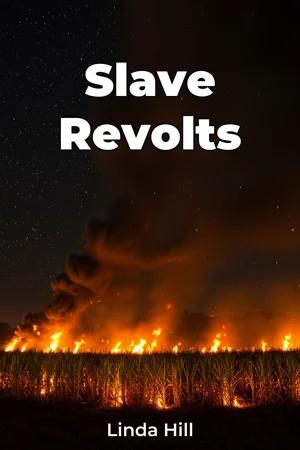
What if the chains of slavery, forged in brutality and sustained by systemic oppression, were not met with passive acceptance but with fierce resistance that irrevocably shaped the Americas? "Slave Revolts" delves into the heart of this resistance, examining the major uprisings that punctuated the history of slavery across the Americas, from the Caribbean islands to the mainland colonies and nations. This book explores the causes underpinning these revolts, the diverse figures who rose to lead them, and their profound and lasting impact on the unfolding abolitionist movements, and the transformation of societies built on forced labor. This exploration is crucial, because understanding these revolts provides insight into the agency of enslaved people, often portrayed as passive victims. It reframes the narrative to highlight their active role in fighting for their freedom and shaping the course of history. Furthermore, studying these revolts illuminates the inherent instability of slave societies and their vulnerability to internal rebellion, a factor that significantly influenced abolitionist thought and political maneuvering. "Slave Revolts" operates within the established historical context of the transatlantic slave trade and the plantation system. It assumes a basic understanding of these institutions but delves deeper into the specifics of their operation in different geographical locations and time periods. The book's central argument is that slave revolts were not isolated incidents of desperation, but rather interconnected expressions of resistance fueled by shared grievances and a common desire for liberation, which played a decisive role in dismantling slavery and reshaping social structures. The book proceeds in a structured manner, beginning with an introduction to the global system of slavery and establishing the intellectual foundations underpinning resistance. It then presents detailed analyses of several key revolts, examining their origins, the strategies employed by the rebels, and the responses of the slaveholding societies. The Haitian Revolution, the Stono Rebellion, and the Demerara Rebellion all receive rigorous analysis. Each case study explores the unique circumstances that triggered the revolt, the leadership that galvanized enslaved people, and the immediate and long-term consequences for both the enslaved population and the broader society. The book culminates in an examination of the cumulative impact of these revolts on abolitionist movements, demonstrating how they fueled moral outrage, inspired political action, and contributed to the eventual demise of slavery. Finally, the book considers the lasting legacy of these revolts in the shaping of post-slavery societies and the ongoing struggle for racial equality. This book draws upon a diverse range of primary and secondary sources, including firsthand accounts from participants and observers, official documents, legal records, and scholarly analyses. It emphasizes interdisciplinary connections, drawing insights from history, sociology, and political science to provide a nuanced understanding of the complex dynamics at play. The book examines the economic impact of slave resistance, its influence on political ideologies, and its social and cultural expressions. A distinctive element of "Slave Revolts" is its analysis of the transnational connections between revolts. The book highlights how news and ideas of rebellion spread across geographical boundaries, inspiring enslaved people in different locations to take action. The book maintains an academic yet accessible tone, aiming to engage both scholars and general readers interested in a deeper understanding of the history of slavery and resistance. It targets students of history, African American studies, and human rights, as well as anyone seeking a comprehensive and nuanced account of the struggles against slavery. The scope of "Slave Revolts" encompasses the major slave uprisings across the Americas from the 16th to the 19th centuries. While it acknowledges the global context of slavery, its primary focus remains on the Americas. The book addresses ongoing debates about the effectiveness of violent resistance versus other forms of resistance, and it seeks to provide a balanced assessment of the costs and benefits of slave revolts. The insights gained from this book have real-world applications. They can inform contemporary discussions about social justice, resistance movements, and the enduring legacies of slavery and racism. Ultimately, "Slave Revolts" seeks to provide a comprehensive and compelling account of a pivotal chapter in human history, one that continues to resonate in the present day.
What if the chains of slavery, forged in brutality and sustained by systemic oppression, were not met with passive acceptance but with fierce resistance that irrevocably shaped the Americas? "Slave Revolts" delves into the heart of this resistance, examining the major uprisings that punctuated the history of slavery across the Americas, from the Caribbean islands to the mainland colonies and nations. This book explores the causes underpinning these revolts, the diverse figures who rose to lead them, and their profound and lasting impact on the unfolding abolitionist movements, and the transformation of societies built on forced labor. This exploration is crucial, because understanding these revolts provides insight into the agency of enslaved people, often portrayed as passive victims. It reframes the narrative to highlight their active role in fighting for their freedom and shaping the course of history. Furthermore, studying these revolts illuminates the inherent instability of slave societies and their vulnerability to internal rebellion, a factor that significantly influenced abolitionist thought and political maneuvering. "Slave Revolts" operates within the established historical context of the transatlantic slave trade and the plantation system. It assumes a basic understanding of these institutions but delves deeper into the specifics of their operation in different geographical locations and time periods. The book's central argument is that slave revolts were not isolated incidents of desperation, but rather interconnected expressions of resistance fueled by shared grievances and a common desire for liberation, which played a decisive role in dismantling slavery and reshaping social structures. The book proceeds in a structured manner, beginning with an introduction to the global system of slavery and establishing the intellectual foundations underpinning resistance. It then presents detailed analyses of several key revolts, examining their origins, the strategies employed by the rebels, and the responses of the slaveholding societies. The Haitian Revolution, the Stono Rebellion, and the Demerara Rebellion all receive rigorous analysis. Each case study explores the unique circumstances that triggered the revolt, the leadership that galvanized enslaved people, and the immediate and long-term consequences for both the enslaved population and the broader society. The book culminates in an examination of the cumulative impact of these revolts on abolitionist movements, demonstrating how they fueled moral outrage, inspired political action, and contributed to the eventual demise of slavery. Finally, the book considers the lasting legacy of these revolts in the shaping of post-slavery societies and the ongoing struggle for racial equality. This book draws upon a diverse range of primary and secondary sources, including firsthand accounts from participants and observers, official documents, legal records, and scholarly analyses. It emphasizes interdisciplinary connections, drawing insights from history, sociology, and political science to provide a nuanced understanding of the complex dynamics at play. The book examines the economic impact of slave resistance, its influence on political ideologies, and its social and cultural expressions. A distinctive element of "Slave Revolts" is its analysis of the transnational connections between revolts. The book highlights how news and ideas of rebellion spread across geographical boundaries, inspiring enslaved people in different locations to take action. The book maintains an academic yet accessible tone, aiming to engage both scholars and general readers interested in a deeper understanding of the history of slavery and resistance. It targets students of history, African American studies, and human rights, as well as anyone seeking a comprehensive and nuanced account of the struggles against slavery. The scope of "Slave Revolts" encompasses the major slave uprisings across the Americas from the 16th to the 19th centuries. While it acknowledges the global context of slavery, its primary focus remains on the Americas. The book addresses ongoing debates about the effectiveness of violent resistance versus other forms of resistance, and it seeks to provide a balanced assessment of the costs and benefits of slave revolts. The insights gained from this book have real-world applications. They can inform contemporary discussions about social justice, resistance movements, and the enduring legacies of slavery and racism. Ultimately, "Slave Revolts" seeks to provide a comprehensive and compelling account of a pivotal chapter in human history, one that continues to resonate in the present day.
"Slave Revolts" examines significant uprisings across the Americas, revealing enslaved people's active resistance against the brutal system of slavery. Going beyond portraying them as passive victims, the book highlights their agency in fighting for freedom and influencing abolitionist movements. It delves into the causes, leaders, and lasting impacts of these revolts on societies built upon forced labor, emphasizing the inherent instability within slave societies. For example, the Haitian Revolution demonstrated the potential for enslaved people to overthrow their oppressors and establish an independent nation. The book progresses systematically, beginning with the foundations of slavery and resistance, before analyzing key revolts like the Stono and Demerara Rebellions. Each case study explores the unique triggers, leadership, and consequences of each revolt, ultimately emphasizing their cumulative impact on abolitionist sentiments, political action, and the dismantling of slavery. It draws upon diverse sources, including firsthand accounts and legal records, to provide a nuanced understanding of the complex dynamics at play, including the transnational spread of rebellious ideas.
Book Details
ISBN
9788235265548
Publisher
Publifye AS
Your Licenses
You don't own any licenses for this book
Purchase a license below to unlock this book and download the EPUB.
Purchase License
Select a tier to unlock this book
Need bulk licensing?
Contact us for enterprise agreements.