
About This Book
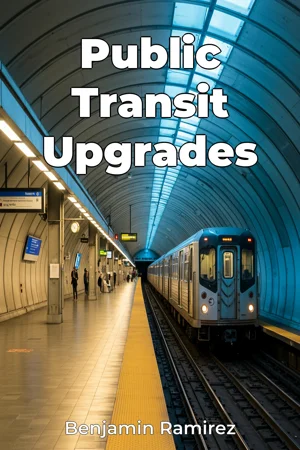
How can cities move more people efficiently, sustainably, and equitably in the 21st century? "Public Transit Upgrades" answers this question by examining the modernization of bus, train, and metro systems worldwide. This book addresses the critical need for cities to improve their public transportation infrastructure to meet growing populations, combat climate change, and enhance urban livability. We explore how technological advancements, architectural innovations, and strategic planning are converging to reshape the future of urban mobility. The book is structured around three main themes. First, it delves into technological innovations enhancing public transit, such as electric and autonomous buses, smart train control systems, and real-time passenger information apps. We analyze how these technologies are being implemented and their impact on efficiency, reliability, and accessibility. Second, the book explores architectural and design considerations in creating modern, welcoming, and functional transit spaces. This includes examining station design, accessibility features, and the integration of transit hubs into the urban fabric. Finally, the book addresses the crucial aspect of strategic planning and policy. This section examines funding models, public-private partnerships, and transit-oriented development strategies that are essential for successful transit upgrades. "Public Transit Upgrades" argues that a holistic approach, integrating technological innovation with thoughtful architectural design and robust strategic planning, is vital for creating effective and equitable public transit systems. The book's central argument is that investments in public transit are not merely infrastructure projects, but are also investments in the social, economic, and environmental well-being of cities. The book begins by establishing the historical context of public transit and the challenges it faces today, including aging infrastructure, funding constraints, and evolving ridership patterns. We draw upon case studies from cities around the globe, from established metropolises like London and Tokyo to rapidly growing urban centers in Asia and South America. These case studies showcase various approaches to public transit modernization and offer valuable lessons for policymakers, urban planners, and architects. Data from government reports, academic studies, and industry publications are used to support the arguments presented. The methodologies used range from quantitative analysis of ridership data and cost-benefit analyses to qualitative assessments of passenger experiences and community impacts. The book connects to several other fields, most notably urban planning, civil engineering, and environmental science. The success of public transit upgrades is inextricably linked to broader urban development strategies and requires expertise in engineering and a deep understanding of environmental sustainability. It also touches on sociology and economics, given the impact improved transit can have on connecting disadvantaged communities with jobs and services. "Public Transit Upgrades" stands out by offering a comprehensive, interdisciplinary perspective on public transit modernization. It avoids a purely technical focus, instead emphasizing the importance of integrating technology with human-centered design and strategic policy. The book adopts an informative and analytical tone, presenting complex information in a clear and accessible manner. The primary audience is composed of urban planners, architects, policymakers, transportation engineers, and anyone interested in sustainable urban development. The book provides valuable insights and practical guidance for professionals involved in planning, designing, and implementing public transit upgrades. It is also relevant to students and researchers in related fields. While broad in scope, the book focuses primarily on rail-based and bus-based transit systems, with less emphasis on emerging modes like micro-mobility or aerial transit. The book addresses the ongoing debate about the role of public versus private sector involvement in public transit. It explores the pros and cons of different funding models and governance structures, and it examines the challenges of balancing competing interests in public transit projects. Practical applications of the information in "Public Transit Upgrades" include informing investment decisions, guiding the design of new transit systems, and improving the operation of existing systems. The insights in this book empower readers to advocate for effective public transit solutions in their own communities.
How can cities move more people efficiently, sustainably, and equitably in the 21st century? "Public Transit Upgrades" answers this question by examining the modernization of bus, train, and metro systems worldwide. This book addresses the critical need for cities to improve their public transportation infrastructure to meet growing populations, combat climate change, and enhance urban livability. We explore how technological advancements, architectural innovations, and strategic planning are converging to reshape the future of urban mobility. The book is structured around three main themes. First, it delves into technological innovations enhancing public transit, such as electric and autonomous buses, smart train control systems, and real-time passenger information apps. We analyze how these technologies are being implemented and their impact on efficiency, reliability, and accessibility. Second, the book explores architectural and design considerations in creating modern, welcoming, and functional transit spaces. This includes examining station design, accessibility features, and the integration of transit hubs into the urban fabric. Finally, the book addresses the crucial aspect of strategic planning and policy. This section examines funding models, public-private partnerships, and transit-oriented development strategies that are essential for successful transit upgrades. "Public Transit Upgrades" argues that a holistic approach, integrating technological innovation with thoughtful architectural design and robust strategic planning, is vital for creating effective and equitable public transit systems. The book's central argument is that investments in public transit are not merely infrastructure projects, but are also investments in the social, economic, and environmental well-being of cities. The book begins by establishing the historical context of public transit and the challenges it faces today, including aging infrastructure, funding constraints, and evolving ridership patterns. We draw upon case studies from cities around the globe, from established metropolises like London and Tokyo to rapidly growing urban centers in Asia and South America. These case studies showcase various approaches to public transit modernization and offer valuable lessons for policymakers, urban planners, and architects. Data from government reports, academic studies, and industry publications are used to support the arguments presented. The methodologies used range from quantitative analysis of ridership data and cost-benefit analyses to qualitative assessments of passenger experiences and community impacts. The book connects to several other fields, most notably urban planning, civil engineering, and environmental science. The success of public transit upgrades is inextricably linked to broader urban development strategies and requires expertise in engineering and a deep understanding of environmental sustainability. It also touches on sociology and economics, given the impact improved transit can have on connecting disadvantaged communities with jobs and services. "Public Transit Upgrades" stands out by offering a comprehensive, interdisciplinary perspective on public transit modernization. It avoids a purely technical focus, instead emphasizing the importance of integrating technology with human-centered design and strategic policy. The book adopts an informative and analytical tone, presenting complex information in a clear and accessible manner. The primary audience is composed of urban planners, architects, policymakers, transportation engineers, and anyone interested in sustainable urban development. The book provides valuable insights and practical guidance for professionals involved in planning, designing, and implementing public transit upgrades. It is also relevant to students and researchers in related fields. While broad in scope, the book focuses primarily on rail-based and bus-based transit systems, with less emphasis on emerging modes like micro-mobility or aerial transit. The book addresses the ongoing debate about the role of public versus private sector involvement in public transit. It explores the pros and cons of different funding models and governance structures, and it examines the challenges of balancing competing interests in public transit projects. Practical applications of the information in "Public Transit Upgrades" include informing investment decisions, guiding the design of new transit systems, and improving the operation of existing systems. The insights in this book empower readers to advocate for effective public transit solutions in their own communities.
"Public Transit Upgrades" explores the modernization of public transportation systems worldwide, crucial for growing populations and sustainable development. The book highlights how cities are integrating technology, architectural innovation, and strategic planning to reshape urban mobility. For example, electric buses and smart train control systems are revolutionizing efficiency, while advancements in station design focus on accessibility and integration into the urban landscape. The book emphasizes a holistic approach, arguing that successful public transit upgrades must blend technological advancements with human-centered design and strategic policy. It delves into funding models, public-private partnerships, and transit-oriented development. By examining case studies from global cities, from London to rapidly growing urban centers in Asia, the book offers valuable lessons for policymakers and urban planners. Beginning with the historical context of public transit and current challenges, the book progresses through technological innovations, architectural considerations, and strategic planning. This approach provides a comprehensive, interdisciplinary perspective on public transit modernization, making it a valuable resource for professionals and anyone interested in sustainable urban development.
Book Details
ISBN
9788235265500
Publisher
Publifye AS
Your Licenses
You don't own any licenses for this book
Purchase a license below to unlock this book and download the EPUB.
Purchase License
Select a tier to unlock this book
Need bulk licensing?
Contact us for enterprise agreements.