
About This Book
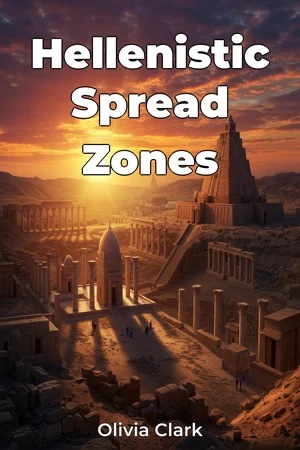
How did the conquests of Alexander the Great not only forge an empire but also catalyze a cultural transformation that reverberates through history? "Hellenistic Spread Zones" investigates the multifaceted diffusion of Greek language, philosophy, and governance across the vast territories influenced by Alexander and his successors, offering a comprehensive exploration of this pivotal era. This book delves into the Hellenistic period's complex dynamics, examining how Greek ideals intertwined with local traditions to shape new cultural landscapes from the Mediterranean to Central Asia. Understanding this period is key to grasping the foundations of Western civilization, the evolution of political systems, and the enduring power of cultural exchange. This study focuses on three core themes: the propagation of the Koine Greek language as a lingua franca, the dissemination and adaptation of Greek philosophical schools, and the implementation and evolution of Greek-inspired governance structures. These elements represent the primary mechanisms through which Hellenistic influence permeated diverse societies. The book unfolds against the backdrop of Alexander's conquests in the 4th century BCE, which shattered the existing political order and opened avenues for unprecedented interaction between Greek and non-Greek cultures. Prior knowledge of classical Greek history and basic philosophical concepts will enhance the reader's understanding, though foundational information is provided. Our central argument posits that the Hellenistic era was not merely a period of Greek cultural dominance, but a dynamic process of negotiation and synthesis. Greek ideas were selectively adopted, adapted, and transformed in response to local conditions, resulting in hybrid cultural forms that defied simple categorization. This nuanced perspective challenges traditional narratives of unidirectional Greek influence. "Hellenistic Spread Zones" is structured in three parts. First, it introduces the key concepts of Hellenization, cultural diffusion, and syncretism, establishing the theoretical framework for the study. The second part examines specific regions— Egypt, Syria, and Bactria–detailing the unique manifestations of Hellenistic influence in each. This section will analyze the evolution of local political structures and the emergence of new cultural artifacts stemming from the fusion of Greek and indigenous traditions. The third part analyzes the long-term impact of Hellenistic culture on subsequent historical periods. The conclusion emphasizes the lasting relevance of the Hellenistic experience for understanding contemporary issues of globalization and cultural interaction. This book relies on diverse sources, including archaeological evidence, inscriptions, papyri, and literary texts from both Greek and non-Greek authors. Special attention is given to the analysis of bilingual inscriptions and material culture to decipher the complex interplay between Greek and local traditions. "Hellenistic Spread Zones" intersects significantly with fields such as archaeology, linguistics, and political science. Archaeological findings provide tangible evidence of cultural interaction, while linguistic analysis illuminates the processes of language adoption and adaptation. The study of political structures reveals the ways in which Greek administrative models were modified and integrated into existing systems of governance. This book offers a fresh perspective by emphasizing the agency of non-Greek populations in shaping the Hellenistic world. Rather than portraying them as passive recipients of Greek culture, it highlights their active participation in the processes of cultural exchange and adaptation. The tone is academic, yet accessible. Written to engage both scholars and informed general readers, the book avoids jargon and presents complex ideas in a clear and concise manner. The target audience includes students and scholars of ancient history, classical studies, and world history, as well as anyone interested in the dynamics of cultural exchange and the legacy of the Hellenistic world. As a work of historical scholarship, this book adheres to the principles of academic rigor and impartiality. It presents evidence-based arguments and acknowledges alternative interpretations. The scope of "Hellenistic Spread Zones" is geographically broad, encompassing the major regions influenced by Alexander's conquests. However, it focuses primarily on the cultural and political dimensions of Hellenization, with less emphasis on economic aspects. The insights presented in this book have practical applications for understanding contemporary issues of globalization, cultural diversity, and the challenges of intercultural communication. By examining the historical complexities of cultural exchange, it offers valuable lessons for navigating the interconnected world of today. The book engages with ongoing debates about the nature of Hellenization, the role of cultural imperialism, and the agency of non-Greek populations. By presenting a nuanced and evidence-based perspective, it contributes to a more informed understanding of this complex and consequential period in world history.
How did the conquests of Alexander the Great not only forge an empire but also catalyze a cultural transformation that reverberates through history? "Hellenistic Spread Zones" investigates the multifaceted diffusion of Greek language, philosophy, and governance across the vast territories influenced by Alexander and his successors, offering a comprehensive exploration of this pivotal era. This book delves into the Hellenistic period's complex dynamics, examining how Greek ideals intertwined with local traditions to shape new cultural landscapes from the Mediterranean to Central Asia. Understanding this period is key to grasping the foundations of Western civilization, the evolution of political systems, and the enduring power of cultural exchange. This study focuses on three core themes: the propagation of the Koine Greek language as a lingua franca, the dissemination and adaptation of Greek philosophical schools, and the implementation and evolution of Greek-inspired governance structures. These elements represent the primary mechanisms through which Hellenistic influence permeated diverse societies. The book unfolds against the backdrop of Alexander's conquests in the 4th century BCE, which shattered the existing political order and opened avenues for unprecedented interaction between Greek and non-Greek cultures. Prior knowledge of classical Greek history and basic philosophical concepts will enhance the reader's understanding, though foundational information is provided. Our central argument posits that the Hellenistic era was not merely a period of Greek cultural dominance, but a dynamic process of negotiation and synthesis. Greek ideas were selectively adopted, adapted, and transformed in response to local conditions, resulting in hybrid cultural forms that defied simple categorization. This nuanced perspective challenges traditional narratives of unidirectional Greek influence. "Hellenistic Spread Zones" is structured in three parts. First, it introduces the key concepts of Hellenization, cultural diffusion, and syncretism, establishing the theoretical framework for the study. The second part examines specific regions— Egypt, Syria, and Bactria–detailing the unique manifestations of Hellenistic influence in each. This section will analyze the evolution of local political structures and the emergence of new cultural artifacts stemming from the fusion of Greek and indigenous traditions. The third part analyzes the long-term impact of Hellenistic culture on subsequent historical periods. The conclusion emphasizes the lasting relevance of the Hellenistic experience for understanding contemporary issues of globalization and cultural interaction. This book relies on diverse sources, including archaeological evidence, inscriptions, papyri, and literary texts from both Greek and non-Greek authors. Special attention is given to the analysis of bilingual inscriptions and material culture to decipher the complex interplay between Greek and local traditions. "Hellenistic Spread Zones" intersects significantly with fields such as archaeology, linguistics, and political science. Archaeological findings provide tangible evidence of cultural interaction, while linguistic analysis illuminates the processes of language adoption and adaptation. The study of political structures reveals the ways in which Greek administrative models were modified and integrated into existing systems of governance. This book offers a fresh perspective by emphasizing the agency of non-Greek populations in shaping the Hellenistic world. Rather than portraying them as passive recipients of Greek culture, it highlights their active participation in the processes of cultural exchange and adaptation. The tone is academic, yet accessible. Written to engage both scholars and informed general readers, the book avoids jargon and presents complex ideas in a clear and concise manner. The target audience includes students and scholars of ancient history, classical studies, and world history, as well as anyone interested in the dynamics of cultural exchange and the legacy of the Hellenistic world. As a work of historical scholarship, this book adheres to the principles of academic rigor and impartiality. It presents evidence-based arguments and acknowledges alternative interpretations. The scope of "Hellenistic Spread Zones" is geographically broad, encompassing the major regions influenced by Alexander's conquests. However, it focuses primarily on the cultural and political dimensions of Hellenization, with less emphasis on economic aspects. The insights presented in this book have practical applications for understanding contemporary issues of globalization, cultural diversity, and the challenges of intercultural communication. By examining the historical complexities of cultural exchange, it offers valuable lessons for navigating the interconnected world of today. The book engages with ongoing debates about the nature of Hellenization, the role of cultural imperialism, and the agency of non-Greek populations. By presenting a nuanced and evidence-based perspective, it contributes to a more informed understanding of this complex and consequential period in world history.
"Hellenistic Spread Zones" explores the profound cultural transformation initiated by Alexander the Great's conquests. This pivotal era saw the diffusion of Greek language, philosophy, and governance across vast territories, shaping new cultural landscapes from the Mediterranean to Central Asia. The book argues that the Hellenistic period was not simply Greek cultural dominance, but a dynamic process of negotiation and synthesis. For example, the widespread adoption of Koine Greek facilitated communication and cultural exchange. The study examines the propagation of Koine Greek, the dissemination of Greek philosophical schools, and the evolution of Greek-inspired governance. It progresses through an introduction of key concepts like Hellenization and syncretism, then explores specific regions such as Egypt, Syria, and Bactria to detail unique manifestations of Hellenistic influence. Finally, it analyzes the long-term impact of Hellenistic culture, emphasizing its relevance to contemporary globalization and cultural interaction. This approach highlights the agency of non-Greek populations in shaping the Hellenistic world, offering a fresh perspective on cultural exchange and adaptation.
Book Details
ISBN
9788235265296
Publisher
Publifye AS
Your Licenses
You don't own any licenses for this book
Purchase a license below to unlock this book and download the EPUB.
Purchase License
Select a tier to unlock this book
Need bulk licensing?
Contact us for enterprise agreements.