
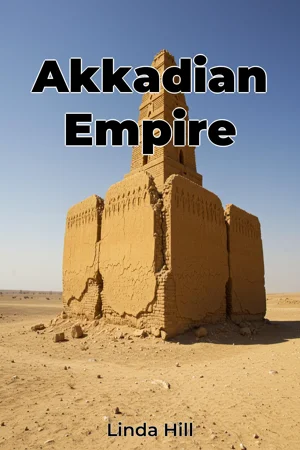
About This Book
What led to the world's first empire rising to prominence and what were the seeds of its ultimate demise? This book, "Akkadian Empire," delves into the fascinating history of the Akkadian Empire, exploring its rapid ascent, its profound impact on Mesopotamian society, and the factors contributing to its eventual collapse. Understanding the Akkadian Empire is crucial because it offers invaluable insights into the dynamics of early state formation, imperial administration, and the complex interplay between environmental factors, political stability, and cultural development. This book will explore three main areas: the socio-political environment preceding the Akkadian rise, the Akkadian dynasty and its influence, and finally the factors that culminated in societal collapse. We will begin by examining the fragmented city-state landscape of Mesopotamia prior to Sargon of Akkad and the conditions that allowed for his unprecedented consolidation of power. We will investigate Sargon's military strategies, administrative innovations, and ideological justifications for imperial rule. Furthermore, the book will analyze the empire's cultural contributions, with a focus on the standardization of cuneiform script, the promotion of Akkadian language, and the integration of diverse religious traditions. The central argument of "Akkadian Empire" is that the empire's success was predicated on a delicate balance between centralized control and regional autonomy, a balance that was ultimately disrupted by a combination of internal rebellions, external pressures, and environmental changes. This argument is important because it challenges simplistic narratives of imperial expansion and decline, highlighting the complex and interconnected factors that shape the trajectory of early empires. The book is structured to provide a comprehensive overview of the Akkadian Empire. It begins with an introduction to the broader historical context of Mesopotamia in the third millennium BCE. We subsequently explore the rise of Sargon and the establishment of Akkad as a new imperial capital. A detailed analysis of the Akkadian administration, economy, and culture follows, including its art, literature, and religious practices. The book then examines the reigns of Sargon's successors, focusing on their efforts to maintain control over the vast empire and to address internal and external challenges. Finally, the book investigates the causes of the Akkadian Empire's collapse, considering both environmental factors, such as drought and salinization, and socio-political factors, such as internal rebellions and invasions by neighboring peoples. The analysis presented in this book relies on a wide range of evidence, including cuneiform texts, archaeological excavations, and environmental data. We will draw on royal inscriptions, administrative documents, literary works, and legal codes to reconstruct the history and culture of the Akkadian Empire. Archaeological evidence from sites and surrounding regions shed light on the empire's urban centers, agricultural practices, and patterns of trade and exchange. Interdisciplinary connections enrich the book's argument. Archaeological findings combined with climate reconstruction provides insights into the environmental factors that may have contributed to the empire's decline. Moreover, comparative studies of other early empires, such as the Egyptian Old Kingdom, offer valuable perspectives on the challenges and opportunities of imperial rule. "Akkadian Empire" offers a fresh perspective by integrating environmental history with traditional political and social history. It moves beyond simplistic explanations of imperial collapse, emphasizing the complex interplay of factors that contributed to the Akkadian Empire's demise. Written in a clear and accessible style, this book is intended for students, scholars, and general readers who are interested in ancient history, Mesopotamian civilization, and the study of empires. It provides a comprehensive and up-to-date overview of the Akkadian Empire, incorporating the latest research and offering new insights into its rise and fall. The scope of this book is limited to the Akkadian Empire itself, focusing on its internal dynamics and its interactions with neighboring regions. While it touches on the broader history of Mesopotamia, it does not attempt to provide a comprehensive account of Mesopotamian civilization as a whole. The lessons learned from the Akkadian Empire have real-world applications for understanding contemporary challenges of state-building, resource management, and political instability. By studying the successes and failures of the world's first known empire, we can gain insights into the long-term consequences of political decisions and environmental policies. Additionally, the debates surrounding the relative importance of environmental versus socio-political factors in the empire’s collapse are reviewed offering different perspectives on the matter.
What led to the world's first empire rising to prominence and what were the seeds of its ultimate demise? This book, "Akkadian Empire," delves into the fascinating history of the Akkadian Empire, exploring its rapid ascent, its profound impact on Mesopotamian society, and the factors contributing to its eventual collapse. Understanding the Akkadian Empire is crucial because it offers invaluable insights into the dynamics of early state formation, imperial administration, and the complex interplay between environmental factors, political stability, and cultural development. This book will explore three main areas: the socio-political environment preceding the Akkadian rise, the Akkadian dynasty and its influence, and finally the factors that culminated in societal collapse. We will begin by examining the fragmented city-state landscape of Mesopotamia prior to Sargon of Akkad and the conditions that allowed for his unprecedented consolidation of power. We will investigate Sargon's military strategies, administrative innovations, and ideological justifications for imperial rule. Furthermore, the book will analyze the empire's cultural contributions, with a focus on the standardization of cuneiform script, the promotion of Akkadian language, and the integration of diverse religious traditions. The central argument of "Akkadian Empire" is that the empire's success was predicated on a delicate balance between centralized control and regional autonomy, a balance that was ultimately disrupted by a combination of internal rebellions, external pressures, and environmental changes. This argument is important because it challenges simplistic narratives of imperial expansion and decline, highlighting the complex and interconnected factors that shape the trajectory of early empires. The book is structured to provide a comprehensive overview of the Akkadian Empire. It begins with an introduction to the broader historical context of Mesopotamia in the third millennium BCE. We subsequently explore the rise of Sargon and the establishment of Akkad as a new imperial capital. A detailed analysis of the Akkadian administration, economy, and culture follows, including its art, literature, and religious practices. The book then examines the reigns of Sargon's successors, focusing on their efforts to maintain control over the vast empire and to address internal and external challenges. Finally, the book investigates the causes of the Akkadian Empire's collapse, considering both environmental factors, such as drought and salinization, and socio-political factors, such as internal rebellions and invasions by neighboring peoples. The analysis presented in this book relies on a wide range of evidence, including cuneiform texts, archaeological excavations, and environmental data. We will draw on royal inscriptions, administrative documents, literary works, and legal codes to reconstruct the history and culture of the Akkadian Empire. Archaeological evidence from sites and surrounding regions shed light on the empire's urban centers, agricultural practices, and patterns of trade and exchange. Interdisciplinary connections enrich the book's argument. Archaeological findings combined with climate reconstruction provides insights into the environmental factors that may have contributed to the empire's decline. Moreover, comparative studies of other early empires, such as the Egyptian Old Kingdom, offer valuable perspectives on the challenges and opportunities of imperial rule. "Akkadian Empire" offers a fresh perspective by integrating environmental history with traditional political and social history. It moves beyond simplistic explanations of imperial collapse, emphasizing the complex interplay of factors that contributed to the Akkadian Empire's demise. Written in a clear and accessible style, this book is intended for students, scholars, and general readers who are interested in ancient history, Mesopotamian civilization, and the study of empires. It provides a comprehensive and up-to-date overview of the Akkadian Empire, incorporating the latest research and offering new insights into its rise and fall. The scope of this book is limited to the Akkadian Empire itself, focusing on its internal dynamics and its interactions with neighboring regions. While it touches on the broader history of Mesopotamia, it does not attempt to provide a comprehensive account of Mesopotamian civilization as a whole. The lessons learned from the Akkadian Empire have real-world applications for understanding contemporary challenges of state-building, resource management, and political instability. By studying the successes and failures of the world's first known empire, we can gain insights into the long-term consequences of political decisions and environmental policies. Additionally, the debates surrounding the relative importance of environmental versus socio-political factors in the empire’s collapse are reviewed offering different perspectives on the matter.
"Akkadian Empire" explores the rise and fall of the world's first empire in Mesopotamia, led by Sargon of Akkad. It examines how Sargon consolidated power from fragmented city-states through military strategies and administrative innovations, impacting Mesopotamian society and culture. The book argues that the Akkadian Empire's success hinged on balancing centralized control with regional autonomy, a balance disrupted by internal rebellions, external pressures, and environmental changes. Intriguingly, the empire standardized cuneiform script and integrated diverse religious traditions, showcasing its cultural influence. The book progresses by first examining the pre-Akkadian socio-political landscape, then delving into the Akkadian dynasty and its influence. Finally, it analyzes the factors leading to the empire's collapse. Drawing on cuneiform texts, archaeological finds, and environmental data, the book integrates environmental history with traditional political and social history, offering new insights into the complex interplay of factors that led to the Akkadian Empire's demise. By understanding the dynamics of this early empire, readers can gain valuable insights into state formation, imperial administration, and the consequences of political and environmental decisions.
Book Details
ISBN
9788235265197
Publisher
Publifye AS
Your Licenses
You don't own any licenses for this book
Purchase a license below to unlock this book and download the EPUB.
Purchase License
Select a tier to unlock this book
Need bulk licensing?
Contact us for enterprise agreements.