
About This Book
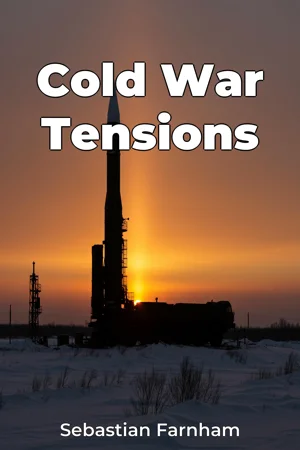
What if the world held its breath for nearly half a century, teetering on the brink of nuclear annihilation? "Cold War Tensions" dissects that precarious era, exploring the complex geopolitical struggles, intricate military strategies, and deeply rooted ideological battles that defined global conflicts from the end of World War II to the fall of the Soviet Union. This book is crucial to understanding the present as the echoes of the Cold War still resonate in today's international relations. This book examines three key areas: the ideological clash between communism and capitalism, the proxy wars that served as battlegrounds for these ideologies, and the ever-present threat of nuclear war. Understanding these topics is vital because they illuminate the roots of current geopolitical tensions and reveal the long-lasting consequences of Cold War policies and conflicts. To fully appreciate the Cold War, it’s necessary to grasp the post-World War II landscape. The devastation left by the war created power vacuums, leading to the emergence of the United States and the Soviet Union as superpowers. This book assumes the reader has a basic understanding of 20th-century history and the key players involved. The central argument of "Cold War Tensions" is that the Cold War was not a monolithic event but a series of interconnected conflicts driven by ideological competition and strategic maneuvering for global dominance. This argument is significant because it challenges simplistic narratives of the era, highlighting the nuances and complexities that shaped international relations. The book begins by introducing the fundamental ideological differences between the United States and the Soviet Union, detailing their respective political and economic systems, then transitions into analysis of proxy wars. Korea, Vietnam, and Afghanistan are examined as critical examples. The culmination of the book involves a comprehensive investigation into the arms race, including the development and deployment of nuclear weapons, the doctrine of Mutually Assured Destruction (MAD), and the various attempts at arms control and disarmament. Finally, the book analyzes the collapse of the Soviet Union and the end of the Cold War, focusing on the factors that contributed to its demise and the implications for the future of international relations. "Cold War Tensions" relies on a diverse range of primary and secondary sources, including declassified government documents, diplomatic cables, military records, and scholarly analyses. It also draws upon the personal accounts of policymakers, military leaders, and ordinary citizens who lived through the Cold War era. This book connects to other fields such as political science through the examination of political systems and ideologies, economics through the study of different economic models and their effects, and sociology through the analysis of the social and cultural impacts of the Cold War. These interdisciplinary connections enrich the book's argument by providing a more comprehensive understanding of the Cold War's multifaceted nature. "Cold War Tensions" offers an innovative perspective by examining the Cold War through a global lens, considering the experiences and perspectives of countries beyond the US and the Soviet Union. This approach allows for a more nuanced and complete understanding of the era's complexities. The book adopts a fact-based, analytical approach, presenting information in a clear and objective manner. The writing style is accessible to a broad audience while maintaining scholarly rigor. The intended audience includes students of history, political science, and international relations, as well as general readers interested in learning more about the Cold War. This book would be valuable to anyone seeking to understand the historical roots of contemporary global challenges. As a work of military and world history, "Cold War Tensions" adheres to the conventions of rigorous research, accurate sourcing, and balanced interpretation. It strives to provide a comprehensive and objective account of the events and issues it examines. The scope of "Cold War Tensions" is focused on the major geopolitical, military, and ideological aspects of the Cold War. It does not delve into every single event or conflict but rather concentrates on the most significant developments and their broader implications. The information in this book can be applied to understanding current international relations, analyzing contemporary conflicts, and developing strategies for promoting peace and cooperation. "Cold War Tensions" addresses ongoing debates about the causes and consequences of the Cold War, including discussions about the role of ideology, the impact of US and Soviet foreign policy, and the effects of nuclear weapons.
What if the world held its breath for nearly half a century, teetering on the brink of nuclear annihilation? "Cold War Tensions" dissects that precarious era, exploring the complex geopolitical struggles, intricate military strategies, and deeply rooted ideological battles that defined global conflicts from the end of World War II to the fall of the Soviet Union. This book is crucial to understanding the present as the echoes of the Cold War still resonate in today's international relations. This book examines three key areas: the ideological clash between communism and capitalism, the proxy wars that served as battlegrounds for these ideologies, and the ever-present threat of nuclear war. Understanding these topics is vital because they illuminate the roots of current geopolitical tensions and reveal the long-lasting consequences of Cold War policies and conflicts. To fully appreciate the Cold War, it’s necessary to grasp the post-World War II landscape. The devastation left by the war created power vacuums, leading to the emergence of the United States and the Soviet Union as superpowers. This book assumes the reader has a basic understanding of 20th-century history and the key players involved. The central argument of "Cold War Tensions" is that the Cold War was not a monolithic event but a series of interconnected conflicts driven by ideological competition and strategic maneuvering for global dominance. This argument is significant because it challenges simplistic narratives of the era, highlighting the nuances and complexities that shaped international relations. The book begins by introducing the fundamental ideological differences between the United States and the Soviet Union, detailing their respective political and economic systems, then transitions into analysis of proxy wars. Korea, Vietnam, and Afghanistan are examined as critical examples. The culmination of the book involves a comprehensive investigation into the arms race, including the development and deployment of nuclear weapons, the doctrine of Mutually Assured Destruction (MAD), and the various attempts at arms control and disarmament. Finally, the book analyzes the collapse of the Soviet Union and the end of the Cold War, focusing on the factors that contributed to its demise and the implications for the future of international relations. "Cold War Tensions" relies on a diverse range of primary and secondary sources, including declassified government documents, diplomatic cables, military records, and scholarly analyses. It also draws upon the personal accounts of policymakers, military leaders, and ordinary citizens who lived through the Cold War era. This book connects to other fields such as political science through the examination of political systems and ideologies, economics through the study of different economic models and their effects, and sociology through the analysis of the social and cultural impacts of the Cold War. These interdisciplinary connections enrich the book's argument by providing a more comprehensive understanding of the Cold War's multifaceted nature. "Cold War Tensions" offers an innovative perspective by examining the Cold War through a global lens, considering the experiences and perspectives of countries beyond the US and the Soviet Union. This approach allows for a more nuanced and complete understanding of the era's complexities. The book adopts a fact-based, analytical approach, presenting information in a clear and objective manner. The writing style is accessible to a broad audience while maintaining scholarly rigor. The intended audience includes students of history, political science, and international relations, as well as general readers interested in learning more about the Cold War. This book would be valuable to anyone seeking to understand the historical roots of contemporary global challenges. As a work of military and world history, "Cold War Tensions" adheres to the conventions of rigorous research, accurate sourcing, and balanced interpretation. It strives to provide a comprehensive and objective account of the events and issues it examines. The scope of "Cold War Tensions" is focused on the major geopolitical, military, and ideological aspects of the Cold War. It does not delve into every single event or conflict but rather concentrates on the most significant developments and their broader implications. The information in this book can be applied to understanding current international relations, analyzing contemporary conflicts, and developing strategies for promoting peace and cooperation. "Cold War Tensions" addresses ongoing debates about the causes and consequences of the Cold War, including discussions about the role of ideology, the impact of US and Soviet foreign policy, and the effects of nuclear weapons.
"Cold War Tensions" explores the nearly half-century-long standoff between the United States and the Soviet Union, an era defined by ideological clash, proxy wars, and the looming threat of nuclear war. This book provides a crucial understanding of how these historical tensions continue to shape today's international relations. One intriguing insight is the book's focus on proxy wars, such as those in Korea, Vietnam, and Afghanistan, showcasing how these conflicts became battlegrounds for the competing ideologies of communism and capitalism. Another is the detailed examination of the arms race, highlighting the precarious doctrine of Mutually Assured Destruction (MAD). This book uniquely approaches the Cold War by examining it through a global lens, considering the perspectives of countries beyond just the US and the Soviet Union. Its fact-based, analytical approach presents information in a clear and objective manner, making it accessible to a broad audience. The book begins by outlining the ideological differences between the two superpowers, then moves into analyzing proxy wars, and culminates with a comprehensive investigation into the arms race, before analyzing the collapse of the Soviet Union.
Book Details
ISBN
9788235265166
Publisher
Publifye AS
Your Licenses
You don't own any licenses for this book
Purchase a license below to unlock this book and download the EPUB.
Purchase License
Select a tier to unlock this book
Need bulk licensing?
Contact us for enterprise agreements.