
About This Book
How will advancements in materials science and manufacturing revolutionize the aircraft of tomorrow? "Future Aviation Designs" explores the confluence of cutting-edge technologies poised to redefine air travel, focusing primarily on the transformative potential of nanotechnology and 3D printing. These advancements are not merely incremental improvements; they represent a fundamental shift in how aircraft are conceived, constructed, and operated, promising increased efficiency, enhanced performance, and reduced environmental impact. This book delves into the core principles driving innovation in aviation design. Nanotechnology, particularly the development of advanced composite materials with exceptional strength-to-weight ratios, stands as a cornerstone. Equally significant is the rise of additive manufacturing, or 3D printing, which enables the creation of complex geometries and customized components previously unattainable with traditional manufacturing methods. Understanding these technologies and their synergistic effects is crucial for anyone seeking to grasp the future trajectory of aviation. Before examining these modern innovations, we first establish a historical context. The evolution of aircraft design, from the Wright brothers' first flight to the sophisticated jets of today, provides a foundation for appreciating the magnitude of the current technological leap. We also cover essential background information on materials science and manufacturing processes, ensuring that readers from diverse backgrounds can follow the technical discussions. The central argument of "Future Aviation Designs" is that nanotechnology and 3D printing are not isolated advancements but rather interconnected forces driving a paradigm shift in the aviation industry. This shift will lead to aircraft that are lighter, stronger, more fuel-efficient, and more environmentally friendly. The book further posits that the integration of these technologies will foster a new era of personalized and optimized aircraft designs tailored to specific mission requirements. The book unfolds in a structured manner. Initially, it introduces the fundamental concepts of nanotechnology and 3D printing, emphasizing their relevance to aviation. Subsequent chapters explore specific applications, such as the use of carbon nanotubes in aircraft structures, the 3D printing of engine components, and the development of self-healing materials. Later chapters examine the implications of these technologies for aircraft performance, fuel efficiency, and environmental sustainability. The final section will focus on challenges that could impede adoption of the new technologies, such as regulatory hurdles and safety concerns. The arguments presented are supported by a wide array of evidence, including research papers, experimental data, and case studies of ongoing projects in the aviation industry. We draw upon data from NASA, the FAA, and leading aerospace companies, alongside academic research from universities worldwide. The book incorporates newly released research and patents to illustrate the latest advancements and their potential impact. "Future Aviation Designs" sits at the intersection of materials science, engineering, and environmental studies. The development of sustainable aviation technologies is critical for mitigating the environmental impact of air travel, aligning the book with broader discussions on climate change and sustainable development. Furthermore, the economic implications of these technological advancements connect the book to the field of economics, particularly in the area of innovation and technological change. This book offers a novel synthesis of information, presenting a holistic view of how nanotechnology and 3D printing will converge to reshape aviation. It provides a balanced analysis of the opportunities with potential challenges, offering a realistic assessment of the future. Written in an accessible yet informative style, "Future Aviation Designs" is designed for a broad audience, including engineers, scientists, students, policymakers, and anyone with an interest in the future of aviation. It serves as a valuable resource for those seeking to understand the technological forces driving innovation in this critical industry. The book's scope is intentionally broad, covering a wide spectrum of applications of nanotechnology and 3D printing in aviation design. However, it does not delve into highly specialized areas, such as avionics or air traffic management, focusing instead on the core aspects of aircraft design and manufacturing. The principles discussed can inform decision-making in the aerospace industry, guide research and development efforts, and inspire new approaches to aircraft design. Moreover, given the drive for increased efficiency, reduced emissions, and decreased fuel consumption, nanotechnology and 3D printing are a few tools that industry experts can use to achieve these goals. While the potential benefits of nanotechnology and 3D printing are significant, their implementation is not without challenges. The book addresses concerns about the safety and reliability of these technologies, as well as the regulatory hurdles that need to be overcome to ensure their widespread adoption. These debates are explored with viewpoints from various experts and agencies.
How will advancements in materials science and manufacturing revolutionize the aircraft of tomorrow? "Future Aviation Designs" explores the confluence of cutting-edge technologies poised to redefine air travel, focusing primarily on the transformative potential of nanotechnology and 3D printing. These advancements are not merely incremental improvements; they represent a fundamental shift in how aircraft are conceived, constructed, and operated, promising increased efficiency, enhanced performance, and reduced environmental impact. This book delves into the core principles driving innovation in aviation design. Nanotechnology, particularly the development of advanced composite materials with exceptional strength-to-weight ratios, stands as a cornerstone. Equally significant is the rise of additive manufacturing, or 3D printing, which enables the creation of complex geometries and customized components previously unattainable with traditional manufacturing methods. Understanding these technologies and their synergistic effects is crucial for anyone seeking to grasp the future trajectory of aviation. Before examining these modern innovations, we first establish a historical context. The evolution of aircraft design, from the Wright brothers' first flight to the sophisticated jets of today, provides a foundation for appreciating the magnitude of the current technological leap. We also cover essential background information on materials science and manufacturing processes, ensuring that readers from diverse backgrounds can follow the technical discussions. The central argument of "Future Aviation Designs" is that nanotechnology and 3D printing are not isolated advancements but rather interconnected forces driving a paradigm shift in the aviation industry. This shift will lead to aircraft that are lighter, stronger, more fuel-efficient, and more environmentally friendly. The book further posits that the integration of these technologies will foster a new era of personalized and optimized aircraft designs tailored to specific mission requirements. The book unfolds in a structured manner. Initially, it introduces the fundamental concepts of nanotechnology and 3D printing, emphasizing their relevance to aviation. Subsequent chapters explore specific applications, such as the use of carbon nanotubes in aircraft structures, the 3D printing of engine components, and the development of self-healing materials. Later chapters examine the implications of these technologies for aircraft performance, fuel efficiency, and environmental sustainability. The final section will focus on challenges that could impede adoption of the new technologies, such as regulatory hurdles and safety concerns. The arguments presented are supported by a wide array of evidence, including research papers, experimental data, and case studies of ongoing projects in the aviation industry. We draw upon data from NASA, the FAA, and leading aerospace companies, alongside academic research from universities worldwide. The book incorporates newly released research and patents to illustrate the latest advancements and their potential impact. "Future Aviation Designs" sits at the intersection of materials science, engineering, and environmental studies. The development of sustainable aviation technologies is critical for mitigating the environmental impact of air travel, aligning the book with broader discussions on climate change and sustainable development. Furthermore, the economic implications of these technological advancements connect the book to the field of economics, particularly in the area of innovation and technological change. This book offers a novel synthesis of information, presenting a holistic view of how nanotechnology and 3D printing will converge to reshape aviation. It provides a balanced analysis of the opportunities with potential challenges, offering a realistic assessment of the future. Written in an accessible yet informative style, "Future Aviation Designs" is designed for a broad audience, including engineers, scientists, students, policymakers, and anyone with an interest in the future of aviation. It serves as a valuable resource for those seeking to understand the technological forces driving innovation in this critical industry. The book's scope is intentionally broad, covering a wide spectrum of applications of nanotechnology and 3D printing in aviation design. However, it does not delve into highly specialized areas, such as avionics or air traffic management, focusing instead on the core aspects of aircraft design and manufacturing. The principles discussed can inform decision-making in the aerospace industry, guide research and development efforts, and inspire new approaches to aircraft design. Moreover, given the drive for increased efficiency, reduced emissions, and decreased fuel consumption, nanotechnology and 3D printing are a few tools that industry experts can use to achieve these goals. While the potential benefits of nanotechnology and 3D printing are significant, their implementation is not without challenges. The book addresses concerns about the safety and reliability of these technologies, as well as the regulatory hurdles that need to be overcome to ensure their widespread adoption. These debates are explored with viewpoints from various experts and agencies.
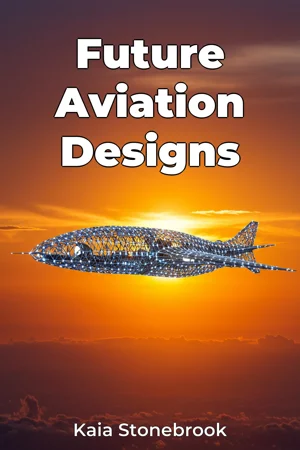
"Future Aviation Designs" explores how nanotechnology and 3D printing are poised to revolutionize aircraft design and air travel. It examines how these technologies promise to deliver lighter, stronger, and more fuel-efficient aircraft. One intriguing insight is the potential of carbon nanotubes to create composite materials with unprecedented strength-to-weight ratios, significantly improving aircraft performance. Another is how 3D printing allows for the creation of complex, customized components, streamlining manufacturing. The book begins by establishing a historical context of aviation and progresses into the core principles of nanotechnology and 3D printing, highlighting their relevance to aerospace engineering and materials science. It illustrates specific applications, such as self-healing materials, and delves into the implications for fuel efficiency and environmental sustainability. The book's value lies in offering a holistic view of how these advancements converge to reshape the aviation industry, presenting both opportunities and potential challenges in additive manufacturing and sustainable aviation.
Book Details
ISBN
9788235265135
Publisher
Publifye AS
Your Licenses
You don't own any licenses for this book
Purchase a license below to unlock this book and download the EPUB.
Purchase License
Select a tier to unlock this book
Need bulk licensing?
Contact us for enterprise agreements.