
About This Book
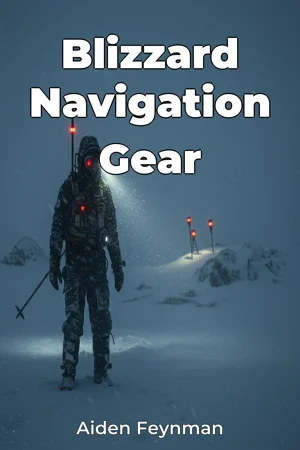
Have you ever wondered how researchers, rescue teams, and even recreational adventurers navigate the blinding whiteout conditions of extreme snowstorms? "Blizzard Navigation Gear" delves into the sophisticated technologies and techniques that make directional movement possible in the face of nature's most challenging blizzards. This book explores the critical intersection of technology, earth sciences, and geography, providing a comprehensive understanding of how humans overcome the navigational hazards posed by these severe weather events. The core of this investigation centers on three main elements: thermal beacon technology, layered GPS systems, and advanced protective gear, specifically moisture-sealed suits. We examine how each independently contributes to successful navigation and how their combined application creates a robust system for maintaining direction and safety. Each of these technologies represents a pivotal advancement in our ability to venture and operate in blizzard conditions. Understanding blizzard navigation requires a baseline knowledge of meteorology, particularly the dynamics of snowstorms, visibility reduction, and wind patterns. A brief primer on these concepts is included to ensure accessibility for all readers. Relevant historical context is also provided, examining early attempts at blizzard navigation and the evolution of the technologies discussed. The central argument of "Blizzard Navigation Gear" is that effective navigation in extreme snowstorms relies on the synergistic application of advanced technologies and informed geographical awareness. This book demonstrates that technology alone is insufficient; a comprehensive understanding of the environment and the limitations of the equipment is essential for safe and effective directional movement. The book is structured to provide a logical progression of knowledge. It opens with an introduction to the challenges of blizzard navigation, outlining historical incidents and the limitations of earlier methods. The subsequent sections delve into each core technology. Thermal beacons are examined in terms of their signal propagation in snow, optimal placement strategies, and limitations related to terrain and atmospheric conditions. A chapter dedicated to layered GPS systems highlights the integration of multiple GPS data sources, the use of differential correction, and the role of inertial measurement units (IMUs) in maintaining accuracy when GPS signals are weak or lost. The book further analyzes the importance of moisture-sealed suits, focusing on their role in maintaining body temperature and preventing hypothermia, a critical factor in navigational success and survival. A final section integrates all the technologies into real-world scenarios, exploring the practical applications, challenges, and implications of these advancements. Evidence and research are drawn from field studies conducted in various blizzard-prone regions, including experimental data on thermal signal propagation in different snow densities, GPS accuracy assessments under varying atmospheric conditions, and physiological studies on the effects of cold and moisture on the human body. Data from national weather services and governmental research agencies are also incorporated. "Blizzard Navigation Gear" connects to several other fields. Material science is essential to the development of advanced protective suits. Electrical engineering plays a crucial role in the design and optimization of thermal beacons and GPS receivers. Human physiology and psychology explain the cognitive and physical challenges faced by individuals navigating in blizzard conditions, highlighting the importance of proper training and preparation. A unique aspect of this book is its detailed analysis of the practical limitations of each technology. Rather than presenting an idealized view, the book acknowledges the challenges posed by terrain, atmospheric conditions, and equipment malfunctions, providing practical guidance on how to mitigate these risks. "Blizzard Navigation Gear" adopts a professional yet accessible tone, presenting complex technical information in a clear and concise manner. The target audience includes earth scientists, meteorologists, search and rescue professionals, winter sports enthusiasts, and anyone interested in the intersection of technology and environmental challenges. This book holds value for those seeking a deeper understanding of the tools and techniques used to navigate extreme weather conditions. As a work of non-fiction, "Blizzard Navigation Gear" prioritizes accuracy, objectivity, and a rigorous presentation of evidence. While covering a wide range of technologies, the scope is intentionally limited to directional movement during snowstorms. This book does not address avalanche safety, emergency shelter construction, or other related survival skills in depth. The knowledge presented here has many real-world applications. Search and rescue teams can use this information to improve their operational effectiveness. Researchers can apply these techniques to conduct experiments in remote and challenging environments. And individual explorers can use what they learn to enhance their safety and situational awareness. While ongoing debates exist regarding the ethical implications of venturing into extreme environments and the potential impact on fragile ecosystems, the book focuses on the technical and practical aspects of navigation as the fundamental area of study.
Have you ever wondered how researchers, rescue teams, and even recreational adventurers navigate the blinding whiteout conditions of extreme snowstorms? "Blizzard Navigation Gear" delves into the sophisticated technologies and techniques that make directional movement possible in the face of nature's most challenging blizzards. This book explores the critical intersection of technology, earth sciences, and geography, providing a comprehensive understanding of how humans overcome the navigational hazards posed by these severe weather events. The core of this investigation centers on three main elements: thermal beacon technology, layered GPS systems, and advanced protective gear, specifically moisture-sealed suits. We examine how each independently contributes to successful navigation and how their combined application creates a robust system for maintaining direction and safety. Each of these technologies represents a pivotal advancement in our ability to venture and operate in blizzard conditions. Understanding blizzard navigation requires a baseline knowledge of meteorology, particularly the dynamics of snowstorms, visibility reduction, and wind patterns. A brief primer on these concepts is included to ensure accessibility for all readers. Relevant historical context is also provided, examining early attempts at blizzard navigation and the evolution of the technologies discussed. The central argument of "Blizzard Navigation Gear" is that effective navigation in extreme snowstorms relies on the synergistic application of advanced technologies and informed geographical awareness. This book demonstrates that technology alone is insufficient; a comprehensive understanding of the environment and the limitations of the equipment is essential for safe and effective directional movement. The book is structured to provide a logical progression of knowledge. It opens with an introduction to the challenges of blizzard navigation, outlining historical incidents and the limitations of earlier methods. The subsequent sections delve into each core technology. Thermal beacons are examined in terms of their signal propagation in snow, optimal placement strategies, and limitations related to terrain and atmospheric conditions. A chapter dedicated to layered GPS systems highlights the integration of multiple GPS data sources, the use of differential correction, and the role of inertial measurement units (IMUs) in maintaining accuracy when GPS signals are weak or lost. The book further analyzes the importance of moisture-sealed suits, focusing on their role in maintaining body temperature and preventing hypothermia, a critical factor in navigational success and survival. A final section integrates all the technologies into real-world scenarios, exploring the practical applications, challenges, and implications of these advancements. Evidence and research are drawn from field studies conducted in various blizzard-prone regions, including experimental data on thermal signal propagation in different snow densities, GPS accuracy assessments under varying atmospheric conditions, and physiological studies on the effects of cold and moisture on the human body. Data from national weather services and governmental research agencies are also incorporated. "Blizzard Navigation Gear" connects to several other fields. Material science is essential to the development of advanced protective suits. Electrical engineering plays a crucial role in the design and optimization of thermal beacons and GPS receivers. Human physiology and psychology explain the cognitive and physical challenges faced by individuals navigating in blizzard conditions, highlighting the importance of proper training and preparation. A unique aspect of this book is its detailed analysis of the practical limitations of each technology. Rather than presenting an idealized view, the book acknowledges the challenges posed by terrain, atmospheric conditions, and equipment malfunctions, providing practical guidance on how to mitigate these risks. "Blizzard Navigation Gear" adopts a professional yet accessible tone, presenting complex technical information in a clear and concise manner. The target audience includes earth scientists, meteorologists, search and rescue professionals, winter sports enthusiasts, and anyone interested in the intersection of technology and environmental challenges. This book holds value for those seeking a deeper understanding of the tools and techniques used to navigate extreme weather conditions. As a work of non-fiction, "Blizzard Navigation Gear" prioritizes accuracy, objectivity, and a rigorous presentation of evidence. While covering a wide range of technologies, the scope is intentionally limited to directional movement during snowstorms. This book does not address avalanche safety, emergency shelter construction, or other related survival skills in depth. The knowledge presented here has many real-world applications. Search and rescue teams can use this information to improve their operational effectiveness. Researchers can apply these techniques to conduct experiments in remote and challenging environments. And individual explorers can use what they learn to enhance their safety and situational awareness. While ongoing debates exist regarding the ethical implications of venturing into extreme environments and the potential impact on fragile ecosystems, the book focuses on the technical and practical aspects of navigation as the fundamental area of study.
"Blizzard Navigation Gear" explores how technology enables navigation during extreme snowstorms, focusing on the integration of earth sciences and geography. It reveals how critical tools like thermal beacons, layered GPS systems, and moisture-sealed suits work together to overcome the challenges of whiteout conditions. Did you know that thermal beacons can guide the way even when visibility is near zero, or that layered GPS leverages multiple data sources to maintain accuracy when signals falter? The book uniquely emphasizes the limitations of each technology, balancing idealized views with practical challenges posed by terrain and atmospheric conditions. By examining historical attempts and cutting-edge advancements, "Blizzard Navigation Gear" presents a comprehensive understanding of directional movement in blizzards. Beginning with an overview of blizzard navigation challenges, the book progresses to detailed examinations of each core technology, including signal propagation of thermal beacons and the integration of GPS data sources. It concludes by integrating these technologies into real-world scenarios, offering valuable insights for earth scientists, meteorologists, and winter sports enthusiasts alike.
Book Details
ISBN
9788235265111
Publisher
Publifye AS
Your Licenses
You don't own any licenses for this book
Purchase a license below to unlock this book and download the EPUB.
Purchase License
Select a tier to unlock this book
Need bulk licensing?
Contact us for enterprise agreements.