
About This Book
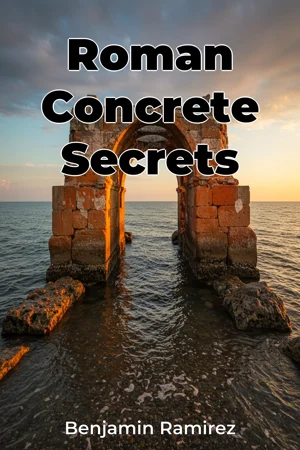
Why does Roman concrete, some of which is over two thousand years old, continue to stand strong while modern concrete crumbles within decades? This book, "Roman Concrete Secrets," delves into the enduring mystery of this ancient material, exploring its composition, construction techniques, and the reasons behind its remarkable longevity. We will uncover not only the "what" of Roman concrete but also the "why" and "how," ultimately demonstrating its relevance to contemporary construction challenges. This investigation is essential because the degradation of modern concrete infrastructure represents a significant global problem, costing billions in repairs and replacements annually. Understanding the properties that made Roman concrete so resilient offers the potential to revolutionize modern concrete production, leading to more sustainable and durable structures. Our journey will begin by establishing a historical context, detailing the rise of Roman concrete and its role in shaping the Roman Empire's architectural achievements, from aqueducts and bridges to the Pantheon and Colosseum. We will discuss the social and economic factors that drove the development and widespread adoption of this innovative building material. No specialized knowledge is needed to follow along, as we clearly define all key concepts and terminology. The central thesis of this book is that the unique combination of specific ingredients, meticulous mixing techniques, and the self-healing properties inherent in Roman concrete's composition account for its unparalleled durability. This book argues that by understanding and replicating these key aspects, we can create more sustainable and longer-lasting concrete for modern infrastructure. The book is structured to guide the reader through a logical exploration of Roman concrete. First, we will introduce the fundamental components of Roman concrete, including pozzolanic ash, lime, aggregate, and seawater, contrasting them with ingredients used in modern Portland cement concrete. Second, we will dissect the mixing and construction techniques used by Roman engineers, drawing on archaeological evidence and experimental studies to understand the critical role of each step. This section will emphasize the unique chemical reactions that occur within Roman concrete over time, leading to its self-healing capabilities. Third, we will rigorously analyze the specific properties of Roman concrete that contribute to its resistance to cracking and degradation, particularly in marine environments. This will involve examining the mineralogical composition, microstructure, and long-term performance data of existing Roman concrete structures. Finally, we will explore the practical applications of this knowledge in modern concrete production, considering the challenges and opportunities associated with adopting Roman techniques in a contemporary context. The evidence presented will be drawn from a variety of sources, including archaeological excavations, scientific analyses of Roman concrete samples, historical texts, and modern experimental studies simulating Roman concrete production. We will present unique data obtained from analyses of core samples extracted from well-preserved Roman structures, alongside comparisons with laboratory-produced samples. This book connects to several other fields, including materials science, archaeology, and environmental engineering. Materials science informs our understanding of the chemical reactions within the concrete. Archaeology provides the historical context and physical evidence. Environmental engineering benefits from the development of more sustainable construction materials. A unique aspect of this book is its focus on the self-healing properties of Roman concrete, a phenomenon only recently understood. We offer a novel perspective by integrating material science with historical construction practices to explain this remarkable feature. The tone remains professional and academic, while remaining accessible to a wide audience. The intended audience includes architects, engineers, archaeologists, historians, and anyone interested in sustainable construction and the history of technology. This book would be valuable to them because it offers a comprehensive and practical understanding of Roman concrete, potentially leading to innovative solutions for modern infrastructure challenges. As a work in the fields of Architecture and History, this book adheres to the conventions of rigorous research, evidence-based analysis, and clear, concise writing. The scope of the book is limited to the study of Roman seawater concrete, with a focus on its material composition, construction techniques, and durability. While other aspects of Roman engineering are mentioned, they are discussed only in the context of understanding Roman concrete. The information presented can be applied practically in the development of new concrete formulations that incorporate pozzolanic materials and potentially replicate the self-healing properties of Roman concrete. This could lead to more durable and sustainable infrastructure, reducing the need for frequent repairs and replacements. The book addresses ongoing debates within the field regarding the precise mechanisms behind the self-healing properties of Roman concrete and the feasibility of replicating Roman techniques on a large scale.
Why does Roman concrete, some of which is over two thousand years old, continue to stand strong while modern concrete crumbles within decades? This book, "Roman Concrete Secrets," delves into the enduring mystery of this ancient material, exploring its composition, construction techniques, and the reasons behind its remarkable longevity. We will uncover not only the "what" of Roman concrete but also the "why" and "how," ultimately demonstrating its relevance to contemporary construction challenges. This investigation is essential because the degradation of modern concrete infrastructure represents a significant global problem, costing billions in repairs and replacements annually. Understanding the properties that made Roman concrete so resilient offers the potential to revolutionize modern concrete production, leading to more sustainable and durable structures. Our journey will begin by establishing a historical context, detailing the rise of Roman concrete and its role in shaping the Roman Empire's architectural achievements, from aqueducts and bridges to the Pantheon and Colosseum. We will discuss the social and economic factors that drove the development and widespread adoption of this innovative building material. No specialized knowledge is needed to follow along, as we clearly define all key concepts and terminology. The central thesis of this book is that the unique combination of specific ingredients, meticulous mixing techniques, and the self-healing properties inherent in Roman concrete's composition account for its unparalleled durability. This book argues that by understanding and replicating these key aspects, we can create more sustainable and longer-lasting concrete for modern infrastructure. The book is structured to guide the reader through a logical exploration of Roman concrete. First, we will introduce the fundamental components of Roman concrete, including pozzolanic ash, lime, aggregate, and seawater, contrasting them with ingredients used in modern Portland cement concrete. Second, we will dissect the mixing and construction techniques used by Roman engineers, drawing on archaeological evidence and experimental studies to understand the critical role of each step. This section will emphasize the unique chemical reactions that occur within Roman concrete over time, leading to its self-healing capabilities. Third, we will rigorously analyze the specific properties of Roman concrete that contribute to its resistance to cracking and degradation, particularly in marine environments. This will involve examining the mineralogical composition, microstructure, and long-term performance data of existing Roman concrete structures. Finally, we will explore the practical applications of this knowledge in modern concrete production, considering the challenges and opportunities associated with adopting Roman techniques in a contemporary context. The evidence presented will be drawn from a variety of sources, including archaeological excavations, scientific analyses of Roman concrete samples, historical texts, and modern experimental studies simulating Roman concrete production. We will present unique data obtained from analyses of core samples extracted from well-preserved Roman structures, alongside comparisons with laboratory-produced samples. This book connects to several other fields, including materials science, archaeology, and environmental engineering. Materials science informs our understanding of the chemical reactions within the concrete. Archaeology provides the historical context and physical evidence. Environmental engineering benefits from the development of more sustainable construction materials. A unique aspect of this book is its focus on the self-healing properties of Roman concrete, a phenomenon only recently understood. We offer a novel perspective by integrating material science with historical construction practices to explain this remarkable feature. The tone remains professional and academic, while remaining accessible to a wide audience. The intended audience includes architects, engineers, archaeologists, historians, and anyone interested in sustainable construction and the history of technology. This book would be valuable to them because it offers a comprehensive and practical understanding of Roman concrete, potentially leading to innovative solutions for modern infrastructure challenges. As a work in the fields of Architecture and History, this book adheres to the conventions of rigorous research, evidence-based analysis, and clear, concise writing. The scope of the book is limited to the study of Roman seawater concrete, with a focus on its material composition, construction techniques, and durability. While other aspects of Roman engineering are mentioned, they are discussed only in the context of understanding Roman concrete. The information presented can be applied practically in the development of new concrete formulations that incorporate pozzolanic materials and potentially replicate the self-healing properties of Roman concrete. This could lead to more durable and sustainable infrastructure, reducing the need for frequent repairs and replacements. The book addresses ongoing debates within the field regarding the precise mechanisms behind the self-healing properties of Roman concrete and the feasibility of replicating Roman techniques on a large scale.
"Roman Concrete Secrets" explores the remarkable durability of ancient Roman concrete, some of which has lasted over two thousand years, contrasting it with the rapid degradation of modern concrete. The book investigates the composition, mixing techniques, and inherent self-healing properties that contributed to this longevity. Understanding these "Roman Concrete Secrets" is crucial, given the significant costs associated with repairing and replacing modern concrete infrastructure. The book begins by establishing a historical context, highlighting Roman concrete's pivotal role in the empire's architectural achievements like aqueducts and the Pantheon. It then dissects the unique combination of ingredients, including pozzolanic ash, lime, and seawater, and the construction processes used by Roman engineers. A key focus is on the chemical reactions that enable the concrete's self-healing capabilities, offering insights into how these properties can be applied to modern sustainable construction. Finally, this exploration progresses by analyzing the material's resistance to cracking and degradation, particularly in marine environments, and considers the practical applications of this knowledge for contemporary concrete production. The book presents evidence from archaeological excavations, scientific analyses, and experimental studies, offering a comprehensive perspective on the enduring legacy of Roman concrete technology.
Book Details
ISBN
9788235265074
Publisher
Publifye AS
Your Licenses
You don't own any licenses for this book
Purchase a license below to unlock this book and download the EPUB.
Purchase License
Select a tier to unlock this book
Need bulk licensing?
Contact us for enterprise agreements.