
About This Book
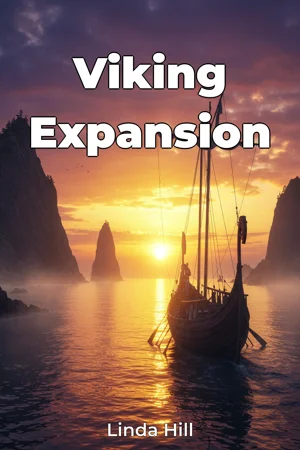
What drove seafaring warriors from the fjords of Scandinavia to raid, trade, and settle across vast swathes of Europe and beyond? "Viking Expansion" meticulously examines this pivotal period in world history, exploring the multifaceted impact of Viking activities on trade networks, military strategies, settlement patterns, and the cultural landscapes of both their homelands and the lands they encountered. The book emphasizes the significance of understanding the Viking Age not as a period of simple raiding and pillaging, but as a complex era of cultural exchange, political maneuvering, and societal transformation. This exploration is vital because the Vikings' influence extends far beyond their reputation as fearsome warriors. Their sophisticated trading systems connected disparate regions, their innovative shipbuilding techniques revolutionized naval warfare, and their settlements left lasting marks on the political and cultural identities of numerous European societies. To fully grasp Europe's development during the medieval period, and to understand the roots of many modern cultural elements, an understanding of the Viking expansion is essential. This book argues that the Viking expansion was driven by a complex interplay of factors, including environmental pressures, technological advancements in shipbuilding and navigation, a decentralized political landscape in Scandinavia that fostered competition and raiding, and expanding trade opportunities that incentivized exploration and settlement. This central argument challenges simplistic narratives that focus solely on Viking aggression, instead presenting a nuanced analysis of the social, economic, and political forces that propelled their expansion. "Viking Expansion" begins by laying the groundwork, introducing Viking society, beliefs, and the technological innovations that enabled their voyages. It then examines the key phases of Viking expansion, dedicating sections to Viking raids and trade along the coasts of England and France, the establishment of settlements in Iceland, Greenland, and North America, and their influence in the eastern regions of Europe, including modern-day Russia and Ukraine. The book analyzes primary sources, including sagas, runic inscriptions, and archaeological finds, to reconstruct Viking society and their interactions with other cultures. It also incorporates recent research in genetics and climate science to provide a comprehensive understanding of the period. The book draws connections to fields such as archaeology, linguistics, and genetics, enriching the historical analysis with interdisciplinary insights. It offers a unique perspective by integrating recent archaeological discoveries and genetic studies, providing a more complete and nuanced understanding of Viking migrations and their interactions with local populations. The tone is fact-based and analytical, intended for readers interested in history, archaeology, and cultural studies. It is designed to appeal to history enthusiasts, students, and anyone seeking a deeper understanding of the Viking Age. It is structured to meet the expectations of the World History genre by providing a well-researched, comprehensive, and balanced account of the Viking expansion, suitable for both academic and general audiences. The book focuses on the geographical spread and cultural impact of the Vikings, specifically excluding detailed analyses of Norse mythology that do not directly pertain to the expansion itself. The book's findings can be applied to understand modern migration patterns, the dynamics of cultural exchange, and the impact of technological innovation on societal development. By exploring the complexities of Viking expansion, "Viking Expansion" offers valuable insights into the forces that shape human history and the enduring legacy of cultural interaction. Ongoing debates exist regarding the precise motivations behind Viking raids and the extent of their cultural influence in certain regions. This book addresses these debates by presenting multiple perspectives and critically evaluating the available evidence.
What drove seafaring warriors from the fjords of Scandinavia to raid, trade, and settle across vast swathes of Europe and beyond? "Viking Expansion" meticulously examines this pivotal period in world history, exploring the multifaceted impact of Viking activities on trade networks, military strategies, settlement patterns, and the cultural landscapes of both their homelands and the lands they encountered. The book emphasizes the significance of understanding the Viking Age not as a period of simple raiding and pillaging, but as a complex era of cultural exchange, political maneuvering, and societal transformation. This exploration is vital because the Vikings' influence extends far beyond their reputation as fearsome warriors. Their sophisticated trading systems connected disparate regions, their innovative shipbuilding techniques revolutionized naval warfare, and their settlements left lasting marks on the political and cultural identities of numerous European societies. To fully grasp Europe's development during the medieval period, and to understand the roots of many modern cultural elements, an understanding of the Viking expansion is essential. This book argues that the Viking expansion was driven by a complex interplay of factors, including environmental pressures, technological advancements in shipbuilding and navigation, a decentralized political landscape in Scandinavia that fostered competition and raiding, and expanding trade opportunities that incentivized exploration and settlement. This central argument challenges simplistic narratives that focus solely on Viking aggression, instead presenting a nuanced analysis of the social, economic, and political forces that propelled their expansion. "Viking Expansion" begins by laying the groundwork, introducing Viking society, beliefs, and the technological innovations that enabled their voyages. It then examines the key phases of Viking expansion, dedicating sections to Viking raids and trade along the coasts of England and France, the establishment of settlements in Iceland, Greenland, and North America, and their influence in the eastern regions of Europe, including modern-day Russia and Ukraine. The book analyzes primary sources, including sagas, runic inscriptions, and archaeological finds, to reconstruct Viking society and their interactions with other cultures. It also incorporates recent research in genetics and climate science to provide a comprehensive understanding of the period. The book draws connections to fields such as archaeology, linguistics, and genetics, enriching the historical analysis with interdisciplinary insights. It offers a unique perspective by integrating recent archaeological discoveries and genetic studies, providing a more complete and nuanced understanding of Viking migrations and their interactions with local populations. The tone is fact-based and analytical, intended for readers interested in history, archaeology, and cultural studies. It is designed to appeal to history enthusiasts, students, and anyone seeking a deeper understanding of the Viking Age. It is structured to meet the expectations of the World History genre by providing a well-researched, comprehensive, and balanced account of the Viking expansion, suitable for both academic and general audiences. The book focuses on the geographical spread and cultural impact of the Vikings, specifically excluding detailed analyses of Norse mythology that do not directly pertain to the expansion itself. The book's findings can be applied to understand modern migration patterns, the dynamics of cultural exchange, and the impact of technological innovation on societal development. By exploring the complexities of Viking expansion, "Viking Expansion" offers valuable insights into the forces that shape human history and the enduring legacy of cultural interaction. Ongoing debates exist regarding the precise motivations behind Viking raids and the extent of their cultural influence in certain regions. This book addresses these debates by presenting multiple perspectives and critically evaluating the available evidence.
"Viking Expansion" explores the Viking Age, focusing on the drivers and impacts of the Norse seafarers' journeys across Europe and beyond. This book argues that Viking expansion was more than just raiding; it was a complex interaction of environmental factors, technological advancements, and socio-political dynamics. Intriguingly, their advanced shipbuilding wasn't just for warfare, but also enabled sophisticated trade networks connecting disparate regions. Also, Viking settlements significantly shaped the cultural and political identities of numerous European societies. The book uniquely integrates archaeological findings, linguistic analysis, and genetic studies to provide a nuanced understanding of Viking migrations and their interactions with local populations. Beginning with an introduction to Viking society and technology, the book progresses through key phases of expansion, from raids on England and France to settlements in Iceland, Greenland, and North America. It also examines Viking influence in Eastern Europe, drawing from sagas, runic inscriptions, and recent research. Ultimately, "Viking Expansion" offers valuable insights into understanding modern migration patterns and the dynamics of cultural exchange. By presenting multiple perspectives and critically evaluating available evidence, the book addresses ongoing debates about Viking motivations and cultural influence, appealing to history enthusiasts and students alike.
Book Details
ISBN
9788235265043
Publisher
Publifye AS
Your Licenses
You don't own any licenses for this book
Purchase a license below to unlock this book and download the EPUB.
Purchase License
Select a tier to unlock this book
Need bulk licensing?
Contact us for enterprise agreements.