
About This Book
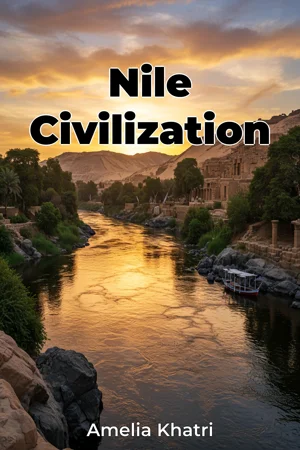
How did a single river give rise to two of Africa's most enduring civilizations? "Nile Civilization" explores the profound and multifaceted impact of the Nile River on the development of ancient Egypt and Nubia, revealing how its waters shaped not only their economies and societies, but also their very worldviews. This book delves into the intricate relationship between the river and the rise of these complex societies, highlighting the Nile's pivotal role in their agriculture, trade networks, monumental architecture, and religious beliefs. We will examine three key areas: the Nile's influence on agricultural practices and food production, its role in facilitating trade and communication, and its connection to the construction of iconic monuments and the development of sophisticated religious ideologies. These topics are paramount to understanding how the Nile valley transformed from a collection of disparate settlements into powerful, centralized states. Understanding these dynamics offers crucial insights into the broader patterns of early state formation and the interplay between environment and human development. This book draws upon a wide array of archaeological evidence, including the analysis of ancient irrigation systems, settlement patterns, and artifacts recovered from both Egyptian and Nubian sites. We will also examine textual sources, such as hieroglyphic inscriptions and papyrus documents, to gain insight into the political, economic, and religious structures of these societies. The synthesis of archaeological and textual data provides a more nuanced understanding of the Nile's influence than either source could offer alone. The central argument of "Nile Civilization" is that the Nile River was not merely a resource, but a dynamic force that actively shaped the socio-political and ideological landscapes of ancient Egypt and Nubia. Its predictable flooding cycles and fertile silt deposits enabled intensive agriculture, which in turn supported dense populations and complex social hierarchies. The river also served as a vital artery for trade and communication, connecting disparate regions and fostering cultural exchange. Ultimately, the Nile became deeply embedded in the religious and symbolic systems of both civilizations, viewed as a source of life, renewal, and divine power. The book begins by providing an introduction to the geography and hydrology of the Nile River, highlighting its unique characteristics and the challenges it presented to early inhabitants. It then explores the development of agricultural techniques, such as irrigation and flood control, that allowed Egyptians and Nubians to harness the river's potential. Subsequent chapters examine the growth of trade networks along the Nile, the construction of monumental architecture, such as pyramids and temples, and the evolution of religious beliefs centered on the river and its associated deities. The book culminates by comparing and contrasting the distinct ways in which the Nile influenced the trajectories of Egyptian and Nubian civilizations, exploring the reasons for their similarities and differences. "Nile Civilization" connects to a variety of related fields, including archaeology, environmental history, and comparative civilizations. By integrating insights from these disciplines, the book offers a more holistic perspective on the Nile's transformative impact. This book is intended for students, researchers, and general readers interested in ancient history, African studies, and the role of environment in shaping human societies. It offers a fresh perspective on two of the world's oldest civilizations, providing a comprehensive and accessible account of their enduring legacy. While the book focuses primarily on the period from the predynastic era to the decline of the Nubian kingdoms, it also touches upon the lasting impact of the Nile on the region's modern history. The writing style is clear and engaging, aiming to convey complex information in an accessible manner. I have tried to avoid technical jargon whenever possible, and provide definitions for key terms to ensure that readers from diverse backgrounds can easily follow the argument. This study acknowledges the ongoing debates surrounding the interpretation of archaeological evidence and the reconstruction of ancient societies, and presents different perspectives fairly and objectively. The real-world applications of this study are broad, and the study of past civilizations offers valuable lessons for addressing contemporary challenges related to water management, resource allocation, and sustainable development.
How did a single river give rise to two of Africa's most enduring civilizations? "Nile Civilization" explores the profound and multifaceted impact of the Nile River on the development of ancient Egypt and Nubia, revealing how its waters shaped not only their economies and societies, but also their very worldviews. This book delves into the intricate relationship between the river and the rise of these complex societies, highlighting the Nile's pivotal role in their agriculture, trade networks, monumental architecture, and religious beliefs. We will examine three key areas: the Nile's influence on agricultural practices and food production, its role in facilitating trade and communication, and its connection to the construction of iconic monuments and the development of sophisticated religious ideologies. These topics are paramount to understanding how the Nile valley transformed from a collection of disparate settlements into powerful, centralized states. Understanding these dynamics offers crucial insights into the broader patterns of early state formation and the interplay between environment and human development. This book draws upon a wide array of archaeological evidence, including the analysis of ancient irrigation systems, settlement patterns, and artifacts recovered from both Egyptian and Nubian sites. We will also examine textual sources, such as hieroglyphic inscriptions and papyrus documents, to gain insight into the political, economic, and religious structures of these societies. The synthesis of archaeological and textual data provides a more nuanced understanding of the Nile's influence than either source could offer alone. The central argument of "Nile Civilization" is that the Nile River was not merely a resource, but a dynamic force that actively shaped the socio-political and ideological landscapes of ancient Egypt and Nubia. Its predictable flooding cycles and fertile silt deposits enabled intensive agriculture, which in turn supported dense populations and complex social hierarchies. The river also served as a vital artery for trade and communication, connecting disparate regions and fostering cultural exchange. Ultimately, the Nile became deeply embedded in the religious and symbolic systems of both civilizations, viewed as a source of life, renewal, and divine power. The book begins by providing an introduction to the geography and hydrology of the Nile River, highlighting its unique characteristics and the challenges it presented to early inhabitants. It then explores the development of agricultural techniques, such as irrigation and flood control, that allowed Egyptians and Nubians to harness the river's potential. Subsequent chapters examine the growth of trade networks along the Nile, the construction of monumental architecture, such as pyramids and temples, and the evolution of religious beliefs centered on the river and its associated deities. The book culminates by comparing and contrasting the distinct ways in which the Nile influenced the trajectories of Egyptian and Nubian civilizations, exploring the reasons for their similarities and differences. "Nile Civilization" connects to a variety of related fields, including archaeology, environmental history, and comparative civilizations. By integrating insights from these disciplines, the book offers a more holistic perspective on the Nile's transformative impact. This book is intended for students, researchers, and general readers interested in ancient history, African studies, and the role of environment in shaping human societies. It offers a fresh perspective on two of the world's oldest civilizations, providing a comprehensive and accessible account of their enduring legacy. While the book focuses primarily on the period from the predynastic era to the decline of the Nubian kingdoms, it also touches upon the lasting impact of the Nile on the region's modern history. The writing style is clear and engaging, aiming to convey complex information in an accessible manner. I have tried to avoid technical jargon whenever possible, and provide definitions for key terms to ensure that readers from diverse backgrounds can easily follow the argument. This study acknowledges the ongoing debates surrounding the interpretation of archaeological evidence and the reconstruction of ancient societies, and presents different perspectives fairly and objectively. The real-world applications of this study are broad, and the study of past civilizations offers valuable lessons for addressing contemporary challenges related to water management, resource allocation, and sustainable development.
"Nile Civilization" explores the significant role the Nile River played in shaping ancient Egypt and Nubia. It examines how the river influenced crucial aspects of these societies, including agriculture and trade. The book highlights how predictable flooding enabled intensive agriculture, supporting dense populations, and how the Nile served as a vital trade route, connecting regions and fostering cultural exchange. Understanding the dynamics between the river and these civilizations offers insights into early state formation and the relationship between environment and human development. The book delves into the construction of monumental architecture, like pyramids and temples, and the development of religious beliefs centered on the river. It uses archaeological evidence, such as ancient irrigation systems and artifacts, alongside textual sources like hieroglyphic inscriptions, to provide a comprehensive understanding. The book progresses by first introducing the Nile's geography, then exploring agricultural techniques, trade networks, monumental construction, and religious evolution.
Book Details
ISBN
9788235264947
Publisher
Publifye AS
Your Licenses
You don't own any licenses for this book
Purchase a license below to unlock this book and download the EPUB.
Purchase License
Select a tier to unlock this book
Need bulk licensing?
Contact us for enterprise agreements.