
About This Book
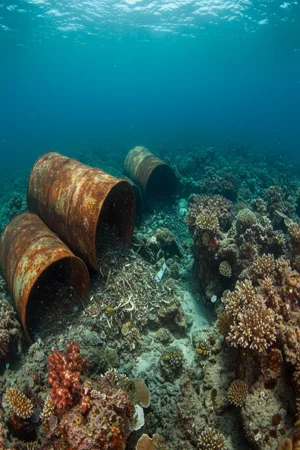
What unseen consequences lurk beneath the ocean's surface, the result of decades of waste disposal practices? "Ocean Dumping Rules" delves into the complex legal landscape governing the intentional disposal of materials at sea, providing a comprehensive examination of a practice with far-reaching environmental and political implications. Understanding the regulations surrounding ocean dumping is crucial for policymakers, environmental advocates, and anyone concerned about the health of our marine ecosystems. This book tackles the intricacies of waste classification, dissecting the definitions that determine what materials are permissible for ocean disposal and under what conditions. It meticulously outlines shipping regulations designed to prevent illegal dumping and ensure responsible transport of waste materials. Furthermore, it provides an in-depth analysis of key international treaties, most notably the London Convention and its Protocol, exploring their effectiveness in mitigating marine pollution and establishing global standards for ocean dumping practices. The context for these regulations is rooted in a history of unregulated waste disposal, leading to significant environmental damage. This book examines the evolution of scientific understanding regarding the impacts of ocean dumping, from initial assumptions of the ocean's limitless capacity to absorb waste, to the current awareness of the detrimental effects on marine life, water quality, and human health. Readers will gain a necessary foundation in oceanography and environmental science to fully grasp the implications of these regulations. The central argument of "Ocean Dumping Rules" is that while international agreements and national laws have established a robust framework for regulating ocean disposal, enforcement gaps, evolving waste streams, and political complexities continue to pose significant challenges to the effective protection of marine environments. This argument is critical because it highlights the need for ongoing vigilance, adaptive management strategies, and international cooperation to address the persistent threat of ocean pollution. The book unfolds in a logical structure. It begins by introducing the fundamental concepts of ocean dumping, including its history, motivations, and the types of materials involved. It then develops its argument through three major sections: first, a detailed examination of waste classifications under international and national law; second, an analysis of shipping regulations and enforcement mechanisms; and third, a comprehensive study of the London Convention and other relevant international agreements, evaluating their strengths, weaknesses, and implementation challenges. The book culminates by exploring practical applications of these regulations, proposing policy recommendations, and outlining strategies for improved monitoring and enforcement. The evidence presented in "Ocean Dumping Rules" draws from a variety of sources, including international legal documents, national legislation, scientific research reports, case studies of specific dumping incidents, and data from governmental and non-governmental monitoring programs. It includes unique data from compliance reports submitted by signatory nations to the London Convention, offering insights into the practical implementation of international law. The study of ocean dumping inherently bridges several disciplines. "Ocean Dumping Rules" connects environmental science with international law, examining how scientific findings inform and are translated into legal frameworks. It also links political science with environmental policy, exploring the political dynamics that shape international agreements and national regulations. The intersection of economics is also explored, specifically how the cost-benefit analyses of waste disposal methods influence decision-making. "Ocean Dumping Rules" offers a unique perspective by combining legal analysis with scientific and political insights. It moves beyond a simple description of regulations to provide a critical assessment of their effectiveness and identifies areas for improvement. The tone is academic but accessible, aiming to inform and engage a broad audience. The writing style is clear, concise, and well-supported by evidence, making complex legal and scientific concepts understandable to non-experts. The target audience includes environmental lawyers, policymakers, marine scientists, graduate students in environmental studies, and informed citizens interested in ocean conservation. The book is valuable to them because it provides a comprehensive and up-to-date resource on a critical environmental issue, offering insights into the legal and political challenges of protecting marine environments from pollution. As a work of non-fiction in the genres of Environment and Politics, this book adheres to the conventions of providing factual accuracy, objective analysis, and clear sourcing of information. It aims to contribute to the existing body of knowledge on ocean dumping while presenting a balanced and nuanced perspective. The scope of "Ocean Dumping Rules" is limited to the legal and regulatory aspects of intentional ocean dumping. It does not delve into other forms of marine pollution, such as plastic waste or oil spills, except where they are directly relevant to the regulation of dumping activities. The information in "Ocean Dumping Rules" can be applied practically by policymakers to improve national regulations and international agreements, by environmental advocates to strengthen their lobbying efforts, and by marine scientists to inform their research and monitoring activities. "Ocean Dumping Rules" addresses the ongoing debates surrounding the use of the ocean as a waste disposal site, including the arguments for and against specific dumping practices, the effectiveness of current regulations, and the need for stricter enforcement. It examines the controversies surrounding the disposal of specific materials, such as dredged materials and decommissioned offshore installations, and explores the ethical considerations of using the ocean as a waste sink.
What unseen consequences lurk beneath the ocean's surface, the result of decades of waste disposal practices? "Ocean Dumping Rules" delves into the complex legal landscape governing the intentional disposal of materials at sea, providing a comprehensive examination of a practice with far-reaching environmental and political implications. Understanding the regulations surrounding ocean dumping is crucial for policymakers, environmental advocates, and anyone concerned about the health of our marine ecosystems. This book tackles the intricacies of waste classification, dissecting the definitions that determine what materials are permissible for ocean disposal and under what conditions. It meticulously outlines shipping regulations designed to prevent illegal dumping and ensure responsible transport of waste materials. Furthermore, it provides an in-depth analysis of key international treaties, most notably the London Convention and its Protocol, exploring their effectiveness in mitigating marine pollution and establishing global standards for ocean dumping practices. The context for these regulations is rooted in a history of unregulated waste disposal, leading to significant environmental damage. This book examines the evolution of scientific understanding regarding the impacts of ocean dumping, from initial assumptions of the ocean's limitless capacity to absorb waste, to the current awareness of the detrimental effects on marine life, water quality, and human health. Readers will gain a necessary foundation in oceanography and environmental science to fully grasp the implications of these regulations. The central argument of "Ocean Dumping Rules" is that while international agreements and national laws have established a robust framework for regulating ocean disposal, enforcement gaps, evolving waste streams, and political complexities continue to pose significant challenges to the effective protection of marine environments. This argument is critical because it highlights the need for ongoing vigilance, adaptive management strategies, and international cooperation to address the persistent threat of ocean pollution. The book unfolds in a logical structure. It begins by introducing the fundamental concepts of ocean dumping, including its history, motivations, and the types of materials involved. It then develops its argument through three major sections: first, a detailed examination of waste classifications under international and national law; second, an analysis of shipping regulations and enforcement mechanisms; and third, a comprehensive study of the London Convention and other relevant international agreements, evaluating their strengths, weaknesses, and implementation challenges. The book culminates by exploring practical applications of these regulations, proposing policy recommendations, and outlining strategies for improved monitoring and enforcement. The evidence presented in "Ocean Dumping Rules" draws from a variety of sources, including international legal documents, national legislation, scientific research reports, case studies of specific dumping incidents, and data from governmental and non-governmental monitoring programs. It includes unique data from compliance reports submitted by signatory nations to the London Convention, offering insights into the practical implementation of international law. The study of ocean dumping inherently bridges several disciplines. "Ocean Dumping Rules" connects environmental science with international law, examining how scientific findings inform and are translated into legal frameworks. It also links political science with environmental policy, exploring the political dynamics that shape international agreements and national regulations. The intersection of economics is also explored, specifically how the cost-benefit analyses of waste disposal methods influence decision-making. "Ocean Dumping Rules" offers a unique perspective by combining legal analysis with scientific and political insights. It moves beyond a simple description of regulations to provide a critical assessment of their effectiveness and identifies areas for improvement. The tone is academic but accessible, aiming to inform and engage a broad audience. The writing style is clear, concise, and well-supported by evidence, making complex legal and scientific concepts understandable to non-experts. The target audience includes environmental lawyers, policymakers, marine scientists, graduate students in environmental studies, and informed citizens interested in ocean conservation. The book is valuable to them because it provides a comprehensive and up-to-date resource on a critical environmental issue, offering insights into the legal and political challenges of protecting marine environments from pollution. As a work of non-fiction in the genres of Environment and Politics, this book adheres to the conventions of providing factual accuracy, objective analysis, and clear sourcing of information. It aims to contribute to the existing body of knowledge on ocean dumping while presenting a balanced and nuanced perspective. The scope of "Ocean Dumping Rules" is limited to the legal and regulatory aspects of intentional ocean dumping. It does not delve into other forms of marine pollution, such as plastic waste or oil spills, except where they are directly relevant to the regulation of dumping activities. The information in "Ocean Dumping Rules" can be applied practically by policymakers to improve national regulations and international agreements, by environmental advocates to strengthen their lobbying efforts, and by marine scientists to inform their research and monitoring activities. "Ocean Dumping Rules" addresses the ongoing debates surrounding the use of the ocean as a waste disposal site, including the arguments for and against specific dumping practices, the effectiveness of current regulations, and the need for stricter enforcement. It examines the controversies surrounding the disposal of specific materials, such as dredged materials and decommissioned offshore installations, and explores the ethical considerations of using the ocean as a waste sink.
"Ocean Dumping Rules" explores the intricate legal framework governing waste disposal at sea, a practice with significant environmental and political ramifications. The book examines how waste is classified under international law, influencing what materials can be disposed of in the ocean and under what conditions. Readers will learn about the evolution of understanding the impact of these practices, from early assumptions that the ocean could absorb unlimited waste, to the current awareness of the harm to marine life and human health. The book progresses through key areas: waste classification, shipping regulations designed to prevent illegal dumping, and the London Convention, a crucial international treaty. It highlights the challenges of enforcement, evolving waste streams, and political complexities that hinder effective marine environment protection. By combining legal analysis with scientific and political insights, "Ocean Dumping Rules" offers a unique perspective on the ongoing debates surrounding ocean waste disposal and the ethical considerations of using the ocean as a waste sink.
Book Details
ISBN
9788235264855
Publisher
Publifye AS
Your Licenses
You don't own any licenses for this book
Purchase a license below to unlock this book and download the EPUB.
Purchase License
Select a tier to unlock this book
Need bulk licensing?
Contact us for enterprise agreements.