
About This Book
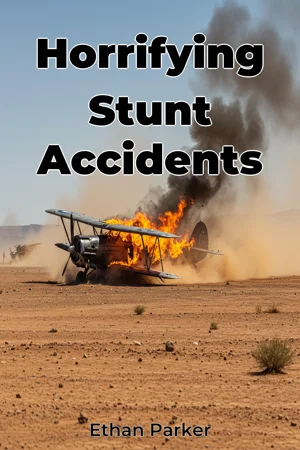
Have you ever considered the perilous line between thrilling entertainment and devastating tragedy on a Hollywood set? "Horrifying Stunt Accidents" delves into the grim history of stunt work, examining those instances where the pursuit of cinematic spectacle resulted in serious injury or death. This book analyzes specific stunt failures, the survival stories of performers involved, and the consequential changes implemented within the film industry to enhance safety. This exploration is vital for understanding the evolution of filmmaking. Stunt work is fundamental to action-driven cinema, yet the risks are often downplayed or ignored. By scrutinizing past errors, we can better appreciate the ongoing efforts to protect performers and understand the ethical considerations inherent in creating high-octane entertainment. Furthermore, society must comprehend that entertainment often has costs unseen by the consumer. "Horrifying Stunt Accidents" argues that progress in stunt safety is not merely a matter of technological advancement, but a reflection of evolving ethical standards and a growing recognition of the value of human life within a high-pressure industry. The book is structured to first provide a historical context, outlining the early days of stunt work and the often-reckless practices that prevailed. It then moves on to detailed accounts of specific accidents, dissecting the causes and consequences of each incident. These accounts rely on primary sources such as accident reports, interviews with stunt performers and crew members, and archival footage. The book dedicates significant portions to analyzing the aftermath of these accidents, focusing on the legal battles, industry reforms, and technological innovations that emerged in response. The culmination of the argument considers the current state of stunt safety, highlighting both the progress made and the challenges that remain. The evidence presented is drawn from a variety of sources, including legal documents, insurance records, and publications from organizations such as the Screen Actors Guild (SAG) and the Alliance of Motion Picture and Television Producers (AMPTP). Methodologically, the book uses a case study approach, examining individual accidents in detail to draw broader conclusions about industry trends and safety practices. The book connects to fields such as labor history, risk management, and media ethics. From a labor history perspective, the book examines the power dynamics between studios and stunt performers, and how those dynamics have shaped safety standards. From a risk management perspective, it analyzes the strategies used to mitigate risk on set and evaluates their effectiveness. From a media ethics perspective, it explores the moral responsibilities of filmmakers to protect their performers and to portray realistic dangers to audiences. "Horrifying Stunt Accidents" offers a unique perspective by focusing not just on the accidents themselves, but also on the human stories behind them. It examines the psychological impact of these events on performers and their families, providing a more nuanced understanding of the true cost of filmmaking. Written in a narrative non-fiction style, the book aims to be both informative and engaging, appealing to a broad audience including film enthusiasts, students of film history, and anyone interested in the behind-the-scenes realities of Hollywood. The target audience also comprises of consumers of films, where they may gain a perspective of the costs involved in entertaining them. The book aligns with the genre conventions of historical non-fiction by adhering to accuracy, offering robust citations, and maintaining a clear, objective tone. The scope of the book is limited to significant accidents in the American film and television industry from the early 20th century to the present day. While international examples are occasionally referenced for comparison, the primary focus remains on Hollywood. The information presented has practical applications for current filmmakers, stunt coordinators, and safety regulators. By learning from past mistakes, they can implement more effective safety protocols and create a safer working environment for stunt performers. The book addresses ongoing debates about the use of CGI versus practical effects and the ethical implications of using increasingly dangerous stunts to attract audiences.
Have you ever considered the perilous line between thrilling entertainment and devastating tragedy on a Hollywood set? "Horrifying Stunt Accidents" delves into the grim history of stunt work, examining those instances where the pursuit of cinematic spectacle resulted in serious injury or death. This book analyzes specific stunt failures, the survival stories of performers involved, and the consequential changes implemented within the film industry to enhance safety. This exploration is vital for understanding the evolution of filmmaking. Stunt work is fundamental to action-driven cinema, yet the risks are often downplayed or ignored. By scrutinizing past errors, we can better appreciate the ongoing efforts to protect performers and understand the ethical considerations inherent in creating high-octane entertainment. Furthermore, society must comprehend that entertainment often has costs unseen by the consumer. "Horrifying Stunt Accidents" argues that progress in stunt safety is not merely a matter of technological advancement, but a reflection of evolving ethical standards and a growing recognition of the value of human life within a high-pressure industry. The book is structured to first provide a historical context, outlining the early days of stunt work and the often-reckless practices that prevailed. It then moves on to detailed accounts of specific accidents, dissecting the causes and consequences of each incident. These accounts rely on primary sources such as accident reports, interviews with stunt performers and crew members, and archival footage. The book dedicates significant portions to analyzing the aftermath of these accidents, focusing on the legal battles, industry reforms, and technological innovations that emerged in response. The culmination of the argument considers the current state of stunt safety, highlighting both the progress made and the challenges that remain. The evidence presented is drawn from a variety of sources, including legal documents, insurance records, and publications from organizations such as the Screen Actors Guild (SAG) and the Alliance of Motion Picture and Television Producers (AMPTP). Methodologically, the book uses a case study approach, examining individual accidents in detail to draw broader conclusions about industry trends and safety practices. The book connects to fields such as labor history, risk management, and media ethics. From a labor history perspective, the book examines the power dynamics between studios and stunt performers, and how those dynamics have shaped safety standards. From a risk management perspective, it analyzes the strategies used to mitigate risk on set and evaluates their effectiveness. From a media ethics perspective, it explores the moral responsibilities of filmmakers to protect their performers and to portray realistic dangers to audiences. "Horrifying Stunt Accidents" offers a unique perspective by focusing not just on the accidents themselves, but also on the human stories behind them. It examines the psychological impact of these events on performers and their families, providing a more nuanced understanding of the true cost of filmmaking. Written in a narrative non-fiction style, the book aims to be both informative and engaging, appealing to a broad audience including film enthusiasts, students of film history, and anyone interested in the behind-the-scenes realities of Hollywood. The target audience also comprises of consumers of films, where they may gain a perspective of the costs involved in entertaining them. The book aligns with the genre conventions of historical non-fiction by adhering to accuracy, offering robust citations, and maintaining a clear, objective tone. The scope of the book is limited to significant accidents in the American film and television industry from the early 20th century to the present day. While international examples are occasionally referenced for comparison, the primary focus remains on Hollywood. The information presented has practical applications for current filmmakers, stunt coordinators, and safety regulators. By learning from past mistakes, they can implement more effective safety protocols and create a safer working environment for stunt performers. The book addresses ongoing debates about the use of CGI versus practical effects and the ethical implications of using increasingly dangerous stunts to attract audiences.
"Horrifying Stunt Accidents" explores the perilous history of stunt work in Hollywood, revealing the grim realities behind the on-screen spectacle. It delves into instances where the pursuit of thrilling entertainment led to serious injuries or fatalities, examining specific stunt failures and the subsequent efforts to improve stunt safety. The book highlights how progress in this area reflects evolving ethical standards and a growing recognition of the value of human life within the high-pressure film industry. One might be surprised to learn that early stunt work often involved reckless practices, and that the industry's safety advancements were frequently driven by tragic accidents and legal battles. The book dissects the causes and consequences of notable accidents, drawing from accident reports, interviews, and archival footage to provide detailed accounts. It emphasizes the human stories behind these events, examining the psychological impact on performers and their families. "Horrifying Stunt Accidents" connects to broader themes of labor history, risk management, and media ethics, analyzing the power dynamics between studios and stunt performers. The book progresses from outlining the early, often-reckless days of stunt work to analyzing specific accidents and their aftermath, culminating in a consideration of the current state of stunt safety.
Book Details
ISBN
9788235264831
Publisher
Publifye AS
Your Licenses
You don't own any licenses for this book
Purchase a license below to unlock this book and download the EPUB.
Purchase License
Select a tier to unlock this book
Need bulk licensing?
Contact us for enterprise agreements.