
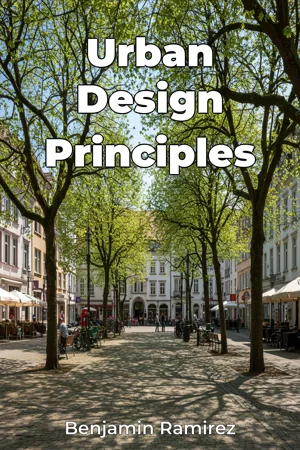
About This Book
How can urban environments be consciously shaped to foster thriving, equitable, and sustainable communities? This book, "Urban Design Principles," delves into the core concepts that underpin effective urban planning and design, offering a comprehensive guide to creating vibrant and functional cities. We will explore the intertwined concepts of walkability, mixed-use development, and public transportation, examining their individual contributions and synergistic effects on the urban landscape. These elements are not merely aesthetic choices; they are fundamental components that shape social interactions, economic opportunities, and environmental impact. The book will demonstrate that successful urban design hinges on understanding the historical context that has shaped our cities. It will explore how past planning decisions have created both opportunities and challenges, informing future design strategies. A foundational understanding of urban sociology and environmental science will be useful for readers to fully grasp the implications of design choices. The central argument presented is that a holistic, people-centered approach to urban design is crucial for creating truly sustainable and equitable cities. This requires moving beyond traditional, car-centric models to prioritize pedestrian-friendly environments, diverse land uses, and efficient public transportation networks. The importance of this argument lies in its potential to reshape urban development practices, leading to improved quality of life, reduced carbon emissions, and greater social inclusion. The book is structured to guide the reader through a logical progression of ideas. First, it introduces the core principles of walkability, mixed-use development, and public transportation, defining each concept and exploring its benefits. Next, it examines the interplay between these elements, demonstrating how they can be integrated to create synergistic effects. Chapters will explore the practical application of these principles through case studies, showcasing successful examples of urban design from around the world. Finally, it culminates in a discussion of the challenges and opportunities facing urban planners today, offering practical recommendations for creating more sustainable and equitable cities. The arguments presented are supported by a combination of empirical research, case studies, and best practices from the field of urban planning. The book draws upon data from various sources, including census data, transportation surveys, and environmental impact assessments, to provide evidence-based insights. Methodologies include spatial analysis, network analysis, and comparative case study analysis. "Urban Design Principles" connects to other fields, including sociology, economics, and environmental science. The book explores the social impacts of urban design, examining how it can affect social equity, community cohesion, and public health. It also considers the economic implications of design choices, exploring how they can influence land values, business activity, and job creation. Furthermore, it examines the environmental consequences of urban development, offering strategies for reducing carbon emissions, conserving natural resources, and promoting biodiversity. This book offers a unique perspective by emphasizing the importance of a collaborative and participatory design process. It argues that successful urban design requires involving community members, stakeholders, and experts from various disciplines in the planning process. This participatory approach ensures that design decisions are responsive to the needs and aspirations of the people who will be most affected by them. The tone of the book is both informative and engaging, presenting complex concepts in a clear and accessible manner. The writing style is professional yet conversational, making the book suitable for a broad audience. The intended readership includes students of urban planning, architecture, and related fields, as well as practicing planners, policymakers, and community activists. The book would be valuable to them because it provides a comprehensive and practical guide to creating more sustainable and equitable cities. As a work of non-fiction on design and architecture, this book adheres to the genre's expectations of accuracy, clarity, and evidence-based arguments. The scope of this book is limited to the principles of urban design, focusing primarily on the built environment. While it acknowledges the importance of social and economic factors, it does not delve into these areas in detail. This intentional limitation allows the book to focus on providing practical guidance for creating better built environments. The information in this book can be applied practically by readers in a variety of ways. For students, it provides a solid foundation for understanding the principles of urban design. For practicing planners, it offers a toolkit of strategies for creating more sustainable and equitable cities. For policymakers, it provides insights into the importance of urban design for achieving broader social and environmental goals. Finally, the book addresses ongoing debates in the field of urban planning, such as the tension between density and affordability, and the role of technology in shaping the future of cities. It offers a balanced perspective on these issues, acknowledging the complexities involved and offering potential solutions.
How can urban environments be consciously shaped to foster thriving, equitable, and sustainable communities? This book, "Urban Design Principles," delves into the core concepts that underpin effective urban planning and design, offering a comprehensive guide to creating vibrant and functional cities. We will explore the intertwined concepts of walkability, mixed-use development, and public transportation, examining their individual contributions and synergistic effects on the urban landscape. These elements are not merely aesthetic choices; they are fundamental components that shape social interactions, economic opportunities, and environmental impact. The book will demonstrate that successful urban design hinges on understanding the historical context that has shaped our cities. It will explore how past planning decisions have created both opportunities and challenges, informing future design strategies. A foundational understanding of urban sociology and environmental science will be useful for readers to fully grasp the implications of design choices. The central argument presented is that a holistic, people-centered approach to urban design is crucial for creating truly sustainable and equitable cities. This requires moving beyond traditional, car-centric models to prioritize pedestrian-friendly environments, diverse land uses, and efficient public transportation networks. The importance of this argument lies in its potential to reshape urban development practices, leading to improved quality of life, reduced carbon emissions, and greater social inclusion. The book is structured to guide the reader through a logical progression of ideas. First, it introduces the core principles of walkability, mixed-use development, and public transportation, defining each concept and exploring its benefits. Next, it examines the interplay between these elements, demonstrating how they can be integrated to create synergistic effects. Chapters will explore the practical application of these principles through case studies, showcasing successful examples of urban design from around the world. Finally, it culminates in a discussion of the challenges and opportunities facing urban planners today, offering practical recommendations for creating more sustainable and equitable cities. The arguments presented are supported by a combination of empirical research, case studies, and best practices from the field of urban planning. The book draws upon data from various sources, including census data, transportation surveys, and environmental impact assessments, to provide evidence-based insights. Methodologies include spatial analysis, network analysis, and comparative case study analysis. "Urban Design Principles" connects to other fields, including sociology, economics, and environmental science. The book explores the social impacts of urban design, examining how it can affect social equity, community cohesion, and public health. It also considers the economic implications of design choices, exploring how they can influence land values, business activity, and job creation. Furthermore, it examines the environmental consequences of urban development, offering strategies for reducing carbon emissions, conserving natural resources, and promoting biodiversity. This book offers a unique perspective by emphasizing the importance of a collaborative and participatory design process. It argues that successful urban design requires involving community members, stakeholders, and experts from various disciplines in the planning process. This participatory approach ensures that design decisions are responsive to the needs and aspirations of the people who will be most affected by them. The tone of the book is both informative and engaging, presenting complex concepts in a clear and accessible manner. The writing style is professional yet conversational, making the book suitable for a broad audience. The intended readership includes students of urban planning, architecture, and related fields, as well as practicing planners, policymakers, and community activists. The book would be valuable to them because it provides a comprehensive and practical guide to creating more sustainable and equitable cities. As a work of non-fiction on design and architecture, this book adheres to the genre's expectations of accuracy, clarity, and evidence-based arguments. The scope of this book is limited to the principles of urban design, focusing primarily on the built environment. While it acknowledges the importance of social and economic factors, it does not delve into these areas in detail. This intentional limitation allows the book to focus on providing practical guidance for creating better built environments. The information in this book can be applied practically by readers in a variety of ways. For students, it provides a solid foundation for understanding the principles of urban design. For practicing planners, it offers a toolkit of strategies for creating more sustainable and equitable cities. For policymakers, it provides insights into the importance of urban design for achieving broader social and environmental goals. Finally, the book addresses ongoing debates in the field of urban planning, such as the tension between density and affordability, and the role of technology in shaping the future of cities. It offers a balanced perspective on these issues, acknowledging the complexities involved and offering potential solutions.
"Urban Design Principles" explores building thriving, equitable, and sustainable communities through effective urban planning. It emphasizes the intertwined roles of walkability, mixed-use development, and public transportation. These are not just aesthetic choices; they fundamentally shape social interactions and environmental impact. Understanding the historical context of urban environments and the implications of urban sociology and environmental science is crucial for informed design strategies. The book argues for a people-centered approach, prioritizing pedestrian-friendly environments and efficient public transport to reshape urban development. It progresses by introducing core design principles and examining their interplay, using global case studies to illustrate practical applications. By offering practical recommendations, it addresses challenges in creating sustainable and equitable cities.
Book Details
ISBN
9788235264541
Publisher
Publifye AS
Your Licenses
You don't own any licenses for this book
Purchase a license below to unlock this book and download the EPUB.
Purchase License
Select a tier to unlock this book
Need bulk licensing?
Contact us for enterprise agreements.