
About This Book
How can a single rearrangement of words unlock layers of meaning and emotion in a poem? "Syntax Variations" explores the profound impact of syntactic choices on emphasis and rhythm in poetry, revealing how poets manipulate sentence structure to create unique effects. This book is vital for anyone seeking a deeper understanding of poetic craft and interpretation. Two fundamental concepts drive this exploration: syntactic inversion and rhythmic manipulation. Syntactic inversion, or the deliberate alteration of standard word order, allows poets to highlight specific words or ideas, creating emphasis and disrupting conventional expectations. Rhythmic manipulation, achieved through variations in sentence length, pauses, and phrasal arrangements, shapes the poem's musicality and emotional impact. Grasping these concepts is crucial for appreciating the deliberate artistry behind poetic composition. Understanding the evolution of poetic syntax requires a brief historical context. From the formal structures of classical poetry to the experimental forms of modernism, poets have continuously pushed the boundaries of syntactic norms. This book examines key periods and movements, showcasing how social and cultural shifts influenced poetic expression. A basic understanding of literary history and terminology will enhance the reader's comprehension. The central argument of "Syntax Variations" is that syntactic choices are not merely stylistic embellishments but fundamental tools that poets use to construct meaning and evoke emotion. By analyzing a wide range of poems across different eras and traditions, this book demonstrates how variations in syntax directly influence the reader's experience and interpretation. This argument challenges the notion of syntax as a passive element and elevates it to a position of active significance in poetic analysis. The book unfolds in a structured manner. It begins with an introduction to core syntactic concepts and terminology, providing a foundation for subsequent analysis. The following sections delve into specific syntactic techniques, such as anaphora, chiasmus, and enjambment, illustrating each with detailed examples from canonical and contemporary poems. Emphasis is placed on how these techniques contribute to both meaning and rhythm. Later chapters explore the relationship between syntax and different poetic forms, such as sonnets, free verse, and haikus. The book culminates with a discussion of the practical implications of syntactic analysis for both readers and writers of poetry. The book's analysis is supported by close readings of individual poems, drawing on scholarly sources in linguistics and literary theory. Quantitative data, such as sentence length and frequency of specific syntactic structures, are used to supplement qualitative interpretations. This blend of approaches provides a robust and multifaceted analysis. "Syntax Variations" connects to several related fields. Linguistics provides the theoretical framework for understanding grammatical structures. Music theory offers insights into the rhythmic qualities of poetry. Rhetoric illuminates the persuasive power of syntactic choices. These interdisciplinary connections enrich the analysis and broaden the book's scope. This book offers a novel perspective by focusing specifically on syntax as a primary driver of meaning and rhythm in poetry. It moves beyond traditional thematic or biographical approaches, providing a detailed and systematic analysis of the underlying linguistic structures. This unique approach allows readers to develop a more nuanced and sophisticated understanding of poetic craft. The tone is academic yet accessible, avoiding jargon where possible and providing clear explanations of complex concepts. The writing style is analytical and precise, with a strong emphasis on close reading and textual evidence. The target audience includes students of literature, creative writing, and linguistics, as well as anyone with a general interest in poetry. The book offers valuable insights for both readers and writers, enhancing their ability to appreciate and create effective poetry. As an academic work in Language Arts, "Syntax Variations" adheres to the conventions of scholarly research, including proper citation and a comprehensive bibliography. It strives for objectivity and rigor in its analysis, while also acknowledging the subjective nature of interpretation. The scope of the book is limited to the analysis of syntactic choices in poetry. It does not delve into other aspects of poetic composition, such as imagery, metaphor, or sound devices, except as they relate to syntax. This focused approach allows for a more in-depth exploration of the central topic. The information presented in "Syntax Variations" can be applied practically in several ways. Readers can use the analytical tools and techniques presented to enhance their own interpretations of poetry. Writers can use the insights gained to improve their own poetic craft. Educators can use the book as a resource for teaching poetry analysis and composition. Ongoing debates in the field of literary theory regarding the role of the author vs. the reader in constructing meaning are addressed. The book takes a balanced approach, acknowledging the importance of both the poet's intentions and the reader's interpretation, while emphasizing the objective evidence provided by the poem's syntactic structure.
How can a single rearrangement of words unlock layers of meaning and emotion in a poem? "Syntax Variations" explores the profound impact of syntactic choices on emphasis and rhythm in poetry, revealing how poets manipulate sentence structure to create unique effects. This book is vital for anyone seeking a deeper understanding of poetic craft and interpretation. Two fundamental concepts drive this exploration: syntactic inversion and rhythmic manipulation. Syntactic inversion, or the deliberate alteration of standard word order, allows poets to highlight specific words or ideas, creating emphasis and disrupting conventional expectations. Rhythmic manipulation, achieved through variations in sentence length, pauses, and phrasal arrangements, shapes the poem's musicality and emotional impact. Grasping these concepts is crucial for appreciating the deliberate artistry behind poetic composition. Understanding the evolution of poetic syntax requires a brief historical context. From the formal structures of classical poetry to the experimental forms of modernism, poets have continuously pushed the boundaries of syntactic norms. This book examines key periods and movements, showcasing how social and cultural shifts influenced poetic expression. A basic understanding of literary history and terminology will enhance the reader's comprehension. The central argument of "Syntax Variations" is that syntactic choices are not merely stylistic embellishments but fundamental tools that poets use to construct meaning and evoke emotion. By analyzing a wide range of poems across different eras and traditions, this book demonstrates how variations in syntax directly influence the reader's experience and interpretation. This argument challenges the notion of syntax as a passive element and elevates it to a position of active significance in poetic analysis. The book unfolds in a structured manner. It begins with an introduction to core syntactic concepts and terminology, providing a foundation for subsequent analysis. The following sections delve into specific syntactic techniques, such as anaphora, chiasmus, and enjambment, illustrating each with detailed examples from canonical and contemporary poems. Emphasis is placed on how these techniques contribute to both meaning and rhythm. Later chapters explore the relationship between syntax and different poetic forms, such as sonnets, free verse, and haikus. The book culminates with a discussion of the practical implications of syntactic analysis for both readers and writers of poetry. The book's analysis is supported by close readings of individual poems, drawing on scholarly sources in linguistics and literary theory. Quantitative data, such as sentence length and frequency of specific syntactic structures, are used to supplement qualitative interpretations. This blend of approaches provides a robust and multifaceted analysis. "Syntax Variations" connects to several related fields. Linguistics provides the theoretical framework for understanding grammatical structures. Music theory offers insights into the rhythmic qualities of poetry. Rhetoric illuminates the persuasive power of syntactic choices. These interdisciplinary connections enrich the analysis and broaden the book's scope. This book offers a novel perspective by focusing specifically on syntax as a primary driver of meaning and rhythm in poetry. It moves beyond traditional thematic or biographical approaches, providing a detailed and systematic analysis of the underlying linguistic structures. This unique approach allows readers to develop a more nuanced and sophisticated understanding of poetic craft. The tone is academic yet accessible, avoiding jargon where possible and providing clear explanations of complex concepts. The writing style is analytical and precise, with a strong emphasis on close reading and textual evidence. The target audience includes students of literature, creative writing, and linguistics, as well as anyone with a general interest in poetry. The book offers valuable insights for both readers and writers, enhancing their ability to appreciate and create effective poetry. As an academic work in Language Arts, "Syntax Variations" adheres to the conventions of scholarly research, including proper citation and a comprehensive bibliography. It strives for objectivity and rigor in its analysis, while also acknowledging the subjective nature of interpretation. The scope of the book is limited to the analysis of syntactic choices in poetry. It does not delve into other aspects of poetic composition, such as imagery, metaphor, or sound devices, except as they relate to syntax. This focused approach allows for a more in-depth exploration of the central topic. The information presented in "Syntax Variations" can be applied practically in several ways. Readers can use the analytical tools and techniques presented to enhance their own interpretations of poetry. Writers can use the insights gained to improve their own poetic craft. Educators can use the book as a resource for teaching poetry analysis and composition. Ongoing debates in the field of literary theory regarding the role of the author vs. the reader in constructing meaning are addressed. The book takes a balanced approach, acknowledging the importance of both the poet's intentions and the reader's interpretation, while emphasizing the objective evidence provided by the poem's syntactic structure.
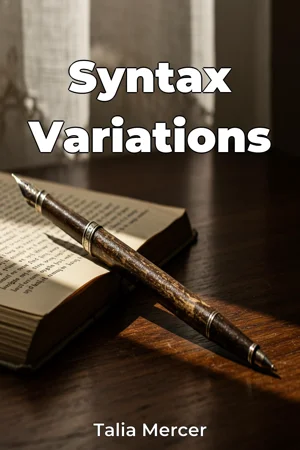
"Syntax Variations" delves into the crucial role of syntax in poetry, exploring how poets manipulate sentence structure to shape meaning and rhythm. It highlights how syntactic inversion, or altering word order, can emphasize specific elements. The book also examines rhythmic manipulation, where variations in sentence length impact a poem's emotional resonance. These techniques demonstrate that syntactic choices are fundamental tools, not mere stylistic flourishes. The book progresses systematically, starting with core syntactic concepts before delving into specific techniques such as anaphora and enjambment. By analyzing diverse poems, the book demonstrates how syntax variations influence interpretation. It connects linguistics, music theory, and rhetoric to enrich its analysis, offering a unique perspective by focusing on syntax as a primary driver of meaning and rhythm, rather than thematic or biographical elements. This detailed approach provides a nuanced understanding of poetic craft, valuable for students and enthusiasts alike. It offers practical tools for both analyzing and creating poetry, enhancing the reader's ability to appreciate the artistry behind poetic composition.
Book Details
ISBN
9788235264480
Publisher
Publifye AS
Your Licenses
You don't own any licenses for this book
Purchase a license below to unlock this book and download the EPUB.
Purchase License
Select a tier to unlock this book
Need bulk licensing?
Contact us for enterprise agreements.