
About This Book
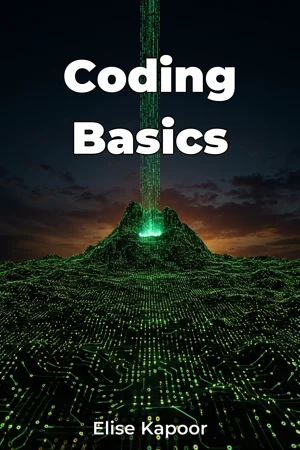
Ever wondered how the seemingly magical world of computers actually works? "Coding Basics" unveils the inner workings of these machines, demystifying the process by which humans communicate instructions, and computers execute them. This book is your comprehensive guide to understanding the fundamental building blocks of coding, from the high-level languages used by programmers to the step-by-step creation of functional websites, engaging games, and practical applications. The two main pillars upon which this book rests are the core concepts of computer programming and the practical application of these concepts in real-world projects. Understanding the logic behind coding languages and how they translate human intentions into machine actions is paramount. Likewise, it is essential to learn how to use code to construct tangible projects, which allow you to see theoretical principles transform into functional realities. These topics are significant because they empower readers with the skills to not only comprehend the digital world but also contribute to its development. "Coding Basics" begins by establishing a historical context, tracing the evolution of computing from its mechanical origins to the sophisticated digital systems we use today. No specialized prior knowledge is required; the book assumes the reader is a complete novice. The central argument of "Coding Basics" is that coding is not an arcane art reserved for experts, but rather a skill accessible to anyone with a logical mind and willingness to learn. We’ll present coding as a form of problem solving, breaking down large, complex challenges into smaller, manageable steps that computers can execute. The book is structured to guide readers through a progressive learning curve. It starts with an explanation of basic computational thinking, introducing algorithms and data structures in an accessible way. We will cover the fundamental concepts of variables, loops, conditional statements, and functions. The second part of the book is dedicated to applying these concepts through guided projects. These projects range from creating a simple website to developing a basic game application. Each project reinforces the concepts learned and provides hands-on experience in coding. The book will offer practical steps, sample code, and explanations of the logic behind each action. The book culminates in a discussion of further learning opportunities, advanced coding paradigms, and the broader implications of coding in the 21st century. To support the arguments presented, "Coding Basics" will draw upon a variety of examples, case studies, and demonstrations. These include code snippets written in commonly used languages, explanations of coding paradigms, and illustrations of how code functions within larger systems. "Coding Basics" is inherently interdisciplinary. It connects to fields such as mathematics (through the use of logic and algorithms), engineering (through the design and construction of systems), and design (through the creation of user interfaces). These connections enhance the book's argument by demonstrating the broad applicability of coding skills across different domains. The book employs a conversational yet informative tone, aiming to make complex topics understandable and approachable. It avoids technical jargon whenever possible and explains concepts in clear, plain language. The target audience is anyone interested in learning to code, regardless of their background or technical expertise. This book is valuable to both beginners who want to explore a new skill and professionals who want a better understanding of how software works. As a work in the 'Programming, Computers' genre, the book adheres to conventions of clarity, accuracy, and practicality. It focuses on providing concrete information and actionable advice while steering clear of vague generalizations or theoretical speculations. While "Coding Basics" covers a broad range of topics, it does not delve into highly specialized areas such as artificial intelligence or advanced data science. The intention is to provide a solid foundation for further learning. The information in "Coding Basics" can be applied immediately by readers to solve real-world problems, automate tasks, and create their own digital projects. It provides the skills needed to build websites, develop applications, and understand the technology that shapes our world. While the fundamental principles of coding are generally agreed upon, there are ongoing debates about the best coding practices and the most effective languages for specific tasks. "Coding Basics" touches upon these debates but refrains from advocating for any single approach, instead, it encourages readers to explore different options and form their own opinions.
Ever wondered how the seemingly magical world of computers actually works? "Coding Basics" unveils the inner workings of these machines, demystifying the process by which humans communicate instructions, and computers execute them. This book is your comprehensive guide to understanding the fundamental building blocks of coding, from the high-level languages used by programmers to the step-by-step creation of functional websites, engaging games, and practical applications. The two main pillars upon which this book rests are the core concepts of computer programming and the practical application of these concepts in real-world projects. Understanding the logic behind coding languages and how they translate human intentions into machine actions is paramount. Likewise, it is essential to learn how to use code to construct tangible projects, which allow you to see theoretical principles transform into functional realities. These topics are significant because they empower readers with the skills to not only comprehend the digital world but also contribute to its development. "Coding Basics" begins by establishing a historical context, tracing the evolution of computing from its mechanical origins to the sophisticated digital systems we use today. No specialized prior knowledge is required; the book assumes the reader is a complete novice. The central argument of "Coding Basics" is that coding is not an arcane art reserved for experts, but rather a skill accessible to anyone with a logical mind and willingness to learn. We’ll present coding as a form of problem solving, breaking down large, complex challenges into smaller, manageable steps that computers can execute. The book is structured to guide readers through a progressive learning curve. It starts with an explanation of basic computational thinking, introducing algorithms and data structures in an accessible way. We will cover the fundamental concepts of variables, loops, conditional statements, and functions. The second part of the book is dedicated to applying these concepts through guided projects. These projects range from creating a simple website to developing a basic game application. Each project reinforces the concepts learned and provides hands-on experience in coding. The book will offer practical steps, sample code, and explanations of the logic behind each action. The book culminates in a discussion of further learning opportunities, advanced coding paradigms, and the broader implications of coding in the 21st century. To support the arguments presented, "Coding Basics" will draw upon a variety of examples, case studies, and demonstrations. These include code snippets written in commonly used languages, explanations of coding paradigms, and illustrations of how code functions within larger systems. "Coding Basics" is inherently interdisciplinary. It connects to fields such as mathematics (through the use of logic and algorithms), engineering (through the design and construction of systems), and design (through the creation of user interfaces). These connections enhance the book's argument by demonstrating the broad applicability of coding skills across different domains. The book employs a conversational yet informative tone, aiming to make complex topics understandable and approachable. It avoids technical jargon whenever possible and explains concepts in clear, plain language. The target audience is anyone interested in learning to code, regardless of their background or technical expertise. This book is valuable to both beginners who want to explore a new skill and professionals who want a better understanding of how software works. As a work in the 'Programming, Computers' genre, the book adheres to conventions of clarity, accuracy, and practicality. It focuses on providing concrete information and actionable advice while steering clear of vague generalizations or theoretical speculations. While "Coding Basics" covers a broad range of topics, it does not delve into highly specialized areas such as artificial intelligence or advanced data science. The intention is to provide a solid foundation for further learning. The information in "Coding Basics" can be applied immediately by readers to solve real-world problems, automate tasks, and create their own digital projects. It provides the skills needed to build websites, develop applications, and understand the technology that shapes our world. While the fundamental principles of coding are generally agreed upon, there are ongoing debates about the best coding practices and the most effective languages for specific tasks. "Coding Basics" touches upon these debates but refrains from advocating for any single approach, instead, it encourages readers to explore different options and form their own opinions.
"Coding Basics" demystifies the world of computer programming, making it accessible to everyone, regardless of prior experience. The book reveals how computers translate human instructions into actions, focusing on the core concepts and their practical application in real-world projects. You'll discover that coding is fundamentally a problem-solving skill, breaking down complex challenges into manageable steps. Did you know early computers were mechanical, not digital, and that the first programmer was a woman? The book adopts a progressive learning approach to guide you through computational thinking, algorithms, and data structures. Starting with the basics of variables, loops, and functions, it moves on to hands-on projects like creating a simple website or a basic game application. This hands-on experience is crucial for solidifying your understanding of coding languages. Each chapter builds upon the previous one, providing practical steps and sample code along the way. By the end of "Coding Basics," you'll not only understand the fundamentals of computer programming but also possess the skills to create your own digital projects. This empowers you to contribute to the digital world and understand the technology that shapes our lives.
Book Details
ISBN
9788235264367
Publisher
Publifye AS
Your Licenses
You don't own any licenses for this book
Purchase a license below to unlock this book and download the EPUB.
Purchase License
Select a tier to unlock this book
Need bulk licensing?
Contact us for enterprise agreements.