
About This Book
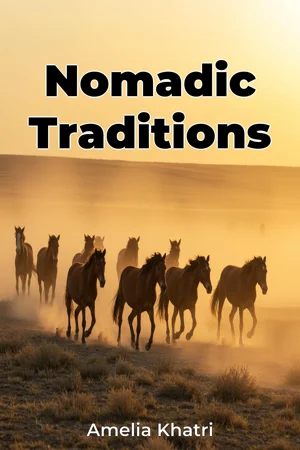
What can the rise and fall of nomadic empires teach us about global interconnectedness and the dynamics of power? "Nomadic Traditions" delves into the complex world of ancient nomadic societies, exploring their diverse cultural practices, sophisticated economies, and innovative warfare tactics, from the well-known Mongols to the less understood Scythians and others. The book examines how these groups, often marginalized in traditional historical narratives, significantly shaped the course of world history, challenging conventional understandings of civilization and empire. Understanding their strategies and societal structures provides valuable insights into the adaptability and resilience of human societies as well as the long-term consequences of cultural exchange and conflict. This study focuses on three core themes: the cultural adaptations of nomadic groups to diverse environments and their impact on settled societies, the economic networks that facilitated trade and resource management across vast distances, and the revolutionary military techniques that enabled them to project power and influence. These elements are crucial for appreciating the full scope of nomadic contributions and for reassessing their role in the development of interregional networks and geopolitical landscapes. "Nomadic Traditions" begins by establishing the environmental and historical context in which these societies emerged and thrived. It introduces the concept of "mobile empires" and discusses the factors that contributed to their formation, expansion, and eventual decline. The book then explores the cultural practices of various nomadic groups including their oral traditions, artistic expressions, religious beliefs, and social hierarchies. It uses archaeological findings, ethnographic studies, and translated historical texts to reconstruct a detailed picture of daily life and cultural values. Further sections analyze the economic systems of nomadic societies, focusing on their engagement in trade, pastoralism, and resource extraction. It highlights the intricate relationships between nomadic economies and those of neighboring settled civilizations, demonstrating how these interactions fostered both cooperation and conflict. The examination of trade routes sheds light on the exchange of goods, ideas, and technologies that transcended geographical boundaries. The book also provides a comprehensive overview of nomadic warfare, including their use of cavalry, archery, and siege tactics. It assesses the impact of these military innovations on the balance of power and examines how nomadic groups adapted and refined their strategies in response to changing circumstances. Case studies of key battles and campaigns illustrate the effectiveness of nomadic tactics and their influence on military thinking in other parts of the world. The book culminates by considering the legacies of nomadic empires and their relevance to contemporary issues, such as globalization, cultural exchange, and conflict resolution. The evidence presented in "Nomadic Traditions" is drawn from a wide range of sources including archaeological excavations, textual analyses of historical chronicles and travel accounts, and comparative studies of nomadic cultures. This interdisciplinary approach integrates history, anthropology, archaeology, and military science to provide a nuanced and comprehensive understanding of nomadic societies. Furthermore, the book connects to broader themes in world history, such as the rise and fall of empires, the dynamics of cultural exchange, and the impact of environmental factors on human societies. By examining these connections, "Nomadic Traditions" offers a new perspective on the interconnectedness of human history and the importance of considering non-state actors in shaping global events. "Nomadic Traditions" is written in an engaging and accessible style, making it suitable for students, scholars, and general readers interested in world history, anthropology, and military history. It offers a fresh perspective on the legacy of nomadic societies and their ongoing relevance to the world today. While focusing on the key nomadic groups such as Mongols and Scythians, the book acknowledges the vastness of the topic and sets defined geographical and temporal boundaries to maintain a coherent narrative. This focused approach allows for an in-depth exploration of selected case studies, providing valuable insights into the broader dynamics of nomadic societies. Ultimately, this work demonstrates that nomadic societies were not simply peripheral players but pivotal actors in the grand narrative of human history, whose innovations and adaptations continue to resonate today.
What can the rise and fall of nomadic empires teach us about global interconnectedness and the dynamics of power? "Nomadic Traditions" delves into the complex world of ancient nomadic societies, exploring their diverse cultural practices, sophisticated economies, and innovative warfare tactics, from the well-known Mongols to the less understood Scythians and others. The book examines how these groups, often marginalized in traditional historical narratives, significantly shaped the course of world history, challenging conventional understandings of civilization and empire. Understanding their strategies and societal structures provides valuable insights into the adaptability and resilience of human societies as well as the long-term consequences of cultural exchange and conflict. This study focuses on three core themes: the cultural adaptations of nomadic groups to diverse environments and their impact on settled societies, the economic networks that facilitated trade and resource management across vast distances, and the revolutionary military techniques that enabled them to project power and influence. These elements are crucial for appreciating the full scope of nomadic contributions and for reassessing their role in the development of interregional networks and geopolitical landscapes. "Nomadic Traditions" begins by establishing the environmental and historical context in which these societies emerged and thrived. It introduces the concept of "mobile empires" and discusses the factors that contributed to their formation, expansion, and eventual decline. The book then explores the cultural practices of various nomadic groups including their oral traditions, artistic expressions, religious beliefs, and social hierarchies. It uses archaeological findings, ethnographic studies, and translated historical texts to reconstruct a detailed picture of daily life and cultural values. Further sections analyze the economic systems of nomadic societies, focusing on their engagement in trade, pastoralism, and resource extraction. It highlights the intricate relationships between nomadic economies and those of neighboring settled civilizations, demonstrating how these interactions fostered both cooperation and conflict. The examination of trade routes sheds light on the exchange of goods, ideas, and technologies that transcended geographical boundaries. The book also provides a comprehensive overview of nomadic warfare, including their use of cavalry, archery, and siege tactics. It assesses the impact of these military innovations on the balance of power and examines how nomadic groups adapted and refined their strategies in response to changing circumstances. Case studies of key battles and campaigns illustrate the effectiveness of nomadic tactics and their influence on military thinking in other parts of the world. The book culminates by considering the legacies of nomadic empires and their relevance to contemporary issues, such as globalization, cultural exchange, and conflict resolution. The evidence presented in "Nomadic Traditions" is drawn from a wide range of sources including archaeological excavations, textual analyses of historical chronicles and travel accounts, and comparative studies of nomadic cultures. This interdisciplinary approach integrates history, anthropology, archaeology, and military science to provide a nuanced and comprehensive understanding of nomadic societies. Furthermore, the book connects to broader themes in world history, such as the rise and fall of empires, the dynamics of cultural exchange, and the impact of environmental factors on human societies. By examining these connections, "Nomadic Traditions" offers a new perspective on the interconnectedness of human history and the importance of considering non-state actors in shaping global events. "Nomadic Traditions" is written in an engaging and accessible style, making it suitable for students, scholars, and general readers interested in world history, anthropology, and military history. It offers a fresh perspective on the legacy of nomadic societies and their ongoing relevance to the world today. While focusing on the key nomadic groups such as Mongols and Scythians, the book acknowledges the vastness of the topic and sets defined geographical and temporal boundaries to maintain a coherent narrative. This focused approach allows for an in-depth exploration of selected case studies, providing valuable insights into the broader dynamics of nomadic societies. Ultimately, this work demonstrates that nomadic societies were not simply peripheral players but pivotal actors in the grand narrative of human history, whose innovations and adaptations continue to resonate today.
"Nomadic Traditions" offers a fresh perspective on world history by exploring the significant yet often overlooked role of nomadic societies. It challenges the traditional view of civilization by highlighting how these mobile empires, like the Mongols and Scythians, shaped cultural exchange, military strategies, and interregional networks. The book reveals how nomadic groups adapted to diverse environments and influenced settled societies, demonstrating their profound impact on global geopolitics. This study delves into nomadic cultural adaptations, economic systems, and warfare tactics. Readers will discover how innovative military techniques, such as the use of cavalry and archery, allowed nomadic groups to project power across vast distances. Furthermore, the book examines how trade routes facilitated the exchange of goods and ideas, fostering both cooperation and conflict with settled civilizations. The book progresses by first establishing the historical context of nomadic societies and then exploring their cultural practices, economic systems, and military innovations. Employing an interdisciplinary approach that integrates history, anthropology, and archaeology, "Nomadic Traditions" provides a nuanced understanding of these societies and their enduring relevance to contemporary issues.
Book Details
ISBN
9788235264329
Publisher
Publifye AS
Your Licenses
You don't own any licenses for this book
Purchase a license below to unlock this book and download the EPUB.
Purchase License
Select a tier to unlock this book
Need bulk licensing?
Contact us for enterprise agreements.