
About This Book
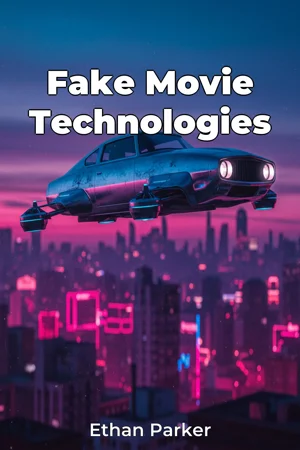
Has science fiction foreshadowed our reality, or have our aspirations for the future simply mirrored the silver screen? "Fake Movie Technologies" explores the fascinating interplay between cinematic invention and technological innovation, examining how concepts once confined to film have either remained impossibilities or materialized in unexpected forms. This book delves into two central themes: the allure of futuristic technology as depicted in movies and the surprising and circuitous paths these fictional inventions have taken toward either complete failure or tangible reality. The exploration of these themes is important because it sheds light on the cultural impact of film on scientific progress and the human drive to innovate. Are we merely predicting the future, or are we actively shaping it based on the stories we tell ourselves? The book provides historical context showing that the science fiction genre has long served as a breeding ground for ideas, often predating the scientific advancements needed to realize them. From Jules Verne's submarine to Arthur C. Clarke's communication satellites, imagination has frequently paved the way for reality. No prior scientific or technical knowledge is needed of the reader to follow along. Our central argument is that while movies can inspire innovation, the actual development of technology is rarely a linear process. The translation from screen to life is complex, governed by scientific principles, economic constraints, and societal needs, often leading to outcomes that diverge significantly from their cinematic origins. It is important to understand this relationship to better evaluate emerging technologies and their potential impacts on society. The book is structured around several core sections. First, we introduce the concept of "movie tech" and establish criteria for evaluating its plausibility and impact. Next, we examine specific examples, grouped into thematic chapters such as "Artificial Intelligence: From HAL to Siri," "Transportation: Flying Cars and Hyperloops," and "Communication: Holograms and Teleportation." Each chapter will analyze the cinematic portrayal of these technologies, trace their real-world development (or lack thereof), and discuss the reasons for their success or failure. The book culminates with a discussion on the ethical and societal implications of "movie tech," exploring how fictional depictions can shape public perception and influence policy decisions. The analysis depends on a variety of sources, including film analyses, scientific literature, patent databases, and historical accounts. Interviews with scientists, engineers, and filmmakers are included to provide diverse perspectives on the creative process and the challenges of technological development. "Fake Movie Technologies" connects to other fields of study, including media studies (analyzing the cultural impact of film), sociology (examining the social implications of technology), and economics (assessing the market forces that drive innovation). These interdisciplinary connections enrich the analysis and provide a more holistic understanding of the relationship between film and technology. The book offers a unique perspective by approaching the subject from a fact-based standpoint separating fact from fiction. It challenges the simplistic notion that movies directly predict the future, instead highlighting the complex interplay between imagination, science, and society, and it uses academic evidence to support this claim. The tone is informative and accessible, making complex scientific concepts understandable to a broad audience. The writing style blends scholarly analysis with popular culture references, creating an engaging and entertaining reading experience. The primary audience includes film buffs, technology enthusiasts, students of media studies and science and technology policy, and anyone interested in the future of innovation. The book will appeal to readers because it offers a fresh perspective on familiar films and technologies, providing insights into the creative process and the challenges of bringing fictional ideas to life. As a work of non-fiction, the book adheres to academic standards of accuracy and objectivity, with all claims supported by evidence and properly cited sources. It provides a balanced and nuanced analysis, acknowledging the limitations of its scope and the complexity of the subject matter. The book focuses primarily on technologies depicted in major motion pictures, excluding television shows and video games to maintain a manageable scope. While it touches on the ethical implications of technology, it does not delve into specific policy recommendations. The information in "Fake Movie Technologies" can be applied practically by readers to critically evaluate new technologies and assess their potential impact on society. It provides a framework for understanding the relationship between science fiction and reality, empowering readers to make informed decisions about the future of innovation. The book inevitably touches upon ongoing debates within the scientific community regarding the feasibility of certain technologies, such as teleportation and artificial general intelligence. It presents different perspectives on these debates, acknowledging the uncertainties and limitations of current scientific knowledge.
Has science fiction foreshadowed our reality, or have our aspirations for the future simply mirrored the silver screen? "Fake Movie Technologies" explores the fascinating interplay between cinematic invention and technological innovation, examining how concepts once confined to film have either remained impossibilities or materialized in unexpected forms. This book delves into two central themes: the allure of futuristic technology as depicted in movies and the surprising and circuitous paths these fictional inventions have taken toward either complete failure or tangible reality. The exploration of these themes is important because it sheds light on the cultural impact of film on scientific progress and the human drive to innovate. Are we merely predicting the future, or are we actively shaping it based on the stories we tell ourselves? The book provides historical context showing that the science fiction genre has long served as a breeding ground for ideas, often predating the scientific advancements needed to realize them. From Jules Verne's submarine to Arthur C. Clarke's communication satellites, imagination has frequently paved the way for reality. No prior scientific or technical knowledge is needed of the reader to follow along. Our central argument is that while movies can inspire innovation, the actual development of technology is rarely a linear process. The translation from screen to life is complex, governed by scientific principles, economic constraints, and societal needs, often leading to outcomes that diverge significantly from their cinematic origins. It is important to understand this relationship to better evaluate emerging technologies and their potential impacts on society. The book is structured around several core sections. First, we introduce the concept of "movie tech" and establish criteria for evaluating its plausibility and impact. Next, we examine specific examples, grouped into thematic chapters such as "Artificial Intelligence: From HAL to Siri," "Transportation: Flying Cars and Hyperloops," and "Communication: Holograms and Teleportation." Each chapter will analyze the cinematic portrayal of these technologies, trace their real-world development (or lack thereof), and discuss the reasons for their success or failure. The book culminates with a discussion on the ethical and societal implications of "movie tech," exploring how fictional depictions can shape public perception and influence policy decisions. The analysis depends on a variety of sources, including film analyses, scientific literature, patent databases, and historical accounts. Interviews with scientists, engineers, and filmmakers are included to provide diverse perspectives on the creative process and the challenges of technological development. "Fake Movie Technologies" connects to other fields of study, including media studies (analyzing the cultural impact of film), sociology (examining the social implications of technology), and economics (assessing the market forces that drive innovation). These interdisciplinary connections enrich the analysis and provide a more holistic understanding of the relationship between film and technology. The book offers a unique perspective by approaching the subject from a fact-based standpoint separating fact from fiction. It challenges the simplistic notion that movies directly predict the future, instead highlighting the complex interplay between imagination, science, and society, and it uses academic evidence to support this claim. The tone is informative and accessible, making complex scientific concepts understandable to a broad audience. The writing style blends scholarly analysis with popular culture references, creating an engaging and entertaining reading experience. The primary audience includes film buffs, technology enthusiasts, students of media studies and science and technology policy, and anyone interested in the future of innovation. The book will appeal to readers because it offers a fresh perspective on familiar films and technologies, providing insights into the creative process and the challenges of bringing fictional ideas to life. As a work of non-fiction, the book adheres to academic standards of accuracy and objectivity, with all claims supported by evidence and properly cited sources. It provides a balanced and nuanced analysis, acknowledging the limitations of its scope and the complexity of the subject matter. The book focuses primarily on technologies depicted in major motion pictures, excluding television shows and video games to maintain a manageable scope. While it touches on the ethical implications of technology, it does not delve into specific policy recommendations. The information in "Fake Movie Technologies" can be applied practically by readers to critically evaluate new technologies and assess their potential impact on society. It provides a framework for understanding the relationship between science fiction and reality, empowering readers to make informed decisions about the future of innovation. The book inevitably touches upon ongoing debates within the scientific community regarding the feasibility of certain technologies, such as teleportation and artificial general intelligence. It presents different perspectives on these debates, acknowledging the uncertainties and limitations of current scientific knowledge.
"Fake Movie Technologies" explores the captivating relationship between cinematic visions and real-world technological innovation. Examining how futuristic technology, once confined to science fiction films, either becomes a reality or remains a fantasy, the book delves into the cultural impact of film on scientific progress. For example, the book investigates concepts like teleportation and flying cars, tracing their origins in movies and analyzing the reasons behind their success or failure in the real world. The book uniquely separates fact from fiction, challenging the idea that movies directly predict the future. Instead, it highlights the complex interaction between imagination, science, and society, supported by academic evidence. Structured around thematic chapters, the book begins by establishing criteria for evaluating "movie tech" and progresses to examine specific examples like artificial intelligence and hyperloops. This approach offers readers a framework for critically evaluating emerging technologies. By blending scholarly analysis with references to popular films, "Fake Movie Technologies" provides insights into the creative process and the challenges of bringing fictional ideas to life, appealing to film buffs, technology enthusiasts, and anyone curious about the future of innovation.
Book Details
ISBN
9788235264176
Publisher
Publifye AS
Your Licenses
You don't own any licenses for this book
Purchase a license below to unlock this book and download the EPUB.
Purchase License
Select a tier to unlock this book
Need bulk licensing?
Contact us for enterprise agreements.