
About This Book
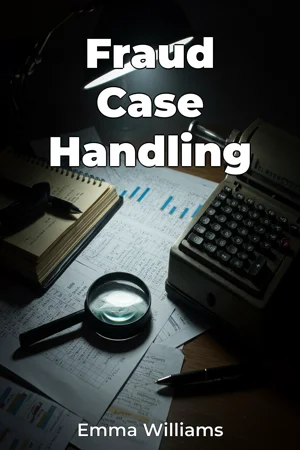
How does a seemingly complex web of financial transactions unravel to reveal a deliberate act of deception? "Fraud Case Handling" provides a comprehensive investigation into the intricate processes of investigating and prosecuting fraud within the criminal justice system. This book will serve as an invaluable resource for understanding forensic audits, intent analysis, and the nuances of sentencing practices in fraud cases. The significance lies in offering a practical guide to navigating the legal and financial landscapes of fraud, topics that are crucial for legal professionals, auditors, and anyone seeking to understand the complexities of white-collar crime. The book’s central argument is that a successful fraud investigation and prosecution hinges on a multi-faceted approach that combines meticulous financial analysis with a deep understanding of criminal intent. It argues that without addressing both the ‘how’ of the fraud and the ‘why,’ cases often falter, leaving perpetrators unpunished and victims without recourse. This argument is important because it highlights the need for interdisciplinary collaboration between forensic accountants, legal experts, and investigators. "Fraud Case Handling" begins by laying the groundwork with an introduction to the core concepts of fraud, including its various forms (e.g., embezzlement, securities fraud, tax evasion), and the legal statutes governing these offenses. Building on this foundation, the book proceeds with a detailed exploration of forensic auditing techniques. This section covers methods for tracing illicit funds, identifying hidden assets, and reconstructing financial records to uncover fraudulent activities. A major segment is devoted to intent analysis, examining the psychological and behavioral patterns of fraudsters to establish the necessary mens rea for criminal conviction. It delves into behavioral analysis, digital forensics, and expert testimony to build cases around proving willful misconduct. Concluding the investigation phase, the book transitions into prosecution, covering trial strategies, evidence presentation, and the challenges of securing convictions in complex financial crimes. Finally, it explores sentencing practices, including factors influencing judicial decisions, restitution orders, and the potential for asset forfeiture. To underpin its arguments, "Fraud Case Handling" draws upon a wealth of real-world case studies, legal precedents, and forensic accounting standards. It utilizes publicly available court documents, financial statements, and investigative reports to illustrate key concepts and methodologies. Furthermore, it references academic research in criminology, psychology, and finance to provide a robust theoretical framework. The book connects to several other disciplines, including criminology (understanding criminal behavior), psychology (analyzing intent and motive), and economics (assessing financial impact). These interdisciplinary connections deepen the understanding how fraud impacts not only individuals and businesses but also broader economic systems. "Fraud Case Handling" offers a practical, step-by-step guide, emphasizing actionable insights and best practices. This includes sample interview questions, audit checklists, and legal templates for use in investigations and prosecutions. Written in a clear, accessible style, "Fraud Case Handling" is targeted towards legal professionals (lawyers, paralegals), forensic accountants, auditors, investigators, and students in related fields. It offers valuable guidance for navigating the intricacies of fraud cases. This book is focused specifically on the processes and procedures involved in investigating and prosecuting fraud within the criminal justice system. Other areas, such as fraud prevention strategies or civil litigation related to fraud, fall outside the scope of this volume. The knowledge presented in "Fraud Case Handling" can be directly applied in real-world scenarios, from conducting internal investigations within companies to assisting law enforcement agencies in prosecuting complex financial crimes. While striving for objectivity, the book acknowledges the ongoing debate surrounding sentencing guidelines and asset forfeiture practices. It explores the arguments for and against these measures, encouraging readers to consider the ethical and practical implications of different approaches.
How does a seemingly complex web of financial transactions unravel to reveal a deliberate act of deception? "Fraud Case Handling" provides a comprehensive investigation into the intricate processes of investigating and prosecuting fraud within the criminal justice system. This book will serve as an invaluable resource for understanding forensic audits, intent analysis, and the nuances of sentencing practices in fraud cases. The significance lies in offering a practical guide to navigating the legal and financial landscapes of fraud, topics that are crucial for legal professionals, auditors, and anyone seeking to understand the complexities of white-collar crime. The book’s central argument is that a successful fraud investigation and prosecution hinges on a multi-faceted approach that combines meticulous financial analysis with a deep understanding of criminal intent. It argues that without addressing both the ‘how’ of the fraud and the ‘why,’ cases often falter, leaving perpetrators unpunished and victims without recourse. This argument is important because it highlights the need for interdisciplinary collaboration between forensic accountants, legal experts, and investigators. "Fraud Case Handling" begins by laying the groundwork with an introduction to the core concepts of fraud, including its various forms (e.g., embezzlement, securities fraud, tax evasion), and the legal statutes governing these offenses. Building on this foundation, the book proceeds with a detailed exploration of forensic auditing techniques. This section covers methods for tracing illicit funds, identifying hidden assets, and reconstructing financial records to uncover fraudulent activities. A major segment is devoted to intent analysis, examining the psychological and behavioral patterns of fraudsters to establish the necessary mens rea for criminal conviction. It delves into behavioral analysis, digital forensics, and expert testimony to build cases around proving willful misconduct. Concluding the investigation phase, the book transitions into prosecution, covering trial strategies, evidence presentation, and the challenges of securing convictions in complex financial crimes. Finally, it explores sentencing practices, including factors influencing judicial decisions, restitution orders, and the potential for asset forfeiture. To underpin its arguments, "Fraud Case Handling" draws upon a wealth of real-world case studies, legal precedents, and forensic accounting standards. It utilizes publicly available court documents, financial statements, and investigative reports to illustrate key concepts and methodologies. Furthermore, it references academic research in criminology, psychology, and finance to provide a robust theoretical framework. The book connects to several other disciplines, including criminology (understanding criminal behavior), psychology (analyzing intent and motive), and economics (assessing financial impact). These interdisciplinary connections deepen the understanding how fraud impacts not only individuals and businesses but also broader economic systems. "Fraud Case Handling" offers a practical, step-by-step guide, emphasizing actionable insights and best practices. This includes sample interview questions, audit checklists, and legal templates for use in investigations and prosecutions. Written in a clear, accessible style, "Fraud Case Handling" is targeted towards legal professionals (lawyers, paralegals), forensic accountants, auditors, investigators, and students in related fields. It offers valuable guidance for navigating the intricacies of fraud cases. This book is focused specifically on the processes and procedures involved in investigating and prosecuting fraud within the criminal justice system. Other areas, such as fraud prevention strategies or civil litigation related to fraud, fall outside the scope of this volume. The knowledge presented in "Fraud Case Handling" can be directly applied in real-world scenarios, from conducting internal investigations within companies to assisting law enforcement agencies in prosecuting complex financial crimes. While striving for objectivity, the book acknowledges the ongoing debate surrounding sentencing guidelines and asset forfeiture practices. It explores the arguments for and against these measures, encouraging readers to consider the ethical and practical implications of different approaches.
"Fraud Case Handling" meticulously dissects the investigation and prosecution of financial fraud, a subject relevant to both Finance and True Crime enthusiasts. It provides an in-depth look at forensic auditing techniques and intent analysis, revealing how investigators reconstruct financial records to uncover fraudulent activities and understand the psychological and behavioral patterns of fraudsters. The book elucidates how a multi-faceted approach, combining financial analysis with a deep understanding of criminal intent, is crucial for successful fraud investigations and prosecutions, preventing perpetrators from evading justice. The book progresses from introducing core concepts of fraud, such as embezzlement and tax evasion, to exploring forensic auditing and intent analysis. It concludes by examining trial strategies, evidence presentation, and sentencing practices. With real-world case studies, legal precedents, and forensic accounting standards, the book serves as a practical guide for legal professionals, auditors, and investigators, offering actionable insights and best practices in handling complex financial crimes.
Book Details
ISBN
9788235264084
Publisher
Publifye AS
Your Licenses
You don't own any licenses for this book
Purchase a license below to unlock this book and download the EPUB.
Purchase License
Select a tier to unlock this book
Need bulk licensing?
Contact us for enterprise agreements.