
About This Book
Have you ever wondered how societies thrived for centuries without modern refrigeration, preserving food through harsh winters and lean seasons? "Underground Food Storage" unveils the ingenious and surprisingly advanced methods employed by indigenous communities worldwide to safeguard their food supplies using the earth itself. This book explores the historical roots, scientific principles, and practical applications of underground pits, root cellars, and natural refrigeration techniques, revealing a wealth of knowledge often overlooked in contemporary food preservation discussions. This book’s central argument is that indigenous food storage methods represent sophisticated adaptations to local environments and resources, embodying sustainable practices that deserve renewed attention in the face of modern food security challenges. These techniques are not merely relics of the past; they hold valuable lessons for creating resilient and environmentally conscious food systems. The significance of this argument lies in its potential to inform contemporary approaches to food storage, offering alternatives to energy-intensive refrigeration and reducing food waste. "Underground Food Storage" begins by establishing the historical and cultural context of these practices, examining evidence from archaeology, anthropology, and ethnobotany. It details how different indigenous groups, from the Americas to Europe and Asia, developed unique approaches to underground food storage based on their specific climates, available materials, and dietary needs. The book then delves into the scientific principles behind these methods, explaining how underground environments provide natural insulation, temperature regulation, and humidity control, inhibiting spoilage and preserving nutritional value. We examine the mechanisms of decay and how these methods mitigate them. The book is structured into three major sections. The first section introduces the diversity of underground storage techniques, categorizing them by type (pits, cellars, mounds) and geographical region. The second section explores the science behind these methods, providing detailed explanations of soil temperature dynamics, air circulation patterns, and the role of microorganisms in food preservation. The third section focuses on practical applications, offering step-by-step guides for constructing and utilizing underground food storage facilities in contemporary settings, with consideration for varying climates and resources. The book culminates in a discussion of the broader implications of these practices for sustainable food systems, community resilience, and cultural preservation. The evidence presented in "Underground Food Storage" is drawn from a variety of sources, including archaeological records, ethnographic studies, oral histories, and experimental data. Specific examples are presented, such as the earth lodges of the Mandan people, the root cellars of Scandinavia, and the Qanat systems of Persia. The book also incorporates data from scientific studies on soil temperature, humidity, and microbial activity, providing a comprehensive and interdisciplinary analysis. This book connects to other fields such as archaeology, anthropology, environmental science, and sustainable agriculture. The study of underground food storage sheds light on past human adaptations, cultural practices, and resource management strategies. Linking this knowledge to contemporary agricultural practices offers potential ways to create more sustainable and resilient food systems. The book also relates to environmental science by exploring the ecological impacts of different storage methods and their potential to reduce reliance on energy-intensive refrigeration. "Underground Food Storage" offers a unique perspective by integrating historical knowledge with scientific analysis and practical application. It moves beyond romanticizing indigenous practices to providing a nuanced and evidence-based account of their effectiveness and relevance. Written in a clear and accessible style, "Underground Food Storage" is intended for a broad audience, including gardeners, homesteaders, chefs, historians, anthropologists, and anyone interested in sustainable food systems and cultural heritage. The book's practical focus and engaging narrative make it valuable for both academic and non-academic readers. As a work of non-fiction, "Underground Food Storage" adheres to the standards of accuracy, objectivity, and evidence-based reasoning. While the book explores a wide range of indigenous practices, it acknowledges the limitations of available data and the diversity of cultural contexts. It does not attempt to provide an exhaustive account of all underground food storage methods but rather focuses on representative examples that illustrate key principles and applications. The information in "Underground Food Storage" can be applied practically by readers who wish to build their own underground storage facilities, improve their food preservation techniques, or learn more about sustainable food systems. The book provides detailed instructions, diagrams, and case studies to guide readers through the process. While the benefits of are clear, the book also addresses the potential controversies or debates surrounding. This includes discussions of the labor involved, the suitability of certain techniques for different climates, and the potential for food spoilage if proper precautions are not taken. In essence, "Underground Food Storage" is not just a historical account; it is a practical guide and a call to action, urging readers to rediscover and adapt these ancient techniques for a more sustainable and resilient future.
Have you ever wondered how societies thrived for centuries without modern refrigeration, preserving food through harsh winters and lean seasons? "Underground Food Storage" unveils the ingenious and surprisingly advanced methods employed by indigenous communities worldwide to safeguard their food supplies using the earth itself. This book explores the historical roots, scientific principles, and practical applications of underground pits, root cellars, and natural refrigeration techniques, revealing a wealth of knowledge often overlooked in contemporary food preservation discussions. This book’s central argument is that indigenous food storage methods represent sophisticated adaptations to local environments and resources, embodying sustainable practices that deserve renewed attention in the face of modern food security challenges. These techniques are not merely relics of the past; they hold valuable lessons for creating resilient and environmentally conscious food systems. The significance of this argument lies in its potential to inform contemporary approaches to food storage, offering alternatives to energy-intensive refrigeration and reducing food waste. "Underground Food Storage" begins by establishing the historical and cultural context of these practices, examining evidence from archaeology, anthropology, and ethnobotany. It details how different indigenous groups, from the Americas to Europe and Asia, developed unique approaches to underground food storage based on their specific climates, available materials, and dietary needs. The book then delves into the scientific principles behind these methods, explaining how underground environments provide natural insulation, temperature regulation, and humidity control, inhibiting spoilage and preserving nutritional value. We examine the mechanisms of decay and how these methods mitigate them. The book is structured into three major sections. The first section introduces the diversity of underground storage techniques, categorizing them by type (pits, cellars, mounds) and geographical region. The second section explores the science behind these methods, providing detailed explanations of soil temperature dynamics, air circulation patterns, and the role of microorganisms in food preservation. The third section focuses on practical applications, offering step-by-step guides for constructing and utilizing underground food storage facilities in contemporary settings, with consideration for varying climates and resources. The book culminates in a discussion of the broader implications of these practices for sustainable food systems, community resilience, and cultural preservation. The evidence presented in "Underground Food Storage" is drawn from a variety of sources, including archaeological records, ethnographic studies, oral histories, and experimental data. Specific examples are presented, such as the earth lodges of the Mandan people, the root cellars of Scandinavia, and the Qanat systems of Persia. The book also incorporates data from scientific studies on soil temperature, humidity, and microbial activity, providing a comprehensive and interdisciplinary analysis. This book connects to other fields such as archaeology, anthropology, environmental science, and sustainable agriculture. The study of underground food storage sheds light on past human adaptations, cultural practices, and resource management strategies. Linking this knowledge to contemporary agricultural practices offers potential ways to create more sustainable and resilient food systems. The book also relates to environmental science by exploring the ecological impacts of different storage methods and their potential to reduce reliance on energy-intensive refrigeration. "Underground Food Storage" offers a unique perspective by integrating historical knowledge with scientific analysis and practical application. It moves beyond romanticizing indigenous practices to providing a nuanced and evidence-based account of their effectiveness and relevance. Written in a clear and accessible style, "Underground Food Storage" is intended for a broad audience, including gardeners, homesteaders, chefs, historians, anthropologists, and anyone interested in sustainable food systems and cultural heritage. The book's practical focus and engaging narrative make it valuable for both academic and non-academic readers. As a work of non-fiction, "Underground Food Storage" adheres to the standards of accuracy, objectivity, and evidence-based reasoning. While the book explores a wide range of indigenous practices, it acknowledges the limitations of available data and the diversity of cultural contexts. It does not attempt to provide an exhaustive account of all underground food storage methods but rather focuses on representative examples that illustrate key principles and applications. The information in "Underground Food Storage" can be applied practically by readers who wish to build their own underground storage facilities, improve their food preservation techniques, or learn more about sustainable food systems. The book provides detailed instructions, diagrams, and case studies to guide readers through the process. While the benefits of are clear, the book also addresses the potential controversies or debates surrounding. This includes discussions of the labor involved, the suitability of certain techniques for different climates, and the potential for food spoilage if proper precautions are not taken. In essence, "Underground Food Storage" is not just a historical account; it is a practical guide and a call to action, urging readers to rediscover and adapt these ancient techniques for a more sustainable and resilient future.
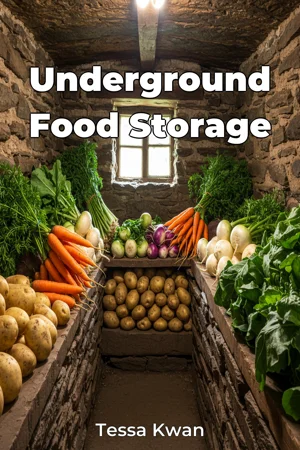
"Underground Food Storage" explores humanity's age-old reliance on the earth for preserving food, revealing ingenious methods employed by indigenous cultures worldwide. These techniques, including root cellars and underground pits, represent sophisticated adaptations to local environments, offering natural refrigeration and protection from spoilage. Discover how these approaches regulated temperature and humidity, extending food's shelf life without modern technology. The book delves into the historical and cultural context of these practices, examining archaeological evidence and ethnographic studies from around the globe. Readers will learn about the diverse approaches used by different cultures, from the earth lodges of the Mandan people to the Qanat systems of Persia. It also explains the scientific principles behind these methods, such as soil temperature dynamics and air circulation patterns. The book progresses from introducing a variety of techniques to explaining the science behind them, and finally offering practical applications for contemporary settings. It is a valuable resource for anyone interested in sustainable food systems, homesteading, and preserving cultural heritage, offering insights into creating resilient and environmentally conscious food practices.
Book Details
ISBN
9788235264046
Publisher
Publifye AS
Your Licenses
You don't own any licenses for this book
Purchase a license below to unlock this book and download the EPUB.
Purchase License
Select a tier to unlock this book
Need bulk licensing?
Contact us for enterprise agreements.