
About This Book
Have you ever considered how a simple metal disc could shape the course of empires and revolutionize global trade? "Coinage History" delves into the fascinating journey of money, tracing its evolution from rudimentary barter systems to the sophisticated coin-based economies that underpin modern society. This book explores not only the physical development of coins but also their profound impact on trade, politics, and culture throughout history. This book examines three critical aspects of coinage: its origins in early civilizations, its role in facilitating trade networks, and its influence on political power. The importance of these topics lies in understanding how economic systems are intrinsically linked to societal development. Knowledge of coinage history offers crucial insights into financial systems, trade dynamics, and the rise and fall of civilizations. To understand the significance of coinage, it is essential to first consider the limitations of barter systems and the need for a standardized medium of exchange. The book provides a historical context starting from the ancient world, exploring Mesopotamia, Anatolia, and the Mediterranean cultures where coinage first emerged. No specialized knowledge is needed, as the exploration begins with the fundamentals of economic exchange. The central argument of "Coinage History" is that the adoption and evolution of coinage have been a fundamental driver of economic growth and political consolidation throughout history. Coinage provided a standardized, portable, and durable means of exchange, which facilitated trade, taxation, and the accumulation of wealth. This thesis is vital for anyone seeking to understand economic history and the development of modern financial systems. The book begins by introducing the pre-coinage era, focusing on the limitations of barter and early forms of commodity money. It then progresses through three major sections: 1. **The Dawn of Coinage**: This section explores the earliest uses of coins in regions like Lydia and Greece, examining the materials, manufacturing techniques, and designs that characterized early coinage. 2. **Coinage and Trade Networks**: This part analyzes how coinage facilitated trade across vast distances, creating economic interconnectedness between different regions. The impact of Roman coinage on the expansion of its empire and the role of silver coinage in global trade during the Age of Exploration are emphasized. 3. **Coinage in Political and Social Context**: This section delves into how rulers used coinage to project power, finance wars, and manage their economies. The book also explores counterfeit coinage and its effect on economies. The evidence presented includes archaeological findings, numismatic analysis, historical texts, and economic models. The book draws on primary sources, such as ancient inscriptions and trade records, as well as secondary academic research in history, economics, and archaeology, offering a comprehensive and meticulously researched account. "Coinage History" connects to several other fields. Firstly, archaeology provides the physical evidence of coins and mints, offering material insights into their production and distribution. Secondly, political science informs the analysis of how coinage was used as a tool of governance and state power. Thirdly, art history offers an understanding of the symbolic and artistic elements incorporated into coin design. This book adopts a comprehensive and accessible style, making complex economic and historical concepts understandable to a broad audience. It avoids technical jargon and utilizes clear explanations and illustrative examples to convey its message. The target audience for "Coinage History" includes students of history and economics, numismatists, collectors, and general readers interested in the history of money and its impact on civilization. The book will appeal to those seeking a well-researched and engaging account of coinage from its origins to its enduring influence. As a work of non-fiction history, the book adheres to standard conventions of academic rigor, including thorough sourcing, clear argumentation, and objective analysis. The scope of the book extends from the earliest known examples of coinage to the early modern period, focusing on the key developments and turning points in coinage history across different regions. It does not go into modern fiat currencies or digital money, leaving that for alternative volumes. The information in "Coinage History" can be applied to understanding current economic issues, such as inflation, currency valuation, and the role of central banks. It also allows readers to appreciate the long-term implications of monetary policy and trade practices. The book addresses controversies such as the debates surrounding the origins of coinage. It also examines conflicting interpretations of the economic impact of specific coinage policies. By presenting multiple viewpoints and analyzing the available evidence, the book offers a balanced and nuanced perspective on these important issues.
Have you ever considered how a simple metal disc could shape the course of empires and revolutionize global trade? "Coinage History" delves into the fascinating journey of money, tracing its evolution from rudimentary barter systems to the sophisticated coin-based economies that underpin modern society. This book explores not only the physical development of coins but also their profound impact on trade, politics, and culture throughout history. This book examines three critical aspects of coinage: its origins in early civilizations, its role in facilitating trade networks, and its influence on political power. The importance of these topics lies in understanding how economic systems are intrinsically linked to societal development. Knowledge of coinage history offers crucial insights into financial systems, trade dynamics, and the rise and fall of civilizations. To understand the significance of coinage, it is essential to first consider the limitations of barter systems and the need for a standardized medium of exchange. The book provides a historical context starting from the ancient world, exploring Mesopotamia, Anatolia, and the Mediterranean cultures where coinage first emerged. No specialized knowledge is needed, as the exploration begins with the fundamentals of economic exchange. The central argument of "Coinage History" is that the adoption and evolution of coinage have been a fundamental driver of economic growth and political consolidation throughout history. Coinage provided a standardized, portable, and durable means of exchange, which facilitated trade, taxation, and the accumulation of wealth. This thesis is vital for anyone seeking to understand economic history and the development of modern financial systems. The book begins by introducing the pre-coinage era, focusing on the limitations of barter and early forms of commodity money. It then progresses through three major sections: 1. **The Dawn of Coinage**: This section explores the earliest uses of coins in regions like Lydia and Greece, examining the materials, manufacturing techniques, and designs that characterized early coinage. 2. **Coinage and Trade Networks**: This part analyzes how coinage facilitated trade across vast distances, creating economic interconnectedness between different regions. The impact of Roman coinage on the expansion of its empire and the role of silver coinage in global trade during the Age of Exploration are emphasized. 3. **Coinage in Political and Social Context**: This section delves into how rulers used coinage to project power, finance wars, and manage their economies. The book also explores counterfeit coinage and its effect on economies. The evidence presented includes archaeological findings, numismatic analysis, historical texts, and economic models. The book draws on primary sources, such as ancient inscriptions and trade records, as well as secondary academic research in history, economics, and archaeology, offering a comprehensive and meticulously researched account. "Coinage History" connects to several other fields. Firstly, archaeology provides the physical evidence of coins and mints, offering material insights into their production and distribution. Secondly, political science informs the analysis of how coinage was used as a tool of governance and state power. Thirdly, art history offers an understanding of the symbolic and artistic elements incorporated into coin design. This book adopts a comprehensive and accessible style, making complex economic and historical concepts understandable to a broad audience. It avoids technical jargon and utilizes clear explanations and illustrative examples to convey its message. The target audience for "Coinage History" includes students of history and economics, numismatists, collectors, and general readers interested in the history of money and its impact on civilization. The book will appeal to those seeking a well-researched and engaging account of coinage from its origins to its enduring influence. As a work of non-fiction history, the book adheres to standard conventions of academic rigor, including thorough sourcing, clear argumentation, and objective analysis. The scope of the book extends from the earliest known examples of coinage to the early modern period, focusing on the key developments and turning points in coinage history across different regions. It does not go into modern fiat currencies or digital money, leaving that for alternative volumes. The information in "Coinage History" can be applied to understanding current economic issues, such as inflation, currency valuation, and the role of central banks. It also allows readers to appreciate the long-term implications of monetary policy and trade practices. The book addresses controversies such as the debates surrounding the origins of coinage. It also examines conflicting interpretations of the economic impact of specific coinage policies. By presenting multiple viewpoints and analyzing the available evidence, the book offers a balanced and nuanced perspective on these important issues.
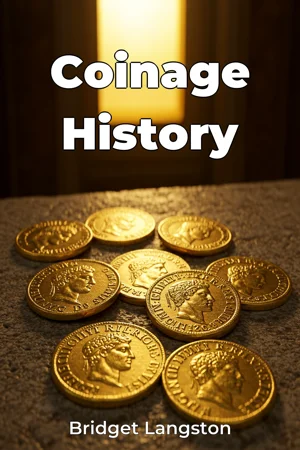
"Coinage History" explores the captivating story of how coins evolved from simple barter systems to complex economic drivers, shaping empires and trade. Delving into the origins of coinage in ancient civilizations, the book highlights how these early forms of currency facilitated trade networks and influenced political power. Intriguingly, the standardization of coinage allowed for efficient taxation and wealth accumulation, crucial for state development. The book progresses chronologically, initially examining the pre-coinage era and the limitations of barter. It then explores the dawn of coinage in regions like Lydia and Greece, analyzing manufacturing techniques and designs. Further, it investigates how coinage spurred trade across vast distances, exemplified by Roman coinage's impact on empire expansion. "Coinage History" provides a well-researched account of coinage's enduring influence using archaeological findings and historical texts.
Book Details
ISBN
9788235263735
Publisher
Publifye AS
Your Licenses
You don't own any licenses for this book
Purchase a license below to unlock this book and download the EPUB.
Purchase License
Select a tier to unlock this book
Need bulk licensing?
Contact us for enterprise agreements.