
About This Book
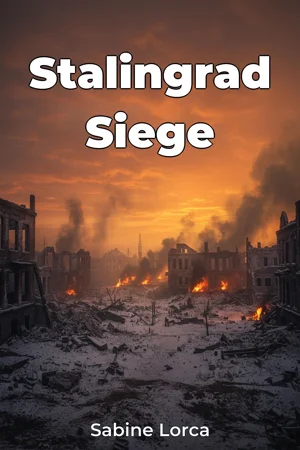
How did a city reduced to rubble become the graveyard of an invading army and the fulcrum upon which the Second World War turned? "Stalingrad Siege" dissects the pivotal battle, not merely as a clash of arms, but as a collision of ideologies, strategies, and human endurance, forever altering the trajectory of the Eastern Front and the global conflict. This book explores three indispensable topics: the strategic importance of Stalingrad to both the Soviet Union and Nazi Germany; the brutal urban warfare that defined the battle; and its lasting impact, geopolitically and psychologically. These themes are vital because Stalingrad represents the furthest eastward expansion of the Third Reich and its eventual defeat, a turning point that shifted the balance of power irretrievably. The narrative unfolds against the backdrop of Operation Barbarossa, Germany's invasion of the Soviet Union in 1941. Readers should possess a basic understanding of the war’s early phases, including the rapid German advances and the Soviet scorched earth policy. The book argues that Stalingrad was more than just a battle; it was a crucible that forged a new Soviet identity and exposed the limitations of German blitzkrieg tactics in protracted urban combat. "Stalingrad Siege" is structured to provide a comprehensive analysis of the battle. It begins by examining the strategic context: Hitler’s ambition to secure the Caucasus oil fields and Stalin’s determination to defend his namesake city. The narrative then transitions into a detailed account of the fighting within Stalingrad, focusing on the house-to-house combat, the resilience of the Soviet defenders, and the logistical nightmares faced by the German Sixth Army. Finally, the book analyzes the encirclement of the German forces, their eventual surrender, and the long-term consequences of the battle, including its impact on the morale of both sides and its role in shaping the postwar world. The book draws upon a range of primary and secondary sources, including translated German and Soviet military archives, eyewitness accounts from soldiers and civilians, and scholarly analyses of the battle. Particular attention is paid to previously unexamined data, providing fresh insight into the logistical challenges and the human cost of the siege. This book intersects with fields like political science (examining the ideological stakes), psychology (analyzing the impact of trauma on soldiers and civilians), and sociology (exploring the social dynamics of urban warfare). These interdisciplinary connections enhance the understanding of Stalingrad as a multifaceted historical phenomenon. "Stalingrad Siege" distinguishes itself by offering a balanced perspective, incorporating both German and Soviet viewpoints to provide a nuanced understanding of the decisions made by both sides. The book also challenges long-held myths about the battle, presenting a more complex and accurate portrayal of the events. The tone is informative and analytical, designed to engage the reader while maintaining scholarly rigor. "Stalingrad Siege" is aimed at military history enthusiasts, students of World War II, and anyone interested in understanding the turning points of the 20th century. The book offers practical relevance by providing insights into urban warfare strategies, logistical challenges in military campaigns, and the importance of morale in determining the outcome of battles. The book explores areas of controversy, such as the extent of Stalin’s purges within the Red Army and their impact on Soviet military effectiveness, offering a balanced examination of the existing debates. The scope is deliberately focused on the siege itself, with limited excursions into broader political or economic contexts. While it acknowledges the significance of events outside the city, its primary objective is to provide an in-depth analysis of the fighting within Stalingrad. This narrow focus allows for a more granular and comprehensive examination of the battle.
How did a city reduced to rubble become the graveyard of an invading army and the fulcrum upon which the Second World War turned? "Stalingrad Siege" dissects the pivotal battle, not merely as a clash of arms, but as a collision of ideologies, strategies, and human endurance, forever altering the trajectory of the Eastern Front and the global conflict. This book explores three indispensable topics: the strategic importance of Stalingrad to both the Soviet Union and Nazi Germany; the brutal urban warfare that defined the battle; and its lasting impact, geopolitically and psychologically. These themes are vital because Stalingrad represents the furthest eastward expansion of the Third Reich and its eventual defeat, a turning point that shifted the balance of power irretrievably. The narrative unfolds against the backdrop of Operation Barbarossa, Germany's invasion of the Soviet Union in 1941. Readers should possess a basic understanding of the war’s early phases, including the rapid German advances and the Soviet scorched earth policy. The book argues that Stalingrad was more than just a battle; it was a crucible that forged a new Soviet identity and exposed the limitations of German blitzkrieg tactics in protracted urban combat. "Stalingrad Siege" is structured to provide a comprehensive analysis of the battle. It begins by examining the strategic context: Hitler’s ambition to secure the Caucasus oil fields and Stalin’s determination to defend his namesake city. The narrative then transitions into a detailed account of the fighting within Stalingrad, focusing on the house-to-house combat, the resilience of the Soviet defenders, and the logistical nightmares faced by the German Sixth Army. Finally, the book analyzes the encirclement of the German forces, their eventual surrender, and the long-term consequences of the battle, including its impact on the morale of both sides and its role in shaping the postwar world. The book draws upon a range of primary and secondary sources, including translated German and Soviet military archives, eyewitness accounts from soldiers and civilians, and scholarly analyses of the battle. Particular attention is paid to previously unexamined data, providing fresh insight into the logistical challenges and the human cost of the siege. This book intersects with fields like political science (examining the ideological stakes), psychology (analyzing the impact of trauma on soldiers and civilians), and sociology (exploring the social dynamics of urban warfare). These interdisciplinary connections enhance the understanding of Stalingrad as a multifaceted historical phenomenon. "Stalingrad Siege" distinguishes itself by offering a balanced perspective, incorporating both German and Soviet viewpoints to provide a nuanced understanding of the decisions made by both sides. The book also challenges long-held myths about the battle, presenting a more complex and accurate portrayal of the events. The tone is informative and analytical, designed to engage the reader while maintaining scholarly rigor. "Stalingrad Siege" is aimed at military history enthusiasts, students of World War II, and anyone interested in understanding the turning points of the 20th century. The book offers practical relevance by providing insights into urban warfare strategies, logistical challenges in military campaigns, and the importance of morale in determining the outcome of battles. The book explores areas of controversy, such as the extent of Stalin’s purges within the Red Army and their impact on Soviet military effectiveness, offering a balanced examination of the existing debates. The scope is deliberately focused on the siege itself, with limited excursions into broader political or economic contexts. While it acknowledges the significance of events outside the city, its primary objective is to provide an in-depth analysis of the fighting within Stalingrad. This narrow focus allows for a more granular and comprehensive examination of the battle.
"Stalingrad Siege" meticulously examines the brutal and pivotal World War II battle on the Eastern Front between Nazi Germany and the Soviet Union. More than a mere clash of arms, the book reveals Stalingrad as a collision of ideologies and endurance, highlighting the city's strategic importance to both sides. The narrative exposes how the desperate fight for Stalingrad became the graveyard for the German Sixth Army, marking the furthest eastward expansion of the Third Reich and a crucial turning point in the war. The book dives into the horrific urban warfare that defined the battle, illustrating the resilience of the Red Army against the German blitzkrieg. Drawing from extensive primary and secondary sources, including previously unexamined data from both German and Soviet archives, the investigation offers fresh insights into the logistical nightmares and immense human cost of the siege. Through a balanced perspective, the author presents a nuanced understanding of the decisions made by both sides, challenging long-held myths surrounding the battle. Starting with the strategic context of Hitler’s push for the Caucasus oil fields and Stalin’s determination to hold his namesake city, the book moves to detailed accounts of house-to-house combat within Stalingrad. Finally, it analyzes the encirclement and surrender of German forces and the battles long-term impact, including its role in shaping the postwar world. The book is aimed at military history enthusiasts.
Book Details
ISBN
9788235263728
Publisher
Publifye AS
Your Licenses
You don't own any licenses for this book
Purchase a license below to unlock this book and download the EPUB.
Purchase License
Select a tier to unlock this book
Need bulk licensing?
Contact us for enterprise agreements.