
About This Book
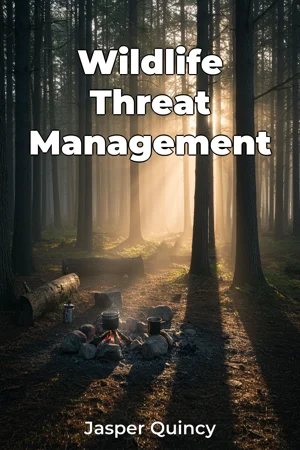
Are you venturing into the wild, where the thrill of adventure meets the untamed power of nature? 'Wildlife Threat Management' offers a comprehensive guide to navigating close encounters with large mammals in adventure zones, focusing on proven strategies for minimizing risk and ensuring the safety of both humans and wildlife. This book addresses a critical need for evidence-based practices in regions where recreational activities intersect with natural habitats. This book tackles three key areas: effective noise deterrents, strategic camp placement, and meticulous scent reduction. Understanding these elements is paramount for anyone operating in bear country, cougar territory, or areas inhabited by other potentially dangerous animals. Improper management of these factors can escalate encounters, leading to property damage, injury, or even fatality for both humans and the wildlife we seek to appreciate. Historically, human-wildlife interactions have often been managed reactively, employing lethal methods after an incident. However, a proactive, preventative approach is not only more humane but also more effective in the long run. Drawing upon recent studies in wildlife biology, conservation, and risk management, 'Wildlife Threat Management' presents a shift toward co-existence through informed decision-making and responsible practices. The central argument of this book is that human safety and wildlife conservation are not mutually exclusive. By implementing carefully considered strategies, it is possible to minimize the risk of dangerous encounters while simultaneously respecting and protecting the natural environment. This argument is particularly relevant in today's world, where increasing human encroachment on wildlife habitats necessitates a more nuanced approach to coexistence. The book begins by introducing the psychological and behavioral factors that govern interactions between humans and large mammals. It then systematically builds upon this foundation, dedicating chapters to noise deterrents, camp placement logic, and scent reduction protocols. The section on noise deterrents examines the effectiveness of various sound-producing devices and strategies, taking into account factors such as frequency, decibel level, and habituation. The chapter on camp placement provides a detailed analysis of how campsite location impacts the likelihood of attracting wildlife. The book culminates in a discussion of practical applications of these principles in diverse environments, from national parks to remote backcountry settings. The evidence presented throughout 'Wildlife Threat Management' is drawn from a variety of sources, including peer-reviewed scientific studies, government reports, and field data collected by wildlife management professionals. The book also incorporates case studies of successful and unsuccessful human-wildlife encounter management strategies. Unique data sources include GPS tracking data of animal movements, analysis of human behavior in wildlife areas, and controlled experiments examining the effectiveness of different deterrent techniques. This book intersects with several other fields, including psychology (understanding human risk perception), acoustics (analyzing the properties of noise deterrents), and environmental science (assessing the impact of human activities on wildlife habitats). 'Wildlife Threat Management' offers a comprehensive, scientifically grounded approach to minimizing risks associated with encounters with large mammals. It avoids sensationalism, presenting information in a clear, accessible style suitable for both professionals and informed laypersons. The target audience includes park rangers, wildlife guides, outdoor enthusiasts, researchers, and anyone whose work or recreation takes them into areas inhabited by potentially dangerous wildlife. This book will be valuable to them because it provides a practical, evidence-based framework for managing risks and promoting coexistence. This book addresses the complex and often contentious issue of human-wildlife conflict. It acknowledges that there are varying perspectives on wildlife management but advocates for a science-based approach that prioritizes both human safety and animal welfare. 'Wildlife Threat Management' focuses specifically on mitigating risks associated with close encounters with large mammals. While it touches upon broader issues of wildlife conservation, it does not attempt to provide a comprehensive overview of all aspects of wildlife management. The protocols outlined in 'Wildlife Threat Management' offer practical guidance for minimizing the risk of wildlife encounters, contributing to safer and more enjoyable experiences in the natural world.
Are you venturing into the wild, where the thrill of adventure meets the untamed power of nature? 'Wildlife Threat Management' offers a comprehensive guide to navigating close encounters with large mammals in adventure zones, focusing on proven strategies for minimizing risk and ensuring the safety of both humans and wildlife. This book addresses a critical need for evidence-based practices in regions where recreational activities intersect with natural habitats. This book tackles three key areas: effective noise deterrents, strategic camp placement, and meticulous scent reduction. Understanding these elements is paramount for anyone operating in bear country, cougar territory, or areas inhabited by other potentially dangerous animals. Improper management of these factors can escalate encounters, leading to property damage, injury, or even fatality for both humans and the wildlife we seek to appreciate. Historically, human-wildlife interactions have often been managed reactively, employing lethal methods after an incident. However, a proactive, preventative approach is not only more humane but also more effective in the long run. Drawing upon recent studies in wildlife biology, conservation, and risk management, 'Wildlife Threat Management' presents a shift toward co-existence through informed decision-making and responsible practices. The central argument of this book is that human safety and wildlife conservation are not mutually exclusive. By implementing carefully considered strategies, it is possible to minimize the risk of dangerous encounters while simultaneously respecting and protecting the natural environment. This argument is particularly relevant in today's world, where increasing human encroachment on wildlife habitats necessitates a more nuanced approach to coexistence. The book begins by introducing the psychological and behavioral factors that govern interactions between humans and large mammals. It then systematically builds upon this foundation, dedicating chapters to noise deterrents, camp placement logic, and scent reduction protocols. The section on noise deterrents examines the effectiveness of various sound-producing devices and strategies, taking into account factors such as frequency, decibel level, and habituation. The chapter on camp placement provides a detailed analysis of how campsite location impacts the likelihood of attracting wildlife. The book culminates in a discussion of practical applications of these principles in diverse environments, from national parks to remote backcountry settings. The evidence presented throughout 'Wildlife Threat Management' is drawn from a variety of sources, including peer-reviewed scientific studies, government reports, and field data collected by wildlife management professionals. The book also incorporates case studies of successful and unsuccessful human-wildlife encounter management strategies. Unique data sources include GPS tracking data of animal movements, analysis of human behavior in wildlife areas, and controlled experiments examining the effectiveness of different deterrent techniques. This book intersects with several other fields, including psychology (understanding human risk perception), acoustics (analyzing the properties of noise deterrents), and environmental science (assessing the impact of human activities on wildlife habitats). 'Wildlife Threat Management' offers a comprehensive, scientifically grounded approach to minimizing risks associated with encounters with large mammals. It avoids sensationalism, presenting information in a clear, accessible style suitable for both professionals and informed laypersons. The target audience includes park rangers, wildlife guides, outdoor enthusiasts, researchers, and anyone whose work or recreation takes them into areas inhabited by potentially dangerous wildlife. This book will be valuable to them because it provides a practical, evidence-based framework for managing risks and promoting coexistence. This book addresses the complex and often contentious issue of human-wildlife conflict. It acknowledges that there are varying perspectives on wildlife management but advocates for a science-based approach that prioritizes both human safety and animal welfare. 'Wildlife Threat Management' focuses specifically on mitigating risks associated with close encounters with large mammals. While it touches upon broader issues of wildlife conservation, it does not attempt to provide a comprehensive overview of all aspects of wildlife management. The protocols outlined in 'Wildlife Threat Management' offer practical guidance for minimizing the risk of wildlife encounters, contributing to safer and more enjoyable experiences in the natural world.
"Wildlife Threat Management" provides a comprehensive guide to safely navigating encounters with large mammals in adventure zones, emphasizing proactive strategies for risk management and coexistence. This book underscores the importance of techniques like effective noise deterrents, strategic camp placement, and meticulous scent reduction in minimizing human-wildlife conflict. For example, the book explores how improper scent management can inadvertently attract animals, leading to potentially dangerous situations, and how understanding animal behavior is crucial for effective deterrent use. By drawing from wildlife biology, conservation, and risk management, the book advocates for a shift from reactive, often lethal, methods to preventative measures that protect both people and animals. It presents information in an accessible style, suitable for park rangers, wildlife guides, outdoor enthusiasts, and anyone venturing into wildlife habitats. Examining psychological factors influencing human-animal interactions, the book systematically builds across chapters on noise deterrents, camp placement, and scent reduction protocols, offering practical applications in diverse environments.
Book Details
ISBN
9788235263711
Publisher
Publifye AS
Your Licenses
You don't own any licenses for this book
Purchase a license below to unlock this book and download the EPUB.
Purchase License
Select a tier to unlock this book
Need bulk licensing?
Contact us for enterprise agreements.