
About This Book
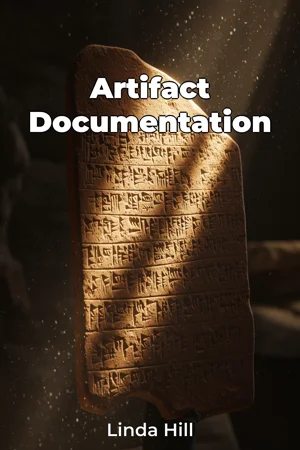
How did past generations transform broken fragments of civilizations into coherent narratives of human history? This book, "Artifact Documentation," explores the meticulous processes by which historical artifacts have been cataloged, preserved, and studied, providing a window into reconstructing past civilizations and understanding their achievements. We will delve into the evolving methodologies of artifact management, highlighting its significance in shaping our understanding of world history. This book addresses three key topics: the evolution of cataloging systems, the development of preservation techniques, and the impact of artifact analysis on historical interpretation. The importance of these topics lies in the fact that accurate artifact documentation forms the bedrock of historical research. Without systematic methods for recording, protecting, and analyzing material culture, our understanding of past civilizations would be fragmentary and unreliable. Contextually, the book spans from early rudimentary methods of artifact recording to modern digital technologies. Early practices often lacked standardization, leading to inconsistencies and loss of valuable information. The rise of scientific investigation and professional archaeology in the 19th and 20th centuries brought increased rigor and complexity to artifact documentation. The central argument of "Artifact Documentation" is that the evolution of artifact documentation practices reflects a broader shift in how societies understand and value history. It emphasizes that artifact documentation is not a neutral process but is instead shaped by prevailing social, political, and scientific paradigms. By tracing this evolution, the book reveals how our understanding of the past is contingent upon the methods we employ to study its material remains. The book unfolds in three major sections. First, it introduces the fundamental concepts of artifact documentation, including archaeological context, typology, and provenance. Second, it examines the historical development of cataloging and preservation techniques, covering topics such as the creation of museum collections, the development of standardized recording systems, and the application of scientific conservation methods. This section is further divided into chapters exploring specific periods and geographical regions, illustrating both common trends and local variations in documentation practices. Third, it considers the impact of artifact analysis on historical interpretation, focusing on how technological advancements, such as radiocarbon dating and DNA analysis, have revolutionized our understanding of past societies. The book culminates in a discussion of current challenges and future directions in artifact documentation, including the role of digital technologies and the ethical considerations involved in managing cultural heritage. The evidence presented relies on a range of primary and secondary sources, including archaeological reports, museum archives, conservation records, historical photographs, and scholarly publications. It also draws from case studies of specific archaeological sites and museum collections, providing concrete examples of the methods and challenges involved in artifact documentation. "Artifact Documentation" connects to several other fields, including archaeology, museum studies, conservation science, and information management. Its exploration of artifact analysis directly relates to scientific disciplines like chemistry, physics, and biology. These interdisciplinary connections enrich the book's argument by demonstrating the diverse expertise required for effective artifact documentation. The book offers a unique perspective by focusing on the intellectual history of artifact documentation, examining how documentation practices themselves have shaped our understanding of the past. It adopts an accessible yet scholarly tone, aiming to engage a broad audience interested in history, archaeology, and material culture. The target audience includes students and researchers in archaeology, history, museum studies, and related fields, as well as heritage professionals and anyone interested in the science of history. It offers valuable insights into the methods and challenges of reconstructing past civilizations from their material remains. As a work of non-fiction, "Artifact Documentation" adheres to principles of accuracy, objectivity, and evidence-based reasoning. It presents a balanced and nuanced account of the subject, acknowledging both the achievements and the limitations of artifact documentation practices. The scope includes a broad overview of artifact documentation practices across different time periods and geographical regions, but it focuses primarily on developments in Europe and North America. It acknowledges the contributions of diverse cultural traditions to the field, while recognizing that the book cannot provide an exhaustive account of every region and time period. The information in the book can be applied practically by readers involved in archaeological fieldwork, museum curation, and cultural heritage management. It offers guidance on best practices for artifact documentation and provides a framework for critically evaluating existing collections and archives. The book also addresses controversies in the field, such as debates over the ownership and repatriation of cultural heritage, and the ethical considerations involved in documenting and preserving artifacts from marginalized communities.
How did past generations transform broken fragments of civilizations into coherent narratives of human history? This book, "Artifact Documentation," explores the meticulous processes by which historical artifacts have been cataloged, preserved, and studied, providing a window into reconstructing past civilizations and understanding their achievements. We will delve into the evolving methodologies of artifact management, highlighting its significance in shaping our understanding of world history. This book addresses three key topics: the evolution of cataloging systems, the development of preservation techniques, and the impact of artifact analysis on historical interpretation. The importance of these topics lies in the fact that accurate artifact documentation forms the bedrock of historical research. Without systematic methods for recording, protecting, and analyzing material culture, our understanding of past civilizations would be fragmentary and unreliable. Contextually, the book spans from early rudimentary methods of artifact recording to modern digital technologies. Early practices often lacked standardization, leading to inconsistencies and loss of valuable information. The rise of scientific investigation and professional archaeology in the 19th and 20th centuries brought increased rigor and complexity to artifact documentation. The central argument of "Artifact Documentation" is that the evolution of artifact documentation practices reflects a broader shift in how societies understand and value history. It emphasizes that artifact documentation is not a neutral process but is instead shaped by prevailing social, political, and scientific paradigms. By tracing this evolution, the book reveals how our understanding of the past is contingent upon the methods we employ to study its material remains. The book unfolds in three major sections. First, it introduces the fundamental concepts of artifact documentation, including archaeological context, typology, and provenance. Second, it examines the historical development of cataloging and preservation techniques, covering topics such as the creation of museum collections, the development of standardized recording systems, and the application of scientific conservation methods. This section is further divided into chapters exploring specific periods and geographical regions, illustrating both common trends and local variations in documentation practices. Third, it considers the impact of artifact analysis on historical interpretation, focusing on how technological advancements, such as radiocarbon dating and DNA analysis, have revolutionized our understanding of past societies. The book culminates in a discussion of current challenges and future directions in artifact documentation, including the role of digital technologies and the ethical considerations involved in managing cultural heritage. The evidence presented relies on a range of primary and secondary sources, including archaeological reports, museum archives, conservation records, historical photographs, and scholarly publications. It also draws from case studies of specific archaeological sites and museum collections, providing concrete examples of the methods and challenges involved in artifact documentation. "Artifact Documentation" connects to several other fields, including archaeology, museum studies, conservation science, and information management. Its exploration of artifact analysis directly relates to scientific disciplines like chemistry, physics, and biology. These interdisciplinary connections enrich the book's argument by demonstrating the diverse expertise required for effective artifact documentation. The book offers a unique perspective by focusing on the intellectual history of artifact documentation, examining how documentation practices themselves have shaped our understanding of the past. It adopts an accessible yet scholarly tone, aiming to engage a broad audience interested in history, archaeology, and material culture. The target audience includes students and researchers in archaeology, history, museum studies, and related fields, as well as heritage professionals and anyone interested in the science of history. It offers valuable insights into the methods and challenges of reconstructing past civilizations from their material remains. As a work of non-fiction, "Artifact Documentation" adheres to principles of accuracy, objectivity, and evidence-based reasoning. It presents a balanced and nuanced account of the subject, acknowledging both the achievements and the limitations of artifact documentation practices. The scope includes a broad overview of artifact documentation practices across different time periods and geographical regions, but it focuses primarily on developments in Europe and North America. It acknowledges the contributions of diverse cultural traditions to the field, while recognizing that the book cannot provide an exhaustive account of every region and time period. The information in the book can be applied practically by readers involved in archaeological fieldwork, museum curation, and cultural heritage management. It offers guidance on best practices for artifact documentation and provides a framework for critically evaluating existing collections and archives. The book also addresses controversies in the field, such as debates over the ownership and repatriation of cultural heritage, and the ethical considerations involved in documenting and preserving artifacts from marginalized communities.
"Artifact Documentation" explores how societies have transformed fragmented objects into historical narratives, emphasizing the evolution of cataloging, preservation, and analysis techniques. The book highlights that artifact documentation is not a neutral process but is shaped by ever-changing social, political, and scientific paradigms. For example, early documentation methods often lacked standardization, leading to inconsistencies, while later scientific advancements like radiocarbon dating revolutionized our understanding of past societies. The book uniquely focuses on the intellectual history of these practices, revealing how they have influenced our understanding of the past. The book begins by introducing core concepts, such as archaeological context and provenance, then examines the historical development of cataloging and preservation. It covers museum collections, standardized recording systems, and scientific conservation methods, divided into chapters that explore specific periods and geographical regions. Finally, the book considers the impact of artifact analysis on historical interpretation and concludes with current challenges and future directions, including the role of digital technologies and ethical considerations in managing cultural heritage.
Book Details
ISBN
9788235263575
Publisher
Publifye AS
Your Licenses
You don't own any licenses for this book
Purchase a license below to unlock this book and download the EPUB.
Purchase License
Select a tier to unlock this book
Need bulk licensing?
Contact us for enterprise agreements.