
About This Book
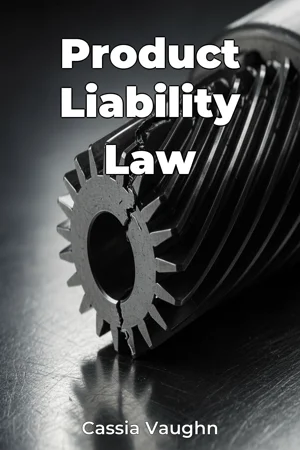
Have you ever considered the far-reaching legal consequences a business faces when a defective product causes harm? This book, "Product Liability Law," delves into the complex world of legal responsibilities borne by businesses, meticulously examining the intricacies of product recalls, compensation cases, and the overarching framework of product liability law. These topics are vital for anyone involved in manufacturing, distribution, or retail, as well as legal professionals and consumers seeking to understand their rights and obligations. The modern landscape of product liability is shaped by a confluence of historical precedents, evolving consumer protection laws, and ever-changing technological advancements. A basic understanding of tort law and contract law is helpful, though not strictly necessary, as the book provides foundational explanations. The central argument of "Product Liability Law" is that a proactive and comprehensive understanding of product liability principles is not merely a matter of legal compliance, but a cornerstone of responsible business practice and consumer safety. We argue that businesses must adopt a preventative approach, embedding robust risk assessment and quality control measures into their operations to mitigate the potential for defective products and subsequent legal ramifications. This book is structured to guide readers through the key aspects of product liability. Initially, we introduce the fundamental concepts, defining what constitutes a "defective product" and exploring the various types of defects (design, manufacturing, and marketing). We then develop these ideas across several major sections. First, we dissect the legal theories underpinning product liability claims, including negligence, strict liability, and breach of warranty. Second, we analyze the process of product recalls, examining the legal framework governing recalls, the practical steps involved in executing a recall, and the strategies for minimizing reputational damage. Third, we scrutinize compensation cases, providing detailed analyses of landmark cases, exploring the methodologies for assessing damages, and offering insights into effective defense strategies. The book culminates in a discussion of emerging trends and challenges in product liability law, such as the impact of e-commerce and the complexities of global supply chains. Our analysis relies on a wide array of evidence, including legal statutes, judicial opinions, regulatory guidelines, and industry best practices. Furthermore, we will incorporate case studies of real-world product liability disputes, drawing upon data from court records and government agencies. "Product Liability Law" connects to multiple fields, including business ethics, risk management, and consumer advocacy. The understanding of ethical considerations in product design and marketing complements the legal analysis. The principles of risk management provide a framework for businesses to proactively address potential product safety hazards. Finally, the insights into consumer advocacy highlight the importance of protecting consumer rights and ensuring accountability for defective products. This book offers a unique perspective by combining legal analysis with practical guidance for businesses. It goes beyond a mere recitation of legal principles, offering concrete strategies for preventing product defects, managing recalls, and defending against liability claims. The tone is professional and informative, aiming to provide a clear and accessible explanation of complex legal concepts. The target audience includes business owners, corporate executives, risk managers, legal professionals, and students studying business law or product safety. This book would be valuable to anyone seeking a comprehensive understanding of the legal responsibilities associated with defective products. In line with conventions of the 'Business' and 'Politics' genres, the book maintains a focus on accuracy, objectivity, and practical relevance. The scope of the book is comprehensive, covering a wide range of product liability issues. However, it is not intended to provide legal advice for specific situations. The information in this book can be applied practically by businesses to develop robust product safety programs, manage potential liability risks, and respond effectively to product recalls. The book addresses several ongoing debates in the field, such as the appropriate standard of liability for manufacturers and the extent to which businesses should be held responsible for injuries caused by misuse of their products.
Have you ever considered the far-reaching legal consequences a business faces when a defective product causes harm? This book, "Product Liability Law," delves into the complex world of legal responsibilities borne by businesses, meticulously examining the intricacies of product recalls, compensation cases, and the overarching framework of product liability law. These topics are vital for anyone involved in manufacturing, distribution, or retail, as well as legal professionals and consumers seeking to understand their rights and obligations. The modern landscape of product liability is shaped by a confluence of historical precedents, evolving consumer protection laws, and ever-changing technological advancements. A basic understanding of tort law and contract law is helpful, though not strictly necessary, as the book provides foundational explanations. The central argument of "Product Liability Law" is that a proactive and comprehensive understanding of product liability principles is not merely a matter of legal compliance, but a cornerstone of responsible business practice and consumer safety. We argue that businesses must adopt a preventative approach, embedding robust risk assessment and quality control measures into their operations to mitigate the potential for defective products and subsequent legal ramifications. This book is structured to guide readers through the key aspects of product liability. Initially, we introduce the fundamental concepts, defining what constitutes a "defective product" and exploring the various types of defects (design, manufacturing, and marketing). We then develop these ideas across several major sections. First, we dissect the legal theories underpinning product liability claims, including negligence, strict liability, and breach of warranty. Second, we analyze the process of product recalls, examining the legal framework governing recalls, the practical steps involved in executing a recall, and the strategies for minimizing reputational damage. Third, we scrutinize compensation cases, providing detailed analyses of landmark cases, exploring the methodologies for assessing damages, and offering insights into effective defense strategies. The book culminates in a discussion of emerging trends and challenges in product liability law, such as the impact of e-commerce and the complexities of global supply chains. Our analysis relies on a wide array of evidence, including legal statutes, judicial opinions, regulatory guidelines, and industry best practices. Furthermore, we will incorporate case studies of real-world product liability disputes, drawing upon data from court records and government agencies. "Product Liability Law" connects to multiple fields, including business ethics, risk management, and consumer advocacy. The understanding of ethical considerations in product design and marketing complements the legal analysis. The principles of risk management provide a framework for businesses to proactively address potential product safety hazards. Finally, the insights into consumer advocacy highlight the importance of protecting consumer rights and ensuring accountability for defective products. This book offers a unique perspective by combining legal analysis with practical guidance for businesses. It goes beyond a mere recitation of legal principles, offering concrete strategies for preventing product defects, managing recalls, and defending against liability claims. The tone is professional and informative, aiming to provide a clear and accessible explanation of complex legal concepts. The target audience includes business owners, corporate executives, risk managers, legal professionals, and students studying business law or product safety. This book would be valuable to anyone seeking a comprehensive understanding of the legal responsibilities associated with defective products. In line with conventions of the 'Business' and 'Politics' genres, the book maintains a focus on accuracy, objectivity, and practical relevance. The scope of the book is comprehensive, covering a wide range of product liability issues. However, it is not intended to provide legal advice for specific situations. The information in this book can be applied practically by businesses to develop robust product safety programs, manage potential liability risks, and respond effectively to product recalls. The book addresses several ongoing debates in the field, such as the appropriate standard of liability for manufacturers and the extent to which businesses should be held responsible for injuries caused by misuse of their products.
"Product Liability Law" offers a comprehensive exploration into the legal responsibilities businesses face concerning defective products. It highlights how a deep understanding of product liability principles extends beyond mere legal compliance, becoming essential for responsible business practices and ensuring consumer safety. The book examines the intricacies of product recalls and compensation cases, offering insights into landmark decisions and effective defense strategies. It emphasizes that businesses should proactively integrate risk assessment and quality control measures into their operations. The book begins by defining defective products and exploring defect types such as design, manufacturing, and marketing flaws. It then dissects the legal theories underpinning product liability claims, including negligence, strict liability, and breach of warranty. Later chapters analyze the product recall process, legal frameworks, practical steps, and reputation management, while also scrutinizing compensation cases and offering insights into assessing damages. The book concludes with emerging trends, like e-commerce impacts and complexities in global supply chains, making it valuable for business owners, legal professionals, and anyone seeking a comprehensive understanding of product liability law.
Book Details
ISBN
9788235263483
Publisher
Publifye AS
Your Licenses
You don't own any licenses for this book
Purchase a license below to unlock this book and download the EPUB.
Purchase License
Select a tier to unlock this book
Need bulk licensing?
Contact us for enterprise agreements.