
About This Book
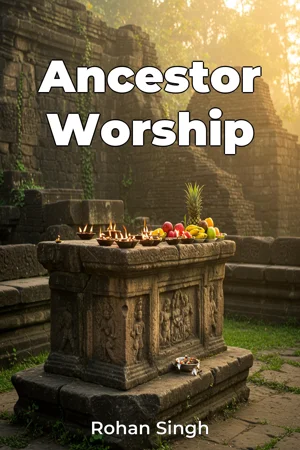
Why do the living maintain connections with the dead? "Ancestor Worship" delves into this fundamental question by examining the diverse practices of ancestor reverence across various regions and cultures throughout history. This book explores the rich tapestry of beliefs and rituals surrounding the veneration of ancestors, shedding light on its enduring significance in shaping social structures, religious beliefs, and cultural identities. This exploration is crucial because ancestor reverence provides a window into understanding humanity's relationship with mortality, family, and the past. By studying these practices, we gain insights into how societies construct meaning, transmit values, and maintain continuity across generations. We will analyze archaeological findings like burial sites and ritual objects, alongside textual sources such as religious scriptures, historical accounts, and ethnographic studies, to provide a comprehensive view. The book's central argument is that ancestor reverence, while manifesting differently across cultures, shares universal functions: reinforcing kinship ties, legitimizing social hierarchies, and providing a sense of continuity and meaning in the face of death. We examine how these functions are expressed through diverse rituals, beliefs, and social practices. The book is structured in three main sections. The first section introduces the key concepts and definitions related to ancestor reverence, including different forms of veneration, the roles of intermediaries (such as priests or shamans), and the symbolic meanings associated with ancestor figures. The second section explores specific case studies from different regions of the world, such as ancient China, ancient Egypt, various African cultures, and pre-Columbian Americas. Each case study analyzes archaeological and textual evidence to reconstruct the specific practices and beliefs associated with ancestor reverence in that region. Key aspects examined include mortuary rituals, the role of ancestor veneration in social and political structures, and the evolution of these practices over time. The third section synthesizes the findings from the case studies to identify common themes and variations in ancestor reverence across cultures. It also explores the contemporary relevance of ancestor veneration, examining its persistence in modern societies and its adaptation to changing social and cultural contexts. This book draws upon a wide range of evidence, including archaeological data from burial sites, temples, and domestic shrines; textual sources such as religious texts, historical chronicles, and ethnographic accounts; and anthropological studies of contemporary practices. We'll also consider artistic representations of ancestors in various forms, from statues and paintings to oral traditions and folklore. "Ancestor Worship" connects to several other fields of study, including anthropology, sociology, religious studies, and archaeology. Anthropological perspectives inform the analysis of cultural beliefs and practices surrounding death and the afterlife. Sociological theories help to understand the role of ancestor reverence in shaping social structures and power relations. Religious studies provides a framework for interpreting the symbolic meanings and spiritual dimensions of ancestor veneration. Archaeological evidence offers tangible insights into the material culture associated with these practices. Unlike many studies that focus on a single region or culture, this book offers a comparative perspective, examining ancestor reverence across diverse geographical and historical contexts. This approach allows for a more nuanced understanding of the phenomenon and its underlying dynamics. The book maintains an academic tone, presenting information in a clear, objective, and well-supported manner. However, the writing style is also accessible and engaging, avoiding overly technical jargon. The narrative is designed to be informative and thought-provoking, encouraging readers to reflect on their own beliefs and assumptions about death, family, and the past. The target audience includes students and scholars in anthropology, religious studies, history, and archaeology, as well as anyone interested in learning more about the diverse ways in which humans have engaged with the memory of the dead across cultures. As a work of non-fiction history and religion, "Ancestor Worship" presents factual information and scholarly analysis. It adheres to academic standards of evidence and argumentation, while remaining accessible to a general audience. The scope of the book encompasses a broad range of cultures and historical periods, but it does not attempt to provide an exhaustive account of every instance of ancestor reverence in human history. Instead, it focuses on selected case studies that illustrate key themes and variations in these practices. The information presented in the book can be applied to various fields, including heritage management, cultural preservation, and genealogical research. It can also provide insights into contemporary debates about death, memory, and identity. Ancestor reverence is not without its controversies. The book will address the role of ancestor veneration in perpetuating social inequalities, promoting patriarchal values, or justifying violence. It will also analyze the ethical implications of studying and interpreting these practices, particularly in relation to indigenous communities and cultural heritage.
Why do the living maintain connections with the dead? "Ancestor Worship" delves into this fundamental question by examining the diverse practices of ancestor reverence across various regions and cultures throughout history. This book explores the rich tapestry of beliefs and rituals surrounding the veneration of ancestors, shedding light on its enduring significance in shaping social structures, religious beliefs, and cultural identities. This exploration is crucial because ancestor reverence provides a window into understanding humanity's relationship with mortality, family, and the past. By studying these practices, we gain insights into how societies construct meaning, transmit values, and maintain continuity across generations. We will analyze archaeological findings like burial sites and ritual objects, alongside textual sources such as religious scriptures, historical accounts, and ethnographic studies, to provide a comprehensive view. The book's central argument is that ancestor reverence, while manifesting differently across cultures, shares universal functions: reinforcing kinship ties, legitimizing social hierarchies, and providing a sense of continuity and meaning in the face of death. We examine how these functions are expressed through diverse rituals, beliefs, and social practices. The book is structured in three main sections. The first section introduces the key concepts and definitions related to ancestor reverence, including different forms of veneration, the roles of intermediaries (such as priests or shamans), and the symbolic meanings associated with ancestor figures. The second section explores specific case studies from different regions of the world, such as ancient China, ancient Egypt, various African cultures, and pre-Columbian Americas. Each case study analyzes archaeological and textual evidence to reconstruct the specific practices and beliefs associated with ancestor reverence in that region. Key aspects examined include mortuary rituals, the role of ancestor veneration in social and political structures, and the evolution of these practices over time. The third section synthesizes the findings from the case studies to identify common themes and variations in ancestor reverence across cultures. It also explores the contemporary relevance of ancestor veneration, examining its persistence in modern societies and its adaptation to changing social and cultural contexts. This book draws upon a wide range of evidence, including archaeological data from burial sites, temples, and domestic shrines; textual sources such as religious texts, historical chronicles, and ethnographic accounts; and anthropological studies of contemporary practices. We'll also consider artistic representations of ancestors in various forms, from statues and paintings to oral traditions and folklore. "Ancestor Worship" connects to several other fields of study, including anthropology, sociology, religious studies, and archaeology. Anthropological perspectives inform the analysis of cultural beliefs and practices surrounding death and the afterlife. Sociological theories help to understand the role of ancestor reverence in shaping social structures and power relations. Religious studies provides a framework for interpreting the symbolic meanings and spiritual dimensions of ancestor veneration. Archaeological evidence offers tangible insights into the material culture associated with these practices. Unlike many studies that focus on a single region or culture, this book offers a comparative perspective, examining ancestor reverence across diverse geographical and historical contexts. This approach allows for a more nuanced understanding of the phenomenon and its underlying dynamics. The book maintains an academic tone, presenting information in a clear, objective, and well-supported manner. However, the writing style is also accessible and engaging, avoiding overly technical jargon. The narrative is designed to be informative and thought-provoking, encouraging readers to reflect on their own beliefs and assumptions about death, family, and the past. The target audience includes students and scholars in anthropology, religious studies, history, and archaeology, as well as anyone interested in learning more about the diverse ways in which humans have engaged with the memory of the dead across cultures. As a work of non-fiction history and religion, "Ancestor Worship" presents factual information and scholarly analysis. It adheres to academic standards of evidence and argumentation, while remaining accessible to a general audience. The scope of the book encompasses a broad range of cultures and historical periods, but it does not attempt to provide an exhaustive account of every instance of ancestor reverence in human history. Instead, it focuses on selected case studies that illustrate key themes and variations in these practices. The information presented in the book can be applied to various fields, including heritage management, cultural preservation, and genealogical research. It can also provide insights into contemporary debates about death, memory, and identity. Ancestor reverence is not without its controversies. The book will address the role of ancestor veneration in perpetuating social inequalities, promoting patriarchal values, or justifying violence. It will also analyze the ethical implications of studying and interpreting these practices, particularly in relation to indigenous communities and cultural heritage.
"Ancestor Worship" explores the widespread practice of honoring deceased relatives across diverse cultures and throughout history. It examines how ancestor reverence shapes cultural identity, religious beliefs, and social structures, revealing the profound ways societies connect with mortality, family, and the past. One intriguing aspect covered is how mortuary rituals, like elaborate burial sites and offerings, reflect a society's understanding of death and the afterlife. The book also examines how ancestor veneration reinforces kinship ties and legitimizes social hierarchies, providing continuity and meaning in the face of death. The book adopts a comparative approach, drawing on archaeological findings, religious texts, historical accounts, and anthropological studies to analyze ancestor reverence in regions like ancient China, ancient Egypt, and pre-Columbian Americas. It highlights both common themes and variations in these practices, emphasizing the enduring relevance of ancestor veneration in modern societies. The book progresses by first introducing key concepts, then exploring specific case studies, and finally synthesizing the findings to identify overarching patterns.
Book Details
ISBN
9788235263407
Publisher
Publifye AS
Your Licenses
You don't own any licenses for this book
Purchase a license below to unlock this book and download the EPUB.
Purchase License
Select a tier to unlock this book
Need bulk licensing?
Contact us for enterprise agreements.