
About This Book
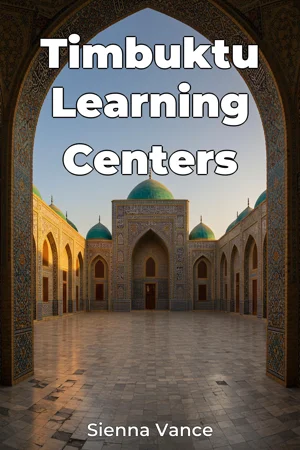
How did a city on the edge of the Sahara Desert become a beacon of intellectual and religious life, rivaling the great centers of learning in Europe and the Middle East? "Timbuktu Learning Centers" unveils the compelling story of Timbuktu's transformation into a thriving scholarly capital during its golden age, exploring the development and significance of its well-documented institutions, written records, and religious instruction. This book argues that Timbuktu's intellectual flourishing was not merely a consequence of its location as a trade hub, but a deliberate and sustained effort to cultivate a vibrant culture of learning, leaving a lasting legacy on Islamic scholarship and West African history. This book delves into three core aspects of Timbuktu's intellectual landscape: the establishment and organization of its mosques and madrasas, the creation and preservation of its vast manuscript libraries, and the evolution of its distinct traditions of Islamic scholarship. These elements are crucial for understanding the depth and complexity of intellectual life in Timbuktu. By examining these areas, “Timbuktu Learning Centers” reveals how Timbuktu fostered critical thinking and religious study. To provide a comprehensive understanding, the book begins by situating Timbuktu within its historical and geographical context. It examines the city's rise as a major center of trade in the trans-Saharan network, highlighting how this economic prosperity provided the foundation for intellectual pursuits. It then investigates the social and political structures that enabled the growth of Timbuktu's scholarly community, including the patronage of rulers and the role of family networks in transmitting knowledge. The book requires no specialized prior knowledge. "Timbuktu Learning Centers" is structured to guide the reader through the key stages of Timbuktu's intellectual development. It begins by introducing the foundational elements of Islamic education and manuscript culture in the city. The book then turns to specific examples of Timbuktu's major educational institutions, analyzing their curricula, teaching methods, and the intellectual contributions of their scholars. Particular attention is paid to the Sankore Mosque, a site of advanced learning. Following this institutional analysis, the book examines the diverse subjects covered in Timbuktu's manuscripts, ranging from Islamic law and theology to astronomy, mathematics, medicine, and literature. Finally, the book assesses the impact of Timbuktu's intellectual legacy on later generations of West African scholars and its relevance to contemporary debates about Islamic education. The arguments in this book are supported by a wealth of primary source material, including digitized manuscripts from Timbuktu's libraries, historical chronicles, and biographical accounts of scholars. It also draws upon secondary scholarship in history, Islamic studies, and African studies to provide a nuanced and comprehensive analysis. This book also uses quantitative data about manuscript production and trade to support its claims. This book intersects with several other fields, including religious studies, African history, and the history of science and technology. By examining the transmission of scientific knowledge through Timbuktu's manuscripts, the book contributes to a broader understanding of the interconnectedness of intellectual traditions in the pre-modern world. This book also links to discussions about cultural preservation and the importance of safeguarding endangered manuscript collections. "Timbuktu Learning Centers" offers a unique perspective by focusing specifically on the mechanisms and institutions that enabled Timbuktu to become a center of learning. It moves beyond the general recognition of Timbuktu's historical importance to provide a detailed examination of how knowledge was produced, disseminated, and preserved in the city. The book is written in an accessible academic style, aiming to be thorough and well-researched yet avoiding overly technical language. It is intended for students, scholars, and anyone interested in the history of Islam, African history, or the history of education. This book will be valuable to those seeking a deeper understanding of Timbuktu's contributions to global intellectual history. As an academic history, "Timbuktu Learning Centers" adheres to the conventions of rigorous research, clear argumentation, and thorough citation of sources. The scope of the book is limited to the golden age of Timbuktu's intellectual life, from the 15th to the 17th centuries, intentionally excluding discussion of later periods of decline or colonial influence to maintain focus. The lessons from Timbuktu’s story offer contemporary relevance. The book shows how investing in education and intellectual pursuits can lead to cultural and economic progress. Moreover, it provides valuable insights into the preservation and management of historical manuscripts in the digital age. This book engages with ongoing debates about the nature of Islamic education, the role of Africa in global intellectual history, and the importance of preserving cultural heritage. It challenges Eurocentric perspectives on the history of knowledge by highlighting the intellectual achievements of a West African society.
How did a city on the edge of the Sahara Desert become a beacon of intellectual and religious life, rivaling the great centers of learning in Europe and the Middle East? "Timbuktu Learning Centers" unveils the compelling story of Timbuktu's transformation into a thriving scholarly capital during its golden age, exploring the development and significance of its well-documented institutions, written records, and religious instruction. This book argues that Timbuktu's intellectual flourishing was not merely a consequence of its location as a trade hub, but a deliberate and sustained effort to cultivate a vibrant culture of learning, leaving a lasting legacy on Islamic scholarship and West African history. This book delves into three core aspects of Timbuktu's intellectual landscape: the establishment and organization of its mosques and madrasas, the creation and preservation of its vast manuscript libraries, and the evolution of its distinct traditions of Islamic scholarship. These elements are crucial for understanding the depth and complexity of intellectual life in Timbuktu. By examining these areas, “Timbuktu Learning Centers” reveals how Timbuktu fostered critical thinking and religious study. To provide a comprehensive understanding, the book begins by situating Timbuktu within its historical and geographical context. It examines the city's rise as a major center of trade in the trans-Saharan network, highlighting how this economic prosperity provided the foundation for intellectual pursuits. It then investigates the social and political structures that enabled the growth of Timbuktu's scholarly community, including the patronage of rulers and the role of family networks in transmitting knowledge. The book requires no specialized prior knowledge. "Timbuktu Learning Centers" is structured to guide the reader through the key stages of Timbuktu's intellectual development. It begins by introducing the foundational elements of Islamic education and manuscript culture in the city. The book then turns to specific examples of Timbuktu's major educational institutions, analyzing their curricula, teaching methods, and the intellectual contributions of their scholars. Particular attention is paid to the Sankore Mosque, a site of advanced learning. Following this institutional analysis, the book examines the diverse subjects covered in Timbuktu's manuscripts, ranging from Islamic law and theology to astronomy, mathematics, medicine, and literature. Finally, the book assesses the impact of Timbuktu's intellectual legacy on later generations of West African scholars and its relevance to contemporary debates about Islamic education. The arguments in this book are supported by a wealth of primary source material, including digitized manuscripts from Timbuktu's libraries, historical chronicles, and biographical accounts of scholars. It also draws upon secondary scholarship in history, Islamic studies, and African studies to provide a nuanced and comprehensive analysis. This book also uses quantitative data about manuscript production and trade to support its claims. This book intersects with several other fields, including religious studies, African history, and the history of science and technology. By examining the transmission of scientific knowledge through Timbuktu's manuscripts, the book contributes to a broader understanding of the interconnectedness of intellectual traditions in the pre-modern world. This book also links to discussions about cultural preservation and the importance of safeguarding endangered manuscript collections. "Timbuktu Learning Centers" offers a unique perspective by focusing specifically on the mechanisms and institutions that enabled Timbuktu to become a center of learning. It moves beyond the general recognition of Timbuktu's historical importance to provide a detailed examination of how knowledge was produced, disseminated, and preserved in the city. The book is written in an accessible academic style, aiming to be thorough and well-researched yet avoiding overly technical language. It is intended for students, scholars, and anyone interested in the history of Islam, African history, or the history of education. This book will be valuable to those seeking a deeper understanding of Timbuktu's contributions to global intellectual history. As an academic history, "Timbuktu Learning Centers" adheres to the conventions of rigorous research, clear argumentation, and thorough citation of sources. The scope of the book is limited to the golden age of Timbuktu's intellectual life, from the 15th to the 17th centuries, intentionally excluding discussion of later periods of decline or colonial influence to maintain focus. The lessons from Timbuktu’s story offer contemporary relevance. The book shows how investing in education and intellectual pursuits can lead to cultural and economic progress. Moreover, it provides valuable insights into the preservation and management of historical manuscripts in the digital age. This book engages with ongoing debates about the nature of Islamic education, the role of Africa in global intellectual history, and the importance of preserving cultural heritage. It challenges Eurocentric perspectives on the history of knowledge by highlighting the intellectual achievements of a West African society.
"Timbuktu Learning Centers" explores how Timbuktu, a city strategically positioned within the trans-Saharan trade network, became a prominent center for Islamic scholarship and intellectual life. It examines the deliberate cultivation of learning that transformed Timbuktu into a rival to renowned centers in Europe and the Middle East. The book details the organization of mosques and madrasas, the creation and preservation of vast manuscript libraries, and the unique traditions of Islamic education that fostered critical thinking. By examining digitized manuscripts, historical chronicles, and biographical accounts of scholars, the book argues that Timbuktu's intellectual flourishing was a sustained effort, not merely a consequence of trade. The book progresses by first situating Timbuktu within its historical and geographical context, highlighting its economic prosperity. It then investigates the social and political structures supporting the scholarly community, including the patronage of rulers. The text analyzes the curricula, teaching methods, and intellectual contributions of scholars at major institutions like the Sankore Mosque. This detailed approach offers a comprehensive understanding of how Timbuktu's manuscript libraries became repositories of knowledge spanning Islamic law, astronomy, medicine, and literature, demonstrating the city's lasting legacy in Islamic scholarship and West African history.
Book Details
ISBN
9788235263339
Publisher
Publifye AS
Your Licenses
You don't own any licenses for this book
Purchase a license below to unlock this book and download the EPUB.
Purchase License
Select a tier to unlock this book
Need bulk licensing?
Contact us for enterprise agreements.