
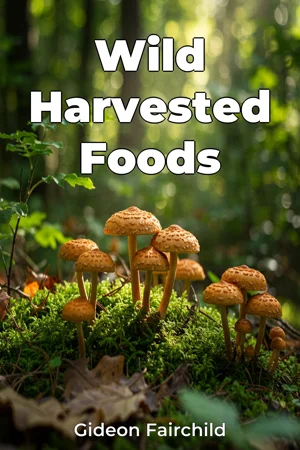
About This Book
Can the bounty of nature beyond cultivated lands and farmed waters offer sustainable solutions for both nutrition and economic security? "Wild Harvested Foods" delves into the intricate relationship between wild plants, fungi, and seafood, and their contributions to local economies and dietary practices around the world. This book explores the economic and ecological significance of these often-overlooked resources. It is important to understand the role of wild-harvested foods in providing sustenance, income, and cultural value, especially in marginalized communities and fragile ecosystems. This book provides the reader with the historical and ecological context needed to understand modern harvesting practices. It examines traditional harvesting methods employed by indigenous communities. These practices often demonstrate sustainable approaches to resource management developed over generations. It then contrasts these with modern commercial harvesting, pointing out potential challenges to long-term sustainability and biodiversity. The central argument of "Wild Harvested Foods" is that integrating wild-harvested resources into both local and global economies requires a balanced approach that prioritizes ecological sustainability and social equity. Neglecting either of these factors will lead to resource depletion and exacerbate existing inequalities. The book is structured around three core themes. First, it introduces the diversity of wild-harvested foods, providing case studies from various regions demonstrating their nutritional value and cultural importance. Second, it analyzes the economic structures surrounding wild harvesting, from small-scale family operations to large-scale commercial enterprises. This section addresses issues of market access, pricing, and the distribution of benefits. Third, it explores the ecological impacts of harvesting practices. It proposes management strategies that promote responsible harvesting and conservation. The arguments presented are supported by a wide range of evidence, including economic data on the market value of wild-harvested foods, ecological studies on the impact of harvesting on plant and animal populations, and ethnographic research documenting the social and cultural significance of these resources. Specific case studies feature examples of successful and unsuccessful harvesting programs, highlighting the factors that contribute to either sustainability or collapse. "Wild Harvested Foods" connects to several disciplines, notably economics, ecology, and anthropology. The economic analysis sheds light on market dynamics and the potential for sustainable economic development. The ecological perspective emphasizes the importance of biodiversity conservation and ecosystem management. The anthropological lens provides insight into the cultural values and traditional knowledge associated with wild-harvested foods. This book stands out by offering a holistic perspective that integrates economic, ecological, and social considerations. It moves beyond simple descriptions of harvesting practices to provide a comprehensive framework for understanding and managing these resources sustainably. Written in an accessible yet informative style, "Wild Harvested Foods" is targeted at researchers, policymakers, conservationists, and anyone interested in sustainable food systems and community development. It delivers information relevant to those working in natural resource management, economics, and public health. As a work of non-fiction, this book is committed to presenting factual information, supported by evidence and analysis. The scope of the book is global, but recognizes limitations in the available data. It focuses on providing a framework for understanding the key issues surrounding wild-harvested foods. The information in this book can be applied practically by readers in several ways. For instance, policymakers can use the findings to develop effective regulations for harvesting practices. Conservationists can use the ecological data to inform conservation efforts. Local communities can draw on the case studies to develop sustainable harvesting programs. The book addresses controversies surrounding sustainable harvesting practices, including debates over the role of commercial harvesting, the effectiveness of different management strategies, and the equitable distribution of benefits. It aims to provide a balanced and nuanced perspective on these complex issues.
Can the bounty of nature beyond cultivated lands and farmed waters offer sustainable solutions for both nutrition and economic security? "Wild Harvested Foods" delves into the intricate relationship between wild plants, fungi, and seafood, and their contributions to local economies and dietary practices around the world. This book explores the economic and ecological significance of these often-overlooked resources. It is important to understand the role of wild-harvested foods in providing sustenance, income, and cultural value, especially in marginalized communities and fragile ecosystems. This book provides the reader with the historical and ecological context needed to understand modern harvesting practices. It examines traditional harvesting methods employed by indigenous communities. These practices often demonstrate sustainable approaches to resource management developed over generations. It then contrasts these with modern commercial harvesting, pointing out potential challenges to long-term sustainability and biodiversity. The central argument of "Wild Harvested Foods" is that integrating wild-harvested resources into both local and global economies requires a balanced approach that prioritizes ecological sustainability and social equity. Neglecting either of these factors will lead to resource depletion and exacerbate existing inequalities. The book is structured around three core themes. First, it introduces the diversity of wild-harvested foods, providing case studies from various regions demonstrating their nutritional value and cultural importance. Second, it analyzes the economic structures surrounding wild harvesting, from small-scale family operations to large-scale commercial enterprises. This section addresses issues of market access, pricing, and the distribution of benefits. Third, it explores the ecological impacts of harvesting practices. It proposes management strategies that promote responsible harvesting and conservation. The arguments presented are supported by a wide range of evidence, including economic data on the market value of wild-harvested foods, ecological studies on the impact of harvesting on plant and animal populations, and ethnographic research documenting the social and cultural significance of these resources. Specific case studies feature examples of successful and unsuccessful harvesting programs, highlighting the factors that contribute to either sustainability or collapse. "Wild Harvested Foods" connects to several disciplines, notably economics, ecology, and anthropology. The economic analysis sheds light on market dynamics and the potential for sustainable economic development. The ecological perspective emphasizes the importance of biodiversity conservation and ecosystem management. The anthropological lens provides insight into the cultural values and traditional knowledge associated with wild-harvested foods. This book stands out by offering a holistic perspective that integrates economic, ecological, and social considerations. It moves beyond simple descriptions of harvesting practices to provide a comprehensive framework for understanding and managing these resources sustainably. Written in an accessible yet informative style, "Wild Harvested Foods" is targeted at researchers, policymakers, conservationists, and anyone interested in sustainable food systems and community development. It delivers information relevant to those working in natural resource management, economics, and public health. As a work of non-fiction, this book is committed to presenting factual information, supported by evidence and analysis. The scope of the book is global, but recognizes limitations in the available data. It focuses on providing a framework for understanding the key issues surrounding wild-harvested foods. The information in this book can be applied practically by readers in several ways. For instance, policymakers can use the findings to develop effective regulations for harvesting practices. Conservationists can use the ecological data to inform conservation efforts. Local communities can draw on the case studies to develop sustainable harvesting programs. The book addresses controversies surrounding sustainable harvesting practices, including debates over the role of commercial harvesting, the effectiveness of different management strategies, and the equitable distribution of benefits. It aims to provide a balanced and nuanced perspective on these complex issues.
"Wild Harvested Foods" examines the crucial role of wild plants, fungi, and seafood in local economies and global nutrition. It highlights the economic and ecological value of these often-overlooked resources, particularly for marginalized communities. The book aims to integrate wild-harvested resources into economies in a way that balances ecological sustainability with social equity, pointing out that neglecting these factors leads to resource depletion and inequality. Did you know that traditional harvesting methods used by indigenous communities often showcase sustainable resource management developed over generations? The book moves through three core themes, starting with the diversity of wild-harvested foods and their cultural importance. It then analyzes the economic structures surrounding harvesting, from small-scale operations to large-scale enterprises, addressing issues of market access and fair pricing. Finally, it explores the ecological impacts of harvesting practices, proposing management strategies for responsible harvesting and biodiversity conservation. Case studies throughout the book offer examples of successful and unsuccessful harvesting programs. This book uniquely blends economics, ecology, and anthropology to provide a comprehensive view of sustainable food systems. It sheds light on market dynamics, emphasizes biodiversity conservation, and provides insight into the cultural values associated with wild foods. Readers will gain access to economic data, ecological studies, and ethnographic research that supports the book's arguments.
Book Details
ISBN
9788235263070
Publisher
Publifye AS
Your Licenses
You don't own any licenses for this book
Purchase a license below to unlock this book and download the EPUB.
Purchase License
Select a tier to unlock this book
Need bulk licensing?
Contact us for enterprise agreements.