
About This Book
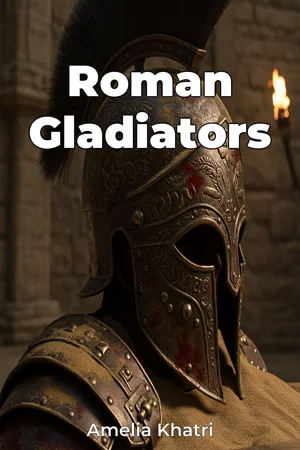
Have you ever wondered about the lives, training, and motivations of the men who fought to the death in the Roman arena? "Roman Gladiators" delves into the world of these combatants, exploring their role in ancient entertainment, political maneuvering, and societal structure. This book examines not only the brutal realities of gladiatorial combat but also the broader context of their existence within Roman society. Understanding gladiators requires a look at the complex interplay of violence, spectacle, and power. Three main themes drive our exploration: the rigorous training and diverse combat styles of gladiators, the multifaceted functions of gladiatorial games within Roman society, and the political and social implications of these spectacles. These themes are important because they reveal how gladiators were more than just fighters; they were integral to the Roman understanding of power, honor, and entertainment. To understand the gladiator, we must first understand Rome. This book provides an overview of Roman history, from the Republic to the Empire, paying particular attention to the social and political structures that gave rise to gladiatorial combat. Some prior knowledge of Roman history may be helpful but is not essential, as key concepts and figures are thoroughly explained. The central argument of "Roman Gladiators" is that gladiatorial combat was not simply a form of entertainment but a deeply ingrained institution that reflected and shaped Roman values, power dynamics, and social hierarchies. This argument is significant because it challenges simplistic views of gladiators as mere bloodsport participants and reveals their complex role in Roman civilization. The book unfolds in a structured manner, beginning with the origins of gladiatorial combat and its evolution over time. We then explore the gladiatorial schools (ludi), examining the rigorous training regimes, diverse weaponry, and specialized fighting styles employed by gladiators. We dedicate a significant portion to analyzing the social status of gladiators, including their origins (often slaves, prisoners of war, or condemned criminals), their living conditions, and their occasional paths to fame and freedom. Next, the book explores how gladiatorial games functioned as a form of social control, political propaganda, and religious ritual. Finally, we address the decline of gladiatorial combat in late antiquity and its lasting legacy in Western culture. The arguments presented in this book are supported by a range of evidence, including archaeological findings (such as gladiatorial equipment and remains), inscriptions, literary sources (such as accounts from contemporary Roman writers), and artistic representations. We utilize primary sources whenever possible, analyzing them critically to provide a balanced and nuanced perspective. "Roman Gladiators" connects to several other fields of study, including military history (through its examination of combat techniques and weaponry), social history (through its analysis of social stratification and mobility), and political science (through its exploration of the use of spectacle as a political tool). These interdisciplinary connections enrich the book's argument by providing a more holistic understanding of the gladiatorial phenomenon. This book offers a unique perspective by examining gladiatorial combat not just as a form of entertainment, but as a reflection of Roman society's values, anxieties, and power structures. The tone of "Roman Gladiators" is informative and analytical, aiming to present the material in a clear, engaging, and accessible manner. While grounded in scholarly research, the book avoids excessive jargon and aims for a broad audience. The target audience includes students of history, enthusiasts of ancient Rome, and anyone interested in the social and cultural dynamics of past civilizations. This book offers valuable insights into a fascinating and often misunderstood aspect of Roman history. In keeping with the genre of history, the book incorporates source citations, maps, timelines, and other visual aids to enhance the reader's understanding. The scope of "Roman Gladiators" is limited to the period of the Roman Republic and Empire, focusing primarily on gladiatorial combat within the city of Rome and other major urban centers. We do not delve into the specifics of gladiatorial combat in other cultures or time periods. The information in this book can be applied to understand other historical cultures that employed spectacle and violence as forms of social control and entertainment. It also offers insights into the enduring human fascination with combat and the complex relationship between violence and society. This book addresses ongoing debates among historians regarding the motivations of gladiators, the extent to which gladiatorial games were truly representative of Roman values, and the reasons for their eventual decline. "Roman Gladiators" aims to offer a balanced and informed contribution to these discussions.
Have you ever wondered about the lives, training, and motivations of the men who fought to the death in the Roman arena? "Roman Gladiators" delves into the world of these combatants, exploring their role in ancient entertainment, political maneuvering, and societal structure. This book examines not only the brutal realities of gladiatorial combat but also the broader context of their existence within Roman society. Understanding gladiators requires a look at the complex interplay of violence, spectacle, and power. Three main themes drive our exploration: the rigorous training and diverse combat styles of gladiators, the multifaceted functions of gladiatorial games within Roman society, and the political and social implications of these spectacles. These themes are important because they reveal how gladiators were more than just fighters; they were integral to the Roman understanding of power, honor, and entertainment. To understand the gladiator, we must first understand Rome. This book provides an overview of Roman history, from the Republic to the Empire, paying particular attention to the social and political structures that gave rise to gladiatorial combat. Some prior knowledge of Roman history may be helpful but is not essential, as key concepts and figures are thoroughly explained. The central argument of "Roman Gladiators" is that gladiatorial combat was not simply a form of entertainment but a deeply ingrained institution that reflected and shaped Roman values, power dynamics, and social hierarchies. This argument is significant because it challenges simplistic views of gladiators as mere bloodsport participants and reveals their complex role in Roman civilization. The book unfolds in a structured manner, beginning with the origins of gladiatorial combat and its evolution over time. We then explore the gladiatorial schools (ludi), examining the rigorous training regimes, diverse weaponry, and specialized fighting styles employed by gladiators. We dedicate a significant portion to analyzing the social status of gladiators, including their origins (often slaves, prisoners of war, or condemned criminals), their living conditions, and their occasional paths to fame and freedom. Next, the book explores how gladiatorial games functioned as a form of social control, political propaganda, and religious ritual. Finally, we address the decline of gladiatorial combat in late antiquity and its lasting legacy in Western culture. The arguments presented in this book are supported by a range of evidence, including archaeological findings (such as gladiatorial equipment and remains), inscriptions, literary sources (such as accounts from contemporary Roman writers), and artistic representations. We utilize primary sources whenever possible, analyzing them critically to provide a balanced and nuanced perspective. "Roman Gladiators" connects to several other fields of study, including military history (through its examination of combat techniques and weaponry), social history (through its analysis of social stratification and mobility), and political science (through its exploration of the use of spectacle as a political tool). These interdisciplinary connections enrich the book's argument by providing a more holistic understanding of the gladiatorial phenomenon. This book offers a unique perspective by examining gladiatorial combat not just as a form of entertainment, but as a reflection of Roman society's values, anxieties, and power structures. The tone of "Roman Gladiators" is informative and analytical, aiming to present the material in a clear, engaging, and accessible manner. While grounded in scholarly research, the book avoids excessive jargon and aims for a broad audience. The target audience includes students of history, enthusiasts of ancient Rome, and anyone interested in the social and cultural dynamics of past civilizations. This book offers valuable insights into a fascinating and often misunderstood aspect of Roman history. In keeping with the genre of history, the book incorporates source citations, maps, timelines, and other visual aids to enhance the reader's understanding. The scope of "Roman Gladiators" is limited to the period of the Roman Republic and Empire, focusing primarily on gladiatorial combat within the city of Rome and other major urban centers. We do not delve into the specifics of gladiatorial combat in other cultures or time periods. The information in this book can be applied to understand other historical cultures that employed spectacle and violence as forms of social control and entertainment. It also offers insights into the enduring human fascination with combat and the complex relationship between violence and society. This book addresses ongoing debates among historians regarding the motivations of gladiators, the extent to which gladiatorial games were truly representative of Roman values, and the reasons for their eventual decline. "Roman Gladiators" aims to offer a balanced and informed contribution to these discussions.
"Roman Gladiators" explores the multifaceted world of gladiatorial combat in ancient Rome, revealing how these spectacles were deeply intertwined with Roman society, politics, and culture. The book argues that gladiatorial games were more than mere entertainment; they served as a powerful tool for social control and political propaganda. For instance, gladiatorial contests often featured diverse combat styles reflecting Rome's vast empire, showcasing the skills of warriors from conquered lands. Similarly, the fate of a defeated gladiator often rested on the crowd's decision, demonstrating the emperor's power to sway public opinion. The book begins by tracing the origins and evolution of gladiatorial combat, then delves into the rigorous training regimes and diverse weaponry used in gladiatorial schools. It examines the social status of gladiators, often slaves or prisoners of war, and their occasional paths to fame and freedom. Finally, the narrative explores the decline of gladiatorial combat and its lasting legacy. By examining archaeological findings, literary accounts, and artistic representations, the book offers a balanced perspective on the role of gladiators in Roman history.
Book Details
ISBN
9788235263032
Publisher
Publifye AS
Your Licenses
You don't own any licenses for this book
Purchase a license below to unlock this book and download the EPUB.
Purchase License
Select a tier to unlock this book
Need bulk licensing?
Contact us for enterprise agreements.