
About This Book
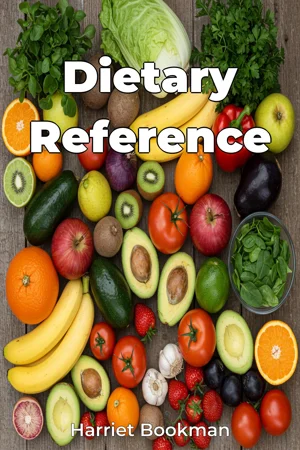
Are you seeking to optimize your health through informed dietary choices? This book, "Dietary Reference," serves as a comprehensive guide to understanding the intricate relationship between food, nutrients, and overall well-being. We delve into the essential aspects of dietary recommendations, providing detailed daily nutrient intake values and extensive data on food composition, all designed to empower you in effective meal planning and the pursuit of a healthier lifestyle. The core of our exploration revolves around three primary pillars: establishing appropriate dietary recommendations, interpreting daily nutrient intake values (DRIs), and effectively utilizing food composition data. Understanding these elements is crucial because they form the foundation for making informed decisions about what we eat, allowing us to tailor our diets to meet individual needs and optimize health outcomes. In a world saturated with often-conflicting nutritional advice, this book provides a clear, evidence-based approach to navigating the complexities of healthy eating. Nutritional science has evolved significantly over the past century, shifting from simply preventing deficiencies to promoting optimal health and preventing chronic diseases. This evolution reflects a deeper understanding of the roles that macronutrients, vitamins, and minerals play in supporting various bodily functions. However, this increased complexity can make it challenging for individuals to translate scientific knowledge into practical dietary choices. A basic understanding of human physiology and the digestive process will be beneficial, but is not required. The central argument of "Dietary Reference" is that a thorough understanding of dietary guidelines, coupled with the knowledge of nutrient requirements and food composition, is essential for achieving and maintaining optimal health. We emphasize that there is no one-size-fits-all approach to nutrition; rather, dietary needs vary based on age, sex, activity level, and individual health status. This book is structured to provide a progressive and comprehensive learning experience. We begin by introducing the fundamental concepts of nutrition science, including macronutrients, micronutrients, and their roles in the body. Next, we delve into the intricacies of DRIs, explaining how these values are established and how they can be used to assess the adequacy of dietary intake. This section will cover Recommended Dietary Allowances (RDAs), Adequate Intakes (AIs), Tolerable Upper Intake Levels (ULs), and Estimated Average Requirements (EARs). Then we transition into an extensive exploration of food composition data, examining the nutrient profiles of various food groups and providing practical guidance on how to utilize this information in meal planning. Practical examples of meal plans for different age groups and activity levels are included. We culminate the book with a discussion of special dietary considerations, such as vegetarianism, veganism, and dietary modifications for specific health conditions, and how DRIs and food composition data can be used in these situations. The information presented is grounded in rigorous scientific research, drawing from peer-reviewed studies, reports from reputable organizations such as the National Academies of Sciences, Engineering, and Medicine, and government databases like the USDA Food Composition Database. We present data in an accessible format, utilizing tables, charts, and infographics to enhance understanding and retention. "Dietary Reference" also connects to related fields such as medicine, public health, and exercise physiology. For physicians and healthcare professionals, the book serves as a valuable resource for advising patients on dietary matters. For public health officials, it provides a framework for developing and implementing effective nutrition education programs. For exercise physiologists, it offers insights into the nutritional needs of athletes and active individuals. Our approach is to present complex information in a clear, concise, and unbiased manner. We avoid jargon and technical terms whenever possible, and we provide explanations for any terms that may be unfamiliar to the reader. The overall tone is informative and encouraging, aimed at empowering readers to take control of their dietary choices. This book is intended for a broad audience, including healthcare professionals, students of nutrition and dietetics, and anyone who is interested in learning more about healthy eating. Whether you are a seasoned health professional or simply someone who wants to improve your understanding of nutrition, "Dietary Reference" will provide you with the knowledge and tools you need to make informed dietary decisions. As a reference work, this book aims to provide a broad overview of dietary recommendations, nutrient intake values, and food composition. While we strive to be comprehensive, we acknowledge that the field of nutrition is constantly evolving, and new research is always emerging. Therefore, we encourage readers to consult with qualified healthcare professionals for personalized dietary advice. The information provided in "Dietary Reference" can be applied in numerous real-world settings. Individuals can use the book to assess their own dietary intake, plan healthy meals, and make informed food choices at the grocery store. Healthcare professionals can use the book to educate patients about nutrition and develop personalized dietary plans. Public health officials can use the book to develop and implement nutrition education programs. Finally, we address some of the ongoing debates and controversies in the field of nutrition, such as the optimal ratio of macronutrients, the role of dietary supplements, and the impact of processed foods on health. We present a balanced perspective on these issues, highlighting the evidence on both sides of the debate.
Are you seeking to optimize your health through informed dietary choices? This book, "Dietary Reference," serves as a comprehensive guide to understanding the intricate relationship between food, nutrients, and overall well-being. We delve into the essential aspects of dietary recommendations, providing detailed daily nutrient intake values and extensive data on food composition, all designed to empower you in effective meal planning and the pursuit of a healthier lifestyle. The core of our exploration revolves around three primary pillars: establishing appropriate dietary recommendations, interpreting daily nutrient intake values (DRIs), and effectively utilizing food composition data. Understanding these elements is crucial because they form the foundation for making informed decisions about what we eat, allowing us to tailor our diets to meet individual needs and optimize health outcomes. In a world saturated with often-conflicting nutritional advice, this book provides a clear, evidence-based approach to navigating the complexities of healthy eating. Nutritional science has evolved significantly over the past century, shifting from simply preventing deficiencies to promoting optimal health and preventing chronic diseases. This evolution reflects a deeper understanding of the roles that macronutrients, vitamins, and minerals play in supporting various bodily functions. However, this increased complexity can make it challenging for individuals to translate scientific knowledge into practical dietary choices. A basic understanding of human physiology and the digestive process will be beneficial, but is not required. The central argument of "Dietary Reference" is that a thorough understanding of dietary guidelines, coupled with the knowledge of nutrient requirements and food composition, is essential for achieving and maintaining optimal health. We emphasize that there is no one-size-fits-all approach to nutrition; rather, dietary needs vary based on age, sex, activity level, and individual health status. This book is structured to provide a progressive and comprehensive learning experience. We begin by introducing the fundamental concepts of nutrition science, including macronutrients, micronutrients, and their roles in the body. Next, we delve into the intricacies of DRIs, explaining how these values are established and how they can be used to assess the adequacy of dietary intake. This section will cover Recommended Dietary Allowances (RDAs), Adequate Intakes (AIs), Tolerable Upper Intake Levels (ULs), and Estimated Average Requirements (EARs). Then we transition into an extensive exploration of food composition data, examining the nutrient profiles of various food groups and providing practical guidance on how to utilize this information in meal planning. Practical examples of meal plans for different age groups and activity levels are included. We culminate the book with a discussion of special dietary considerations, such as vegetarianism, veganism, and dietary modifications for specific health conditions, and how DRIs and food composition data can be used in these situations. The information presented is grounded in rigorous scientific research, drawing from peer-reviewed studies, reports from reputable organizations such as the National Academies of Sciences, Engineering, and Medicine, and government databases like the USDA Food Composition Database. We present data in an accessible format, utilizing tables, charts, and infographics to enhance understanding and retention. "Dietary Reference" also connects to related fields such as medicine, public health, and exercise physiology. For physicians and healthcare professionals, the book serves as a valuable resource for advising patients on dietary matters. For public health officials, it provides a framework for developing and implementing effective nutrition education programs. For exercise physiologists, it offers insights into the nutritional needs of athletes and active individuals. Our approach is to present complex information in a clear, concise, and unbiased manner. We avoid jargon and technical terms whenever possible, and we provide explanations for any terms that may be unfamiliar to the reader. The overall tone is informative and encouraging, aimed at empowering readers to take control of their dietary choices. This book is intended for a broad audience, including healthcare professionals, students of nutrition and dietetics, and anyone who is interested in learning more about healthy eating. Whether you are a seasoned health professional or simply someone who wants to improve your understanding of nutrition, "Dietary Reference" will provide you with the knowledge and tools you need to make informed dietary decisions. As a reference work, this book aims to provide a broad overview of dietary recommendations, nutrient intake values, and food composition. While we strive to be comprehensive, we acknowledge that the field of nutrition is constantly evolving, and new research is always emerging. Therefore, we encourage readers to consult with qualified healthcare professionals for personalized dietary advice. The information provided in "Dietary Reference" can be applied in numerous real-world settings. Individuals can use the book to assess their own dietary intake, plan healthy meals, and make informed food choices at the grocery store. Healthcare professionals can use the book to educate patients about nutrition and develop personalized dietary plans. Public health officials can use the book to develop and implement nutrition education programs. Finally, we address some of the ongoing debates and controversies in the field of nutrition, such as the optimal ratio of macronutrients, the role of dietary supplements, and the impact of processed foods on health. We present a balanced perspective on these issues, highlighting the evidence on both sides of the debate.
"Dietary Reference" offers a comprehensive guide to understanding the science of nutrition and its impact on overall health, emphasizing informed dietary choices through a clear understanding of dietary guidelines, nutrient requirements, and food composition. This book uniquely bridges the gap between complex nutritional science and practical application, making it an invaluable resource for anyone seeking to optimize their health through diet. It highlights the evolution of nutritional science from preventing deficiencies to promoting optimal health, driven by our deeper understanding of how macronutrients and micronutrients support bodily functions. Did you know that dietary needs vary significantly based on age, sex, and activity level? The book systematically progresses through key areas: foundational concepts of nutrition, detailed explanations of Dietary Reference Intakes (DRIs) including Recommended Dietary Allowances (RDAs) and Tolerable Upper Intake Levels (ULs), and an extensive exploration of food composition data using resources like the USDA Food Composition Database. Providing a clear, evidence-based approach, the book also includes practical meal planning examples for different needs and discusses special dietary considerations. The approach taken is to present complex information in an accessible format, using tables, charts, and infographics to enhance understanding. It connects to fields such as medicine and exercise physiology, making it a valuable reference for both healthcare professionals and individuals aiming to improve their understanding of nutrition for healthier eating habits.
Book Details
ISBN
9788235262943
Publisher
Publifye AS
Your Licenses
You don't own any licenses for this book
Purchase a license below to unlock this book and download the EPUB.
Purchase License
Select a tier to unlock this book
Need bulk licensing?
Contact us for enterprise agreements.