
About This Book
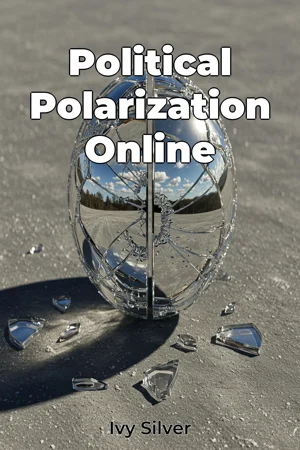
Are we truly connecting online, or are we simply retreating into digital fortresses of our own making? "Political Polarization Online" delves into the complex relationship between digital platforms and the increasing ideological divides that characterize contemporary society. This book explores how algorithms, designed to maximize user engagement, inadvertently contribute to the formation of echo chambers, exacerbating political polarization and hindering constructive dialogue. Understanding these mechanisms is crucial for anyone seeking to navigate the modern information landscape and foster a more cohesive society. This book addresses three key topics: the architecture of engagement-focused algorithms, the psychological underpinnings of echo chambers, and the real-world consequences of online political polarization. These topics are important because they shed light on the ways in which technology shapes our perceptions, influences our beliefs, and ultimately impacts our political discourse. Readers should have a basic understanding of social media platforms and some familiarity with political concepts. The central argument of "Political Polarization Online" is that engagement-optimized algorithms, while seemingly neutral tools, systematically amplify partisan content and reinforce pre-existing biases, leading to greater political division. This argument is vital because it challenges the notion that online platforms are simply neutral conduits of information, revealing the subtle but powerful ways in which they shape our political reality. The book begins by introducing the concept of algorithmic amplification and its role in shaping online content consumption. It then explores the psychological mechanisms that drive individuals to seek out and consume information that confirms their existing beliefs. Following these foundational concepts, the book is structured into three major parts. The first part analyzes the specific algorithms used by major social media platforms and examines how these algorithms prioritize engagement metrics, such as clicks, shares, and comments. The second part delves into the psychology of echo chambers, drawing on research in cognitive psychology and social psychology to understand why people are drawn to homogenous information environments. The third and final part explores the real-world consequences of online political polarization, including its impact on electoral outcomes, social cohesion, and democratic governance. The culmination of the argument leads to a discussion of potential solutions, including algorithmic transparency, media literacy education, and platform regulation. The book relies on a combination of quantitative data analysis and qualitative case studies to support its arguments. It analyzes data from social media platforms, surveys, and experiments to demonstrate the impact of algorithms on content consumption and political attitudes. It also includes case studies of specific political events and online communities to illustrate the real-world consequences of online polarization. Unique data sources include proprietary datasets from social media analytics firms and original survey data collected specifically for this research. "Political Polarization Online" connects to several other fields of study, including political science, communication studies, and computer science. Political science provides the theoretical framework for understanding political polarization and its consequences. Communication studies provides insights into the dynamics of online communication and the formation of public opinion. Computer science provides the technical expertise needed to understand the design and function of engagement-focused algorithms. These interdisciplinary connections enhance the book's argument by providing a more comprehensive and nuanced understanding of the complex relationship between technology and politics. This book offers a novel perspective by examining the interplay between algorithmic amplification and psychological biases in driving online political polarization. The book adopts an academic yet accessible tone, presenting complex information in a clear and engaging manner. It is intended for a broad audience, including students, researchers, policymakers, and anyone interested in understanding the impact of technology on politics and society. This book offers value by providing a comprehensive and accessible analysis of the complex relationship between digital platforms and political polarization. The scope of the book is limited to the analysis of major social media platforms and their impact on political polarization in democratic societies. It does not address the issue of online censorship or the role of authoritarian governments in shaping online discourse. This intentional limitation allows the book to focus on the specific mechanisms that contribute to polarization in democratic contexts. The information presented in this book can be applied practically by readers to critically evaluate the information they encounter online, to engage in more constructive dialogue with people who hold different viewpoints, and to advocate for policies that promote algorithmic transparency and media literacy. Ongoing debates in the field that the book addresses include the role of individual responsibility versus platform responsibility in addressing online polarization, the effectiveness of different interventions aimed at reducing polarization, and the ethical implications of algorithmic amplification of partisan content.
Are we truly connecting online, or are we simply retreating into digital fortresses of our own making? "Political Polarization Online" delves into the complex relationship between digital platforms and the increasing ideological divides that characterize contemporary society. This book explores how algorithms, designed to maximize user engagement, inadvertently contribute to the formation of echo chambers, exacerbating political polarization and hindering constructive dialogue. Understanding these mechanisms is crucial for anyone seeking to navigate the modern information landscape and foster a more cohesive society. This book addresses three key topics: the architecture of engagement-focused algorithms, the psychological underpinnings of echo chambers, and the real-world consequences of online political polarization. These topics are important because they shed light on the ways in which technology shapes our perceptions, influences our beliefs, and ultimately impacts our political discourse. Readers should have a basic understanding of social media platforms and some familiarity with political concepts. The central argument of "Political Polarization Online" is that engagement-optimized algorithms, while seemingly neutral tools, systematically amplify partisan content and reinforce pre-existing biases, leading to greater political division. This argument is vital because it challenges the notion that online platforms are simply neutral conduits of information, revealing the subtle but powerful ways in which they shape our political reality. The book begins by introducing the concept of algorithmic amplification and its role in shaping online content consumption. It then explores the psychological mechanisms that drive individuals to seek out and consume information that confirms their existing beliefs. Following these foundational concepts, the book is structured into three major parts. The first part analyzes the specific algorithms used by major social media platforms and examines how these algorithms prioritize engagement metrics, such as clicks, shares, and comments. The second part delves into the psychology of echo chambers, drawing on research in cognitive psychology and social psychology to understand why people are drawn to homogenous information environments. The third and final part explores the real-world consequences of online political polarization, including its impact on electoral outcomes, social cohesion, and democratic governance. The culmination of the argument leads to a discussion of potential solutions, including algorithmic transparency, media literacy education, and platform regulation. The book relies on a combination of quantitative data analysis and qualitative case studies to support its arguments. It analyzes data from social media platforms, surveys, and experiments to demonstrate the impact of algorithms on content consumption and political attitudes. It also includes case studies of specific political events and online communities to illustrate the real-world consequences of online polarization. Unique data sources include proprietary datasets from social media analytics firms and original survey data collected specifically for this research. "Political Polarization Online" connects to several other fields of study, including political science, communication studies, and computer science. Political science provides the theoretical framework for understanding political polarization and its consequences. Communication studies provides insights into the dynamics of online communication and the formation of public opinion. Computer science provides the technical expertise needed to understand the design and function of engagement-focused algorithms. These interdisciplinary connections enhance the book's argument by providing a more comprehensive and nuanced understanding of the complex relationship between technology and politics. This book offers a novel perspective by examining the interplay between algorithmic amplification and psychological biases in driving online political polarization. The book adopts an academic yet accessible tone, presenting complex information in a clear and engaging manner. It is intended for a broad audience, including students, researchers, policymakers, and anyone interested in understanding the impact of technology on politics and society. This book offers value by providing a comprehensive and accessible analysis of the complex relationship between digital platforms and political polarization. The scope of the book is limited to the analysis of major social media platforms and their impact on political polarization in democratic societies. It does not address the issue of online censorship or the role of authoritarian governments in shaping online discourse. This intentional limitation allows the book to focus on the specific mechanisms that contribute to polarization in democratic contexts. The information presented in this book can be applied practically by readers to critically evaluate the information they encounter online, to engage in more constructive dialogue with people who hold different viewpoints, and to advocate for policies that promote algorithmic transparency and media literacy. Ongoing debates in the field that the book addresses include the role of individual responsibility versus platform responsibility in addressing online polarization, the effectiveness of different interventions aimed at reducing polarization, and the ethical implications of algorithmic amplification of partisan content.
"Political Polarization Online" explores how digital platforms and algorithms contribute to increasing ideological divides. It examines how engagement-focused algorithms, designed to maximize user interaction, inadvertently foster echo chambers. These echo chambers amplify partisan content, reinforcing existing biases and hindering constructive dialogue. The book argues that these seemingly neutral algorithms systematically increase political division, challenging the idea that online platforms are simply neutral conduits of information. The book is structured into three parts, beginning with an introduction to algorithmic amplification and its role in shaping online content consumption. It then explores the psychological mechanisms that drive individuals to seek out information confirming their beliefs. Finally, it delves into the real-world consequences of online political polarization, including its impact on electoral outcomes and democratic governance. By combining quantitative data analysis with qualitative case studies, the book provides a comprehensive and accessible analysis of the complex relationship between technology and political polarization.
Book Details
ISBN
9788235262844
Publisher
Publifye AS
Your Licenses
You don't own any licenses for this book
Purchase a license below to unlock this book and download the EPUB.
Purchase License
Select a tier to unlock this book
Need bulk licensing?
Contact us for enterprise agreements.