
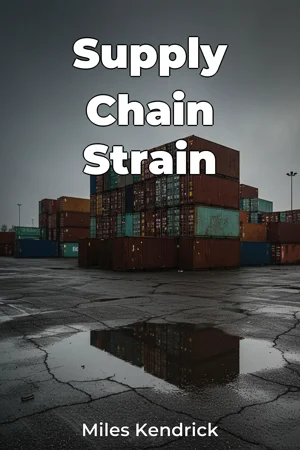
About This Book
Can global supply chains withstand the increasing pressures of our interconnected world? “Supply Chain Strain” delves into the vulnerabilities inherent in these complex networks, particularly when confronted with disruptions ranging from pandemics and geopolitical instability to shipping chokepoints. This book examines how these events expose weaknesses in the system and explores potential solutions for building more resilient and adaptable supply chains. The central argument of "Supply Chain Strain" is that current global supply chain models, optimized primarily for efficiency and cost reduction, are demonstrably fragile and ill-equipped to handle systemic shocks. A shift is needed towards prioritizing resilience, redundancy, and adaptability to ensure the continued flow of goods and services in an increasingly uncertain global landscape. This argument's importance lies in its direct impact on economic stability, national security, and the availability of essential resources for populations worldwide. This book provides a comprehensive analysis of global supply chains, structured in four parts. First, it introduces the fundamental concepts of supply chain management, illustrating the historical evolution toward globalization and lean manufacturing. This section provides a baseline understanding of how supply chains function under normal conditions, covering key metrics and common optimization strategies. Second, the book analyzes major disruptive events, such as the COVID-19 pandemic, the Suez Canal blockage, and ongoing trade wars. These events are examined through the lens of their cascading effects on different industries and regions, highlighting the interconnectedness and vulnerabilities within the global system. Third, "Supply Chain Strain" explores strategies for enhancing supply chain resilience. This includes diversification of sourcing, regionalization of production, investment in inventory buffers, and the adoption of advanced technologies like blockchain and artificial intelligence for improved visibility and risk management. Finally, the book analyzes the role of government policy in fostering resilient supply chains. This section considers the implications of trade policies, infrastructure investments, and regulatory frameworks on supply chain stability. Evidence presented in the book draws from diverse sources, including macroeconomic data, industry reports, case studies of companies that have successfully navigated disruptions, and analyses of government policies. The book utilizes quantitative modeling techniques to assess the impact of different disruption scenarios and to evaluate the effectiveness of various resilience strategies. "Supply Chain Strain" connects to several fields, including economics, political science, and technology. Its economic analysis focuses on the costs and benefits of different supply chain strategies, considering factors such as efficiency, resilience, and sustainability. Its connection to political science involves analyzing the geopolitical risks that can disrupt supply chains, such as trade disputes, sanctions, and political instability. Finally, the book explores the role of technology in enhancing supply chain resilience, looking at innovations in areas like data analytics, automation, and digital platforms. The book adopts a rigorous, analytical approach, presenting information in a clear and accessible style suitable for a broad audience. While grounded in academic research, it avoids technical jargon and incorporates real-world examples to illustrate key concepts. The intended audience includes business professionals, policymakers, academics, and anyone interested in understanding the challenges and opportunities facing global supply chains. It will appeal to those seeking a comprehensive and practical guide to building more resilient and adaptable supply chains in an increasingly uncertain world. "Supply Chain Strain" focuses primarily on the structural vulnerabilities of global supply chains and strategies for enhancing resilience. While it acknowledges the importance of sustainability and ethical considerations, these topics are not the primary focus of the book. The strategies outlined can be applied by businesses to assess their own supply chain vulnerabilities and to develop mitigation plans. Policymakers can use the book's insights to inform the design of policies that promote supply chain resilience and national security. The ongoing debate about the optimal balance between efficiency and resilience in supply chain management is addressed throughout the book. This analysis considers the trade-offs involved in different strategies and offers a framework for making informed decisions based on specific industry contexts and risk profiles.
Can global supply chains withstand the increasing pressures of our interconnected world? “Supply Chain Strain” delves into the vulnerabilities inherent in these complex networks, particularly when confronted with disruptions ranging from pandemics and geopolitical instability to shipping chokepoints. This book examines how these events expose weaknesses in the system and explores potential solutions for building more resilient and adaptable supply chains. The central argument of "Supply Chain Strain" is that current global supply chain models, optimized primarily for efficiency and cost reduction, are demonstrably fragile and ill-equipped to handle systemic shocks. A shift is needed towards prioritizing resilience, redundancy, and adaptability to ensure the continued flow of goods and services in an increasingly uncertain global landscape. This argument's importance lies in its direct impact on economic stability, national security, and the availability of essential resources for populations worldwide. This book provides a comprehensive analysis of global supply chains, structured in four parts. First, it introduces the fundamental concepts of supply chain management, illustrating the historical evolution toward globalization and lean manufacturing. This section provides a baseline understanding of how supply chains function under normal conditions, covering key metrics and common optimization strategies. Second, the book analyzes major disruptive events, such as the COVID-19 pandemic, the Suez Canal blockage, and ongoing trade wars. These events are examined through the lens of their cascading effects on different industries and regions, highlighting the interconnectedness and vulnerabilities within the global system. Third, "Supply Chain Strain" explores strategies for enhancing supply chain resilience. This includes diversification of sourcing, regionalization of production, investment in inventory buffers, and the adoption of advanced technologies like blockchain and artificial intelligence for improved visibility and risk management. Finally, the book analyzes the role of government policy in fostering resilient supply chains. This section considers the implications of trade policies, infrastructure investments, and regulatory frameworks on supply chain stability. Evidence presented in the book draws from diverse sources, including macroeconomic data, industry reports, case studies of companies that have successfully navigated disruptions, and analyses of government policies. The book utilizes quantitative modeling techniques to assess the impact of different disruption scenarios and to evaluate the effectiveness of various resilience strategies. "Supply Chain Strain" connects to several fields, including economics, political science, and technology. Its economic analysis focuses on the costs and benefits of different supply chain strategies, considering factors such as efficiency, resilience, and sustainability. Its connection to political science involves analyzing the geopolitical risks that can disrupt supply chains, such as trade disputes, sanctions, and political instability. Finally, the book explores the role of technology in enhancing supply chain resilience, looking at innovations in areas like data analytics, automation, and digital platforms. The book adopts a rigorous, analytical approach, presenting information in a clear and accessible style suitable for a broad audience. While grounded in academic research, it avoids technical jargon and incorporates real-world examples to illustrate key concepts. The intended audience includes business professionals, policymakers, academics, and anyone interested in understanding the challenges and opportunities facing global supply chains. It will appeal to those seeking a comprehensive and practical guide to building more resilient and adaptable supply chains in an increasingly uncertain world. "Supply Chain Strain" focuses primarily on the structural vulnerabilities of global supply chains and strategies for enhancing resilience. While it acknowledges the importance of sustainability and ethical considerations, these topics are not the primary focus of the book. The strategies outlined can be applied by businesses to assess their own supply chain vulnerabilities and to develop mitigation plans. Policymakers can use the book's insights to inform the design of policies that promote supply chain resilience and national security. The ongoing debate about the optimal balance between efficiency and resilience in supply chain management is addressed throughout the book. This analysis considers the trade-offs involved in different strategies and offers a framework for making informed decisions based on specific industry contexts and risk profiles.
Global supply chains, the intricate networks that deliver goods worldwide, face unprecedented pressures, a theme explored in "Supply Chain Strain". The book investigates how events like pandemics and geopolitical tensions expose vulnerabilities in these systems, originally optimized for efficiency, not necessarily for resilience. For example, the Suez Canal blockage highlighted how a single point of failure can disrupt global trade, costing billions in lost revenue. The book argues for a shift towards prioritizing robustness to ensure economic stability and national security. "Supply Chain Strain" presents a comprehensive analysis, starting with the evolution of supply chain management and then dissecting major disruptive events and their impacts. It delves into strategies for building resilience, such as diversifying sourcing and adopting technologies like blockchain, and examines the role of government policies. The book uses quantitative modeling and case studies to assess disruption scenarios and evaluate resilience strategies. Ultimately, this work offers insights for businesses and policymakers alike, helping them navigate the trade-offs between efficiency and resilience in an increasingly uncertain global environment. By providing a framework for informed decision-making, "Supply Chain Strain" equips readers with the knowledge to fortify supply chains against future shocks.
Book Details
ISBN
9788235262769
Publisher
Publifye AS
Your Licenses
You don't own any licenses for this book
Purchase a license below to unlock this book and download the EPUB.
Purchase License
Select a tier to unlock this book
Need bulk licensing?
Contact us for enterprise agreements.