
About This Book
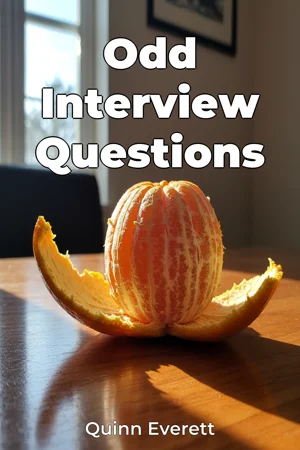
Ever been asked, "If you were a fruit, what fruit would you be?" in a job interview? Or perhaps, "How many ping pong balls would fit in a 747 airplane?" These seemingly random questions are becoming increasingly common in the modern hiring process. This book, "Odd Interview Questions," delves into the perplexing world of unconventional interview questions, exploring why companies ask them, how candidates respond, and what these bizarre inquiries reveal about both the applicant and the organization. We examine two core topics: the psychology behind odd interview questions and the practical strategies for navigating them successfully. First, we dissect the motivations of employers who use these techniques. Are they genuinely trying to assess problem-solving skills, creativity, or cultural fit, or are these questions simply a way to catch candidates off guard? Understanding the intent behind the question is crucial for formulating an effective answer. Second, we provide a toolkit of actionable advice for candidates, including how to interpret abstract questions, structure thoughtful responses under pressure, and leverage these opportunities to showcase their strengths. The use of odd interview questions reflects a shift in hiring practices towards assessing soft skills and adaptability in addition to traditional qualifications. This trend coincides with a growing emphasis on company culture and the perceived need to identify candidates who can think outside the box. However, the effectiveness and fairness of these methods are hotly debated within the HR and management communities. Our central argument is that while odd interview questions can be a valuable tool for assessing certain candidate attributes, they must be used judiciously and ethically, with a clear understanding of their potential biases and limitations. This book is structured to provide both theoretical insight and practical guidance. We begin by introducing the history and evolution of interview techniques, highlighting the factors that have led to the rise of odd questions. The second section analyzes real-world examples of bizarre interview questions, categorized by the type of skill or attribute they are designed to assess. We dissect candidate responses, offering critiques and alternative strategies for answering effectively. The third section presents a framework for employers to design and implement odd interview questions in a way that is both fair and informative. We conclude by discussing the future of hiring and the role of unconventional assessment methods in a rapidly changing job market. Our analysis is based on a combination of primary research, including interviews with HR professionals and job seekers, and secondary research from academic journals, industry reports, and case studies. We draw upon data from various sectors to provide a comprehensive overview of current hiring practices. The book connects to fields such as organizational psychology, behavioral economics, and human resource management, providing a multidisciplinary perspective on the topic. "Odd Interview Questions" offers a unique approach by combining rigorous research with practical advice. Unlike many career guides that focus solely on traditional interview techniques, this book confronts the reality of the modern job market, where candidates are increasingly likely to encounter unconventional questions. It is written in a conversational and accessible style, making it suitable for a wide audience. The primary target audience includes job seekers at all levels, from recent graduates to experienced professionals. It is also a valuable resource for HR professionals, hiring managers, and anyone interested in the science of talent acquisition. While the book explores a wide range of odd interview questions, it acknowledges that the relevance and appropriateness of these questions vary depending on the industry, company culture, and specific role. The information presented can be applied to improve interview performance and refine hiring strategies. The book also addresses ongoing discussions surrounding the ethics and legality of certain interview questions, providing a balanced perspective on these important issues. This book serves as a guide, offering insights and strategies for both those asking and answering the unusual questions that now permeate the job market.
Ever been asked, "If you were a fruit, what fruit would you be?" in a job interview? Or perhaps, "How many ping pong balls would fit in a 747 airplane?" These seemingly random questions are becoming increasingly common in the modern hiring process. This book, "Odd Interview Questions," delves into the perplexing world of unconventional interview questions, exploring why companies ask them, how candidates respond, and what these bizarre inquiries reveal about both the applicant and the organization. We examine two core topics: the psychology behind odd interview questions and the practical strategies for navigating them successfully. First, we dissect the motivations of employers who use these techniques. Are they genuinely trying to assess problem-solving skills, creativity, or cultural fit, or are these questions simply a way to catch candidates off guard? Understanding the intent behind the question is crucial for formulating an effective answer. Second, we provide a toolkit of actionable advice for candidates, including how to interpret abstract questions, structure thoughtful responses under pressure, and leverage these opportunities to showcase their strengths. The use of odd interview questions reflects a shift in hiring practices towards assessing soft skills and adaptability in addition to traditional qualifications. This trend coincides with a growing emphasis on company culture and the perceived need to identify candidates who can think outside the box. However, the effectiveness and fairness of these methods are hotly debated within the HR and management communities. Our central argument is that while odd interview questions can be a valuable tool for assessing certain candidate attributes, they must be used judiciously and ethically, with a clear understanding of their potential biases and limitations. This book is structured to provide both theoretical insight and practical guidance. We begin by introducing the history and evolution of interview techniques, highlighting the factors that have led to the rise of odd questions. The second section analyzes real-world examples of bizarre interview questions, categorized by the type of skill or attribute they are designed to assess. We dissect candidate responses, offering critiques and alternative strategies for answering effectively. The third section presents a framework for employers to design and implement odd interview questions in a way that is both fair and informative. We conclude by discussing the future of hiring and the role of unconventional assessment methods in a rapidly changing job market. Our analysis is based on a combination of primary research, including interviews with HR professionals and job seekers, and secondary research from academic journals, industry reports, and case studies. We draw upon data from various sectors to provide a comprehensive overview of current hiring practices. The book connects to fields such as organizational psychology, behavioral economics, and human resource management, providing a multidisciplinary perspective on the topic. "Odd Interview Questions" offers a unique approach by combining rigorous research with practical advice. Unlike many career guides that focus solely on traditional interview techniques, this book confronts the reality of the modern job market, where candidates are increasingly likely to encounter unconventional questions. It is written in a conversational and accessible style, making it suitable for a wide audience. The primary target audience includes job seekers at all levels, from recent graduates to experienced professionals. It is also a valuable resource for HR professionals, hiring managers, and anyone interested in the science of talent acquisition. While the book explores a wide range of odd interview questions, it acknowledges that the relevance and appropriateness of these questions vary depending on the industry, company culture, and specific role. The information presented can be applied to improve interview performance and refine hiring strategies. The book also addresses ongoing discussions surrounding the ethics and legality of certain interview questions, providing a balanced perspective on these important issues. This book serves as a guide, offering insights and strategies for both those asking and answering the unusual questions that now permeate the job market.
"Odd Interview Questions" explores the increasing trend of unconventional questions in job interviews. It uncovers why companies ask seemingly bizarre questions, like "If you were a fruit, what fruit would you be?" and how these questions are designed to assess a candidate's problem-solving skills, creativity, and cultural fit. The book delves into the psychology behind these oddities, offering job seekers and hiring managers insight into modern hiring practices. This career guide provides actionable advice on interpreting abstract questions and structuring thoughtful responses under pressure. It highlights how the rise of odd interview questions reflects a shift towards evaluating soft skills and adaptability. The book begins with the history of interview techniques, then analyzes real-world examples and effective candidate responses, and concludes with a framework for employers to ethically implement odd questions.
Book Details
ISBN
9788235262592
Publisher
Publifye AS
Your Licenses
You don't own any licenses for this book
Purchase a license below to unlock this book and download the EPUB.
Purchase License
Select a tier to unlock this book
Need bulk licensing?
Contact us for enterprise agreements.