
About This Book
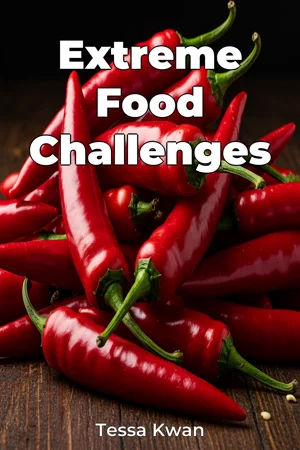
Have you ever wondered what drives individuals to consume dangerously spicy peppers, massive quantities of food, or other questionable edibles for sport? "Extreme Food Challenges" delves into the world of competitive eating and extreme food consumption, examining the motivations, risks, and physiological impacts involved. This book explores this subculture while also providing a fact-based examination of the health implications of pushing culinary boundaries. The book focuses on three core areas: the psychology of extreme eating, the physiological responses to extreme food challenges, and the history and culture surrounding these activities. Understanding why people participate in these events, coupled with an analysis of what these challenges do to the human body, provides a foundation for informed discussion. The historical and cultural context adds depth, revealing how societal factors influence our relationship with food and risk-taking behaviors. This exploration requires an understanding of nutritional science, human physiology, and cultural anthropology. Each chapter builds upon these core concepts, examining the body's reaction to capsaicin, the effects of rapid caloric intake, and the historical precedents for competitive feasting. The central argument is that while extreme food challenges appear to be a display of personal willpower and entertainment, they expose critical vulnerabilities in human physiology and reflect complex cultural attitudes towards food, risk, and achievement. Understanding this intersection is crucial for promoting informed decision-making and mitigating potential harm. The book begins by introducing the phenomenon of extreme food challenges, detailing various types, from speed eating contests to spice challenges. It then explores the psychological factors driving participation, examining concepts like sensation-seeking, competitive spirit, and the allure of online fame. Subsequent chapters delve into the physiological consequences, including the impact on the digestive system, cardiovascular health, and overall well-being. Before concluding, the book analyzes relevant case studies and research findings. Finally, the book considers the ethical considerations surrounding these challenges, proposing guidelines for participant safety and responsible promotion. The book relies on a range of evidence, including scientific studies on human physiology, nutritional analysis of extreme diets, and ethnographic research on competitive eating communities. Data from medical case studies, surveys of competitive eaters, and analyses of media coverage pertaining to food challenges are presented. The topic of extreme food challenges connects to fields such as sports medicine, behavioral psychology, and cultural studies. The physiological impact of extreme eating raises questions relevant to sports medicine, while the psychological motivations connect to behavioral psychology. The cultural significance of these activities and the historical context are relevant to cultural studies. This book takes a data-driven and analytical approach, avoiding sensationalism and focusing on the scientific and social factors involved. It provides a platform for understanding the complexities of extreme food challenges without endorsing or condemning them. The intended audience includes healthcare professionals, nutritionists, psychologists, and anyone interested in understanding the intersection of food, health, and human behavior. This book offers valuable insights for those seeking to understand the risks associated with extreme eating habits. As food writing, the book adheres to journalistic principles of accuracy and objectivity. As a health and fitness resource, it provides scientifically-backed information. The scope of the book includes a broad range of extreme food challenges, but it does not provide medical advice. The focus is on understanding the risks and implications, rather than providing prescriptive solutions. The information presented can be applied to promote responsible participation in food challenges, educate the public about the risks involved, and inform healthcare professionals about the potential health consequences. The book addresses debates surrounding the ethics of competitive eating and the responsibility of organizers and participants. It examines the tension between personal freedom and public health concerns.
Have you ever wondered what drives individuals to consume dangerously spicy peppers, massive quantities of food, or other questionable edibles for sport? "Extreme Food Challenges" delves into the world of competitive eating and extreme food consumption, examining the motivations, risks, and physiological impacts involved. This book explores this subculture while also providing a fact-based examination of the health implications of pushing culinary boundaries. The book focuses on three core areas: the psychology of extreme eating, the physiological responses to extreme food challenges, and the history and culture surrounding these activities. Understanding why people participate in these events, coupled with an analysis of what these challenges do to the human body, provides a foundation for informed discussion. The historical and cultural context adds depth, revealing how societal factors influence our relationship with food and risk-taking behaviors. This exploration requires an understanding of nutritional science, human physiology, and cultural anthropology. Each chapter builds upon these core concepts, examining the body's reaction to capsaicin, the effects of rapid caloric intake, and the historical precedents for competitive feasting. The central argument is that while extreme food challenges appear to be a display of personal willpower and entertainment, they expose critical vulnerabilities in human physiology and reflect complex cultural attitudes towards food, risk, and achievement. Understanding this intersection is crucial for promoting informed decision-making and mitigating potential harm. The book begins by introducing the phenomenon of extreme food challenges, detailing various types, from speed eating contests to spice challenges. It then explores the psychological factors driving participation, examining concepts like sensation-seeking, competitive spirit, and the allure of online fame. Subsequent chapters delve into the physiological consequences, including the impact on the digestive system, cardiovascular health, and overall well-being. Before concluding, the book analyzes relevant case studies and research findings. Finally, the book considers the ethical considerations surrounding these challenges, proposing guidelines for participant safety and responsible promotion. The book relies on a range of evidence, including scientific studies on human physiology, nutritional analysis of extreme diets, and ethnographic research on competitive eating communities. Data from medical case studies, surveys of competitive eaters, and analyses of media coverage pertaining to food challenges are presented. The topic of extreme food challenges connects to fields such as sports medicine, behavioral psychology, and cultural studies. The physiological impact of extreme eating raises questions relevant to sports medicine, while the psychological motivations connect to behavioral psychology. The cultural significance of these activities and the historical context are relevant to cultural studies. This book takes a data-driven and analytical approach, avoiding sensationalism and focusing on the scientific and social factors involved. It provides a platform for understanding the complexities of extreme food challenges without endorsing or condemning them. The intended audience includes healthcare professionals, nutritionists, psychologists, and anyone interested in understanding the intersection of food, health, and human behavior. This book offers valuable insights for those seeking to understand the risks associated with extreme eating habits. As food writing, the book adheres to journalistic principles of accuracy and objectivity. As a health and fitness resource, it provides scientifically-backed information. The scope of the book includes a broad range of extreme food challenges, but it does not provide medical advice. The focus is on understanding the risks and implications, rather than providing prescriptive solutions. The information presented can be applied to promote responsible participation in food challenges, educate the public about the risks involved, and inform healthcare professionals about the potential health consequences. The book addresses debates surrounding the ethics of competitive eating and the responsibility of organizers and participants. It examines the tension between personal freedom and public health concerns.
"Extreme Food Challenges" offers a deep dive into the world of competitive eating, exploring the motivations, health implications, and cultural significance behind these events. The book examines why individuals push their bodies to the limit, consuming massive quantities of food or enduring intense spice levels. Interestingly, these challenges highlight the physiological vulnerabilities of the human body, such as the digestive system's response to rapid caloric intake and the cardiovascular system's reaction to extreme stimuli. The book analyzes the psychology of extreme eating, considering factors like sensation-seeking and the pursuit of online fame, while also delving into the physiological responses and the historical context of competitive feasting. It presents information with a data-driven approach, drawing from nutritional science, human physiology, and cultural anthropology to avoid sensationalism and provide a balanced understanding. Each chapter builds on core concepts to explore the body's reaction to capsaicin, the impact of rapid caloric intake, and historical precedents. Ultimately, "Extreme Food Challenges" seeks to inform readers about the risks and implications involved in this unique subculture, from sports medicine and behavioral psychology perspectives to cultural studies. The book progresses from introducing various types of extreme food challenges to analyzing relevant case studies and research findings, and finally, considers the ethical considerations and guidelines for participant safety.
Book Details
ISBN
9788235262493
Publisher
Publifye AS
Your Licenses
You don't own any licenses for this book
Purchase a license below to unlock this book and download the EPUB.
Purchase License
Select a tier to unlock this book
Need bulk licensing?
Contact us for enterprise agreements.