
About This Book
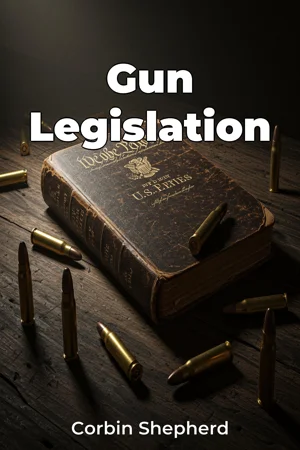
How have shifting interpretations of the Second Amendment shaped the landscape of American society? "Gun Legislation" offers a comprehensive exploration of U.S. gun laws, pivotal court rulings, and significant policy shifts, examining their historical context, legal foundations, and societal impacts. The book focuses on three key areas: the evolution of gun control legislation at the federal and state levels, the landmark Supreme Court cases that have defined the scope of the Second Amendment, and the dynamic interplay between gun policy and public safety. These topics are crucial for understanding the ongoing debates surrounding gun rights and regulations in America. Understanding the current state of gun legislation requires a grasp of its historical roots, stretching back to the post-Revolutionary War era and continuing through periods of rapid industrialization, urbanization, and social change. The book provides this context, offering a detailed timeline of key legislative actions and judicial decisions, including the National Firearms Act of 1934, the Gun Control Act of 1968, and the more recent Protection of Lawful Commerce in Arms Act. The central argument of "Gun Legislation" is that the ongoing evolution of gun laws reflects a continuous tension between individual rights and collective security, a tension that is adjudicated through legislative action, judicial review, and public discourse. This argument is vital because it provides a framework for understanding the complexities of gun policy and evaluating the effectiveness of different regulatory approaches. The book unfolds in a structured manner. First, it introduces the legal and historical foundations of gun control, tracing the development of firearm regulations from the colonial era to the present day. Second, it delves into significant Supreme Court cases, such as *United States v. Miller*, *District of Columbia v. Heller*, and *McDonald v. City of Chicago*, analyzing their legal reasoning and their impact on gun rights. Third, the book examines the effects of specific gun control measures, such as background checks, assault weapon bans, and red flag laws, on crime rates and public safety. The book culminates by considering potential future directions for gun policy in the United States. "Gun Legislation" draws on a wide range of primary and secondary sources, including legislative records, court documents, statistical data from the Centers for Disease Control and Prevention (CDC) and the Federal Bureau of Investigation (FBI), and scholarly research in law, history, and political science. It also incorporates analyses of public opinion surveys and media coverage to provide a comprehensive understanding of the social and political dynamics surrounding gun control. The book connects to other fields such as criminology, public health, and constitutional law. Criminology informs the analysis of the relationship between gun control measures and crime rates. Public health perspectives shed light on the impact of gun violence on community well-being. Constitutional law provides the framework for interpreting the Second Amendment and evaluating the legality of gun regulations. This book distinguishes itself through its balanced and non-partisan approach to a highly contentious issue. It avoids ideological advocacy and instead focuses on providing a fact-based analysis of the legal, historical, and empirical evidence. The writing style is academic yet accessible, aiming to inform and educate readers without overwhelming them with legal jargon or technical details. The target audience for "Gun Legislation" includes students, policymakers, legal professionals, and anyone interested in learning more about the complexities of gun control in the United States. The book is valuable because it provides a comprehensive and objective overview of a topic that is often characterized by misinformation and polarization. It adheres to the conventions of non-fiction by providing clear sourcing, rigorous analysis, and a commitment to factual accuracy. The scope of the book is limited to the legal and political aspects of gun control in the United States. It does not delve into the psychological or sociological factors that contribute to gun violence, nor does it offer specific policy recommendations. This focus allows for a more in-depth examination of the legal and historical context of gun legislation. The information in "Gun Legislation" can be applied practically by readers who wish to engage in informed discussions about gun policy, advocate for specific legislative changes, or understand the legal basis for existing gun laws. The book addresses ongoing debates about the meaning of the Second Amendment, the effectiveness of different gun control measures, and the appropriate balance between individual rights and public safety.
How have shifting interpretations of the Second Amendment shaped the landscape of American society? "Gun Legislation" offers a comprehensive exploration of U.S. gun laws, pivotal court rulings, and significant policy shifts, examining their historical context, legal foundations, and societal impacts. The book focuses on three key areas: the evolution of gun control legislation at the federal and state levels, the landmark Supreme Court cases that have defined the scope of the Second Amendment, and the dynamic interplay between gun policy and public safety. These topics are crucial for understanding the ongoing debates surrounding gun rights and regulations in America. Understanding the current state of gun legislation requires a grasp of its historical roots, stretching back to the post-Revolutionary War era and continuing through periods of rapid industrialization, urbanization, and social change. The book provides this context, offering a detailed timeline of key legislative actions and judicial decisions, including the National Firearms Act of 1934, the Gun Control Act of 1968, and the more recent Protection of Lawful Commerce in Arms Act. The central argument of "Gun Legislation" is that the ongoing evolution of gun laws reflects a continuous tension between individual rights and collective security, a tension that is adjudicated through legislative action, judicial review, and public discourse. This argument is vital because it provides a framework for understanding the complexities of gun policy and evaluating the effectiveness of different regulatory approaches. The book unfolds in a structured manner. First, it introduces the legal and historical foundations of gun control, tracing the development of firearm regulations from the colonial era to the present day. Second, it delves into significant Supreme Court cases, such as *United States v. Miller*, *District of Columbia v. Heller*, and *McDonald v. City of Chicago*, analyzing their legal reasoning and their impact on gun rights. Third, the book examines the effects of specific gun control measures, such as background checks, assault weapon bans, and red flag laws, on crime rates and public safety. The book culminates by considering potential future directions for gun policy in the United States. "Gun Legislation" draws on a wide range of primary and secondary sources, including legislative records, court documents, statistical data from the Centers for Disease Control and Prevention (CDC) and the Federal Bureau of Investigation (FBI), and scholarly research in law, history, and political science. It also incorporates analyses of public opinion surveys and media coverage to provide a comprehensive understanding of the social and political dynamics surrounding gun control. The book connects to other fields such as criminology, public health, and constitutional law. Criminology informs the analysis of the relationship between gun control measures and crime rates. Public health perspectives shed light on the impact of gun violence on community well-being. Constitutional law provides the framework for interpreting the Second Amendment and evaluating the legality of gun regulations. This book distinguishes itself through its balanced and non-partisan approach to a highly contentious issue. It avoids ideological advocacy and instead focuses on providing a fact-based analysis of the legal, historical, and empirical evidence. The writing style is academic yet accessible, aiming to inform and educate readers without overwhelming them with legal jargon or technical details. The target audience for "Gun Legislation" includes students, policymakers, legal professionals, and anyone interested in learning more about the complexities of gun control in the United States. The book is valuable because it provides a comprehensive and objective overview of a topic that is often characterized by misinformation and polarization. It adheres to the conventions of non-fiction by providing clear sourcing, rigorous analysis, and a commitment to factual accuracy. The scope of the book is limited to the legal and political aspects of gun control in the United States. It does not delve into the psychological or sociological factors that contribute to gun violence, nor does it offer specific policy recommendations. This focus allows for a more in-depth examination of the legal and historical context of gun legislation. The information in "Gun Legislation" can be applied practically by readers who wish to engage in informed discussions about gun policy, advocate for specific legislative changes, or understand the legal basis for existing gun laws. The book addresses ongoing debates about the meaning of the Second Amendment, the effectiveness of different gun control measures, and the appropriate balance between individual rights and public safety.
"Gun Legislation" delves into the intricate history and politics surrounding U.S. gun laws, examining how interpretations of the Second Amendment have shaped American society. It traces the evolution of gun control legislation at both federal and state levels and analyzes landmark Supreme Court cases, revealing the ongoing tension between individual gun rights and the pursuit of public safety. For instance, the book explores how the National Firearms Act of 1934 and the Gun Control Act of 1968 reflect changing societal attitudes and legal interpretations. The book uniquely presents a balanced, non-partisan analysis of firearm regulations, avoiding ideological advocacy by focusing on factual evidence from legislative records, court documents, and statistical data. Progressing chronologically, it first establishes the historical foundations of gun control from the colonial era to today. Then, it examines key Supreme Court cases like *District of Columbia v. Heller*, and finally, it assesses the real-world impacts of measures such as background checks and red flag laws, offering readers a comprehensive understanding of this complex issue.
Book Details
ISBN
9788235262301
Publisher
Publifye AS
Your Licenses
You don't own any licenses for this book
Purchase a license below to unlock this book and download the EPUB.
Purchase License
Select a tier to unlock this book
Need bulk licensing?
Contact us for enterprise agreements.