
About This Book
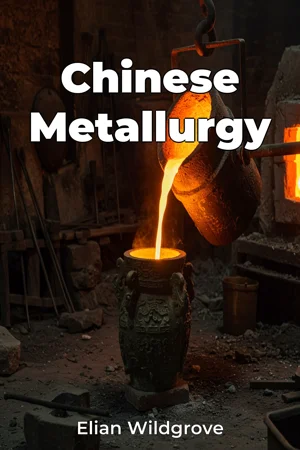
How did ancient China transform from a culture reliant on stone and bone to a civilization forging intricate bronze vessels and, eventually, mastering the production of steel? "Chinese Metallurgy" delves into the fascinating history of metallurgical advancements in ancient China, tracing the evolution of bronze, iron, and steel technologies and their profound impact on warfare, agriculture, and societal development. This book explores not only the technical processes involved but also the cultural and economic forces driving these innovations. This book argues that the development of metallurgy in ancient China was not simply a linear progression of technological improvements, but a complex interplay of innovation, adaptation, and cultural exchange. It demonstrates how Chinese metallurgists, through experimentation and refinement, achieved remarkable levels of skill in casting bronze, developing iron production techniques, and ultimately, mastering the creation of steel centuries before their Western counterparts in some areas. This mastery played a crucial role in shaping China's military power, agricultural productivity, and its overall societal structure. The book is structured to provide a comprehensive overview of Chinese metallurgy. It begins by introducing the earliest uses of metal in China, focusing on the Bronze Age and the casting of intricate ritual vessels, weapons and tools. We then move into the Iron Age, with a detailed examination of the introduction and adaptation of iron smelting technologies. Next, the book will show the various techniques developed for producing steel, including discussions of early steelmaking processes. The culmination of the book examines the practical applications of these metals, analyzing their impact on warfare (weaponry), agriculture (tools), and daily life (various implements). Support for the book's arguments is drawn from a variety of sources, including archaeological evidence, textual analysis of ancient Chinese documents (such as historical records and technical manuals), and comparative studies with metallurgical practices in other ancient cultures. Special attention is given to the interpretation of archaeological finds related to smelting sites, workshops, and burial goods, providing tangible evidence of the metallurgical processes and their societal context. "Chinese Metallurgy" connects to several other fields of study. Firstly, archaeology, as the unearthing and analysis of metal artifacts provides insights into ancient technologies. Secondly, economic history, as the production and trade of metals influenced social structures and power dynamics. Thirdly, the study of ancient warfare, as metal weapons transformed military strategies and capabilities. This book offers a unique perspective by focusing on the cultural context of metallurgical innovation in ancient China. It emphasizes the roles of artisans, rulers, and merchants in shaping the development and dissemination of metal technologies. The writing style is factual and analytical, aiming to present complex technical information in an accessible manner for a broad audience. The target audience includes students and scholars of Chinese history, archaeology, and technology, as well as general readers interested in the history of science and innovation. The book serves as a valuable resource for understanding the technological foundations of ancient Chinese civilization. The scope of this book is limited to the study of ancient China, from the Bronze Age through the early imperial period. It does not delve extensively into later periods or comparative studies with other regions, allowing for a more focused and in-depth analysis of Chinese metallurgical achievements. The knowledge gained from this book can be applied to understanding the broader history of technology, the impact of materials science on society, and the complex relationship between technological innovation and cultural development. Understanding the ingenuity of Chinese metallurgy provides insights into the foundations of our modern world. While significant progress has been made in understanding ancient Chinese metallurgy, debates still exist regarding the precise dating of certain technological innovations and the extent of cultural exchange with other regions. This book addresses these debates by presenting a balanced assessment of the available evidence and acknowledging areas where further research is needed.
How did ancient China transform from a culture reliant on stone and bone to a civilization forging intricate bronze vessels and, eventually, mastering the production of steel? "Chinese Metallurgy" delves into the fascinating history of metallurgical advancements in ancient China, tracing the evolution of bronze, iron, and steel technologies and their profound impact on warfare, agriculture, and societal development. This book explores not only the technical processes involved but also the cultural and economic forces driving these innovations. This book argues that the development of metallurgy in ancient China was not simply a linear progression of technological improvements, but a complex interplay of innovation, adaptation, and cultural exchange. It demonstrates how Chinese metallurgists, through experimentation and refinement, achieved remarkable levels of skill in casting bronze, developing iron production techniques, and ultimately, mastering the creation of steel centuries before their Western counterparts in some areas. This mastery played a crucial role in shaping China's military power, agricultural productivity, and its overall societal structure. The book is structured to provide a comprehensive overview of Chinese metallurgy. It begins by introducing the earliest uses of metal in China, focusing on the Bronze Age and the casting of intricate ritual vessels, weapons and tools. We then move into the Iron Age, with a detailed examination of the introduction and adaptation of iron smelting technologies. Next, the book will show the various techniques developed for producing steel, including discussions of early steelmaking processes. The culmination of the book examines the practical applications of these metals, analyzing their impact on warfare (weaponry), agriculture (tools), and daily life (various implements). Support for the book's arguments is drawn from a variety of sources, including archaeological evidence, textual analysis of ancient Chinese documents (such as historical records and technical manuals), and comparative studies with metallurgical practices in other ancient cultures. Special attention is given to the interpretation of archaeological finds related to smelting sites, workshops, and burial goods, providing tangible evidence of the metallurgical processes and their societal context. "Chinese Metallurgy" connects to several other fields of study. Firstly, archaeology, as the unearthing and analysis of metal artifacts provides insights into ancient technologies. Secondly, economic history, as the production and trade of metals influenced social structures and power dynamics. Thirdly, the study of ancient warfare, as metal weapons transformed military strategies and capabilities. This book offers a unique perspective by focusing on the cultural context of metallurgical innovation in ancient China. It emphasizes the roles of artisans, rulers, and merchants in shaping the development and dissemination of metal technologies. The writing style is factual and analytical, aiming to present complex technical information in an accessible manner for a broad audience. The target audience includes students and scholars of Chinese history, archaeology, and technology, as well as general readers interested in the history of science and innovation. The book serves as a valuable resource for understanding the technological foundations of ancient Chinese civilization. The scope of this book is limited to the study of ancient China, from the Bronze Age through the early imperial period. It does not delve extensively into later periods or comparative studies with other regions, allowing for a more focused and in-depth analysis of Chinese metallurgical achievements. The knowledge gained from this book can be applied to understanding the broader history of technology, the impact of materials science on society, and the complex relationship between technological innovation and cultural development. Understanding the ingenuity of Chinese metallurgy provides insights into the foundations of our modern world. While significant progress has been made in understanding ancient Chinese metallurgy, debates still exist regarding the precise dating of certain technological innovations and the extent of cultural exchange with other regions. This book addresses these debates by presenting a balanced assessment of the available evidence and acknowledging areas where further research is needed.
"Chinese Metallurgy" explores the evolution of metalworking in ancient China, from early bronze casting to the mastery of steelmaking. The book examines how these metallurgical advancements shaped warfare, agriculture, and the overall structure of ancient Chinese society. Intriguingly, Chinese metallurgists achieved sophisticated bronze casting techniques and developed advanced iron production methods, in some instances, centuries ahead of their Western counterparts. The study emphasizes that the story of Chinese metallurgy is not just about technological progress, but also about the interplay of culture, economics, and innovation. The book progresses chronologically, beginning with the Bronze Age and the creation of ritual vessels and weaponry, then moves into the Iron Age, detailing the adaptation of iron smelting. It further explores early steelmaking processes and the practical applications of metals in agriculture and daily life. Drawing from archaeological finds and ancient texts, "Chinese Metallurgy" offers a unique perspective by focusing on the cultural context of these innovations, emphasizing the roles of artisans, rulers, and merchants. It provides a valuable resource for those interested in the technological foundations of ancient Chinese civilization.
Book Details
ISBN
9788235262271
Publisher
Publifye AS
Your Licenses
You don't own any licenses for this book
Purchase a license below to unlock this book and download the EPUB.
Purchase License
Select a tier to unlock this book
Need bulk licensing?
Contact us for enterprise agreements.