
About This Book
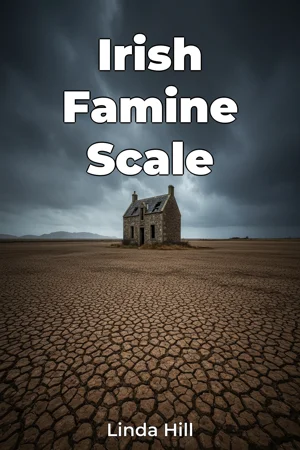
How could a single crop failure devastate an entire nation, and what lasting impacts ripple through generations? "Irish Famine Scale" examines the intricate web of social dynamics and logistical failures that intensified the Great Irish Famine, moving past simple narratives of blight to explore the human systems that exacerbated the tragedy. This book is a critical analysis of government relief efforts, mass migration patterns, and the societal breakdown that occurred between 1845 and 1852, presenting a comprehensive, dispassionate assessment of culpability and consequence. The central argument of "Irish Famine Scale" is that the famine was not solely a natural disaster, but a socio-political catastrophe compounded by inadequate and often counterproductive responses from both British governmental bodies and Irish social structures. This argument challenges traditional narratives that frame the famine as an unavoidable tragedy and underscores the importance of understanding the systemic failures that contributed to its severity. The famine serves as a case study illuminating the dangers of inadequate governance and the complex effects of socio-economic policies during crises. This book unfolds in three major sections. First, it establishes the pre-famine social and economic landscape of Ireland, highlighting land ownership patterns, agricultural practices, and the precarious dependence on the potato crop. This foundational section contextualizes the vulnerability of the Irish population and sets the stage for understanding the famine's initial impact. The second section dissects the British government's relief measures, analyzing the effectiveness (or ineffectiveness) of policies such as public works programs, soup kitchens, and the implementation of the Poor Laws. This section relies heavily on government documents, parliamentary records, and contemporary accounts to expose the limitations and biases that shaped the official response. The third section examines the mass migration that resulted from the famine, tracing the routes and experiences of Irish emigrants to North America, Australia, and beyond. It highlights the social and economic consequences of this diaspora, both for the individuals involved and for the receiving countries. The research underpinning "Irish Famine Scale" draws upon a diverse range of primary sources, including official correspondence, famine relief records, personal letters, and newspaper accounts. Census data, shipping manifests, and land ownership surveys provide quantitative support for the analysis of population decline, migration patterns, and economic shifts. The book uses a blend of qualitative and quantitative methodologies to offer a nuanced understanding of the famine's impact. "Irish Famine Scale" also connects to fields such as economics, sociology, and political science. The analysis of government policies and their economic consequences relates to economic history and development studies. The examination of social structures and migration patterns connects to sociological theories of social change and diaspora studies. The study of political responses to the famine sheds light on the dynamics of colonial governance and political accountability. This book takes a balanced, data-driven approach, avoiding sensationalism and sentimentality. The tone is academic but accessible, aiming to inform and engage a broad readership. The content will appeal to students of Irish history, social policy, and famine studies, as well as general readers interested in learning more about this pivotal moment in history. The genre conventions of historical non-fiction are adhered to, including thorough sourcing, detailed explanations, and a clear, chronological structure. The scope of the book is limited to the period of the Great Irish Famine (1845-1852) and its immediate aftermath, focusing primarily on the social and political dimensions of the crisis. While the book acknowledges the role of the potato blight, its primary focus is on the human factors that transformed a natural disaster into a social catastrophe. The information contained within this book can assist policymakers and aid organizations to create better and more robust disaster-response plans. "Irish Famine Scale" addresses ongoing debates about the role of British policy in exacerbating the famine. By exploring these controversies and providing a nuanced analysis of the evidence, the book aims to contribute to a deeper and more informed understanding of this complex event.
How could a single crop failure devastate an entire nation, and what lasting impacts ripple through generations? "Irish Famine Scale" examines the intricate web of social dynamics and logistical failures that intensified the Great Irish Famine, moving past simple narratives of blight to explore the human systems that exacerbated the tragedy. This book is a critical analysis of government relief efforts, mass migration patterns, and the societal breakdown that occurred between 1845 and 1852, presenting a comprehensive, dispassionate assessment of culpability and consequence. The central argument of "Irish Famine Scale" is that the famine was not solely a natural disaster, but a socio-political catastrophe compounded by inadequate and often counterproductive responses from both British governmental bodies and Irish social structures. This argument challenges traditional narratives that frame the famine as an unavoidable tragedy and underscores the importance of understanding the systemic failures that contributed to its severity. The famine serves as a case study illuminating the dangers of inadequate governance and the complex effects of socio-economic policies during crises. This book unfolds in three major sections. First, it establishes the pre-famine social and economic landscape of Ireland, highlighting land ownership patterns, agricultural practices, and the precarious dependence on the potato crop. This foundational section contextualizes the vulnerability of the Irish population and sets the stage for understanding the famine's initial impact. The second section dissects the British government's relief measures, analyzing the effectiveness (or ineffectiveness) of policies such as public works programs, soup kitchens, and the implementation of the Poor Laws. This section relies heavily on government documents, parliamentary records, and contemporary accounts to expose the limitations and biases that shaped the official response. The third section examines the mass migration that resulted from the famine, tracing the routes and experiences of Irish emigrants to North America, Australia, and beyond. It highlights the social and economic consequences of this diaspora, both for the individuals involved and for the receiving countries. The research underpinning "Irish Famine Scale" draws upon a diverse range of primary sources, including official correspondence, famine relief records, personal letters, and newspaper accounts. Census data, shipping manifests, and land ownership surveys provide quantitative support for the analysis of population decline, migration patterns, and economic shifts. The book uses a blend of qualitative and quantitative methodologies to offer a nuanced understanding of the famine's impact. "Irish Famine Scale" also connects to fields such as economics, sociology, and political science. The analysis of government policies and their economic consequences relates to economic history and development studies. The examination of social structures and migration patterns connects to sociological theories of social change and diaspora studies. The study of political responses to the famine sheds light on the dynamics of colonial governance and political accountability. This book takes a balanced, data-driven approach, avoiding sensationalism and sentimentality. The tone is academic but accessible, aiming to inform and engage a broad readership. The content will appeal to students of Irish history, social policy, and famine studies, as well as general readers interested in learning more about this pivotal moment in history. The genre conventions of historical non-fiction are adhered to, including thorough sourcing, detailed explanations, and a clear, chronological structure. The scope of the book is limited to the period of the Great Irish Famine (1845-1852) and its immediate aftermath, focusing primarily on the social and political dimensions of the crisis. While the book acknowledges the role of the potato blight, its primary focus is on the human factors that transformed a natural disaster into a social catastrophe. The information contained within this book can assist policymakers and aid organizations to create better and more robust disaster-response plans. "Irish Famine Scale" addresses ongoing debates about the role of British policy in exacerbating the famine. By exploring these controversies and providing a nuanced analysis of the evidence, the book aims to contribute to a deeper and more informed understanding of this complex event.
"Irish Famine Scale" offers a deep dive into the Great Irish Famine, examining it not merely as a natural disaster but as a socio-political catastrophe. The book analyzes how existing social structures and the British government's policies amplified the devastation caused by the potato blight between 1845 and 1852. Intriguingly, the study reveals how seemingly well-intentioned relief efforts sometimes worsened the situation, while mass migration reshaped not only Ireland but also the demographics of countries like the United States and Australia. This historical analysis progresses through three distinct parts. Initially, it sets the stage by describing pre-famine Ireland, its reliance on the potato, and existing socio-economic vulnerabilities. The second part meticulously dissects British governmental strategies such as public work programs and the Poor Laws, evaluating their actual impact using parliamentary records and contemporary accounts. Finally, the book turns to the mass migrations spurred by the famine, tracing the journeys of Irish emigrants and assessing the diasporic consequences. Employing a balanced, data-driven approach, "Irish Famine Scale" avoids sensationalism, instead combining qualitative narratives with quantitative data derived from census records and shipping manifests. This comprehensive approach provides students and general readers an opportunity to understand the complex interplay of factors that transformed a crop failure into one of history's most heartbreaking events.
Book Details
ISBN
9788235262103
Publisher
Publifye AS
Your Licenses
You don't own any licenses for this book
Purchase a license below to unlock this book and download the EPUB.
Purchase License
Select a tier to unlock this book
Need bulk licensing?
Contact us for enterprise agreements.