
About This Book
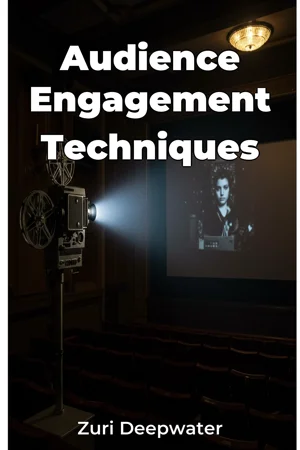
Why do some films and television shows captivate audiences while others fail to leave a lasting impression? "Audience Engagement Techniques" delves into this critical question, offering a comprehensive analysis of how directors and writers strategically employ pacing and structure to cultivate emotional and intellectual investment in their work. This book examines the art and science of audience engagement within the context of film and television, providing actionable insights for industry professionals and enthusiasts alike. A central argument within these pages is that effective pacing and structural design are not merely aesthetic choices but are instead fundamental tools for guiding audience perception, managing emotional responses, and shaping intellectual understanding. Without a deliberate approach to these elements, even the most compelling stories can fall flat. We are not just telling stories; we are architecting experiences. This book explores the principal factors that contribute to audience engagement, focusing on the strategic manipulation of time—pacing—and the arrangement of narrative elements—structure. Pacing dictates the rhythm of information delivery, influencing tension, suspense, and emotional resonance. Structure determines how story beats are revealed, creating patterns of anticipation and resolution that shape the overall viewing experience. Understanding these two elements is essential for filmmakers, television writers, and producers aiming to create compelling and successful projects. The book's structure is designed to provide a comprehensive understanding of audience engagement techniques. It opens with an exploration of the psychological principles underlying audience perception and emotional response. This section provides the theoretical foundation for understanding how and why specific techniques work. The subsequent sections delve into the practical application of these principles. A detailed analysis of pacing techniques examines how directors use editing, scene length, and dialogue rhythm to control the audience's experience of time. Specific case studies will dissect successful examples of pacing, highlighting how they contribute to the overall impact of the film or show. We then turn to structure, dissecting narrative forms such as the three-act structure, episodic storytelling, and non-linear narratives. Through comparative analysis, the book illustrates how different structural choices impact audience engagement. This includes examining the use of plot twists, cliffhangers, and foreshadowing to maintain interest and create emotional investment. The culmination of the book brings together these elements, offering a framework for designing audience-engaging stories. It provides practical guidelines and examples that readers can apply to their own projects. Real-world applications and implications are explored, demonstrating how these techniques can enhance the success of films, television shows, and even business presentations. The evidence presented throughout the book draws from a variety of sources, including film theory, cognitive psychology, and industry case studies. Quantitative data on audience response, such as viewership numbers and social media engagement, is integrated with qualitative analyses of critical reception and audience feedback. This multidisciplinary approach strengthens the book's arguments and provides a well-rounded perspective on the subject. Interdisciplinary connections are paramount to the book's impact. By drawing from fields such as psychology, marketing, and communication studies, "Audience Engagement Techniques" offers a holistic understanding of how stories impact audiences. These connections enrich the book's argument by providing a broader context for understanding audience behaviour. This book offers a unique perspective by focusing on the intentional use of pacing and structure as tools for audience engagement. It stands apart by providing a practical, evidence-based approach to a topic often treated subjectively. The writing style is accessible and engaging, balancing academic rigor with practical application. It avoids jargon and presents complex concepts in a clear and concise manner. The target audience includes film students, screenwriters, directors, producers, and anyone interested in creating engaging stories. This book is particularly valuable for those seeking to understand the underlying principles of audience engagement and apply them to their own work. In line with the expectations of the Management, Business Management, Film & Television genres, the book delivers practical strategies and actionable insights that readers can immediately implement. The scope of the book is primarily focused on pacing and structure within film and television, with limited explorations of other media. This intentional limitation allows for a more in-depth analysis of the chosen topics. The information within "Audience Engagement Techniques" can be used in various real-world applications. Screenwriters can use it to craft more compelling narratives, directors can use it to create more engaging films, and marketers can use it to create more effective advertising campaigns. While the effectiveness of specific techniques can vary depending on cultural context and audience preferences, this book provides a solid foundation for understanding the principles of audience engagement.
Why do some films and television shows captivate audiences while others fail to leave a lasting impression? "Audience Engagement Techniques" delves into this critical question, offering a comprehensive analysis of how directors and writers strategically employ pacing and structure to cultivate emotional and intellectual investment in their work. This book examines the art and science of audience engagement within the context of film and television, providing actionable insights for industry professionals and enthusiasts alike. A central argument within these pages is that effective pacing and structural design are not merely aesthetic choices but are instead fundamental tools for guiding audience perception, managing emotional responses, and shaping intellectual understanding. Without a deliberate approach to these elements, even the most compelling stories can fall flat. We are not just telling stories; we are architecting experiences. This book explores the principal factors that contribute to audience engagement, focusing on the strategic manipulation of time—pacing—and the arrangement of narrative elements—structure. Pacing dictates the rhythm of information delivery, influencing tension, suspense, and emotional resonance. Structure determines how story beats are revealed, creating patterns of anticipation and resolution that shape the overall viewing experience. Understanding these two elements is essential for filmmakers, television writers, and producers aiming to create compelling and successful projects. The book's structure is designed to provide a comprehensive understanding of audience engagement techniques. It opens with an exploration of the psychological principles underlying audience perception and emotional response. This section provides the theoretical foundation for understanding how and why specific techniques work. The subsequent sections delve into the practical application of these principles. A detailed analysis of pacing techniques examines how directors use editing, scene length, and dialogue rhythm to control the audience's experience of time. Specific case studies will dissect successful examples of pacing, highlighting how they contribute to the overall impact of the film or show. We then turn to structure, dissecting narrative forms such as the three-act structure, episodic storytelling, and non-linear narratives. Through comparative analysis, the book illustrates how different structural choices impact audience engagement. This includes examining the use of plot twists, cliffhangers, and foreshadowing to maintain interest and create emotional investment. The culmination of the book brings together these elements, offering a framework for designing audience-engaging stories. It provides practical guidelines and examples that readers can apply to their own projects. Real-world applications and implications are explored, demonstrating how these techniques can enhance the success of films, television shows, and even business presentations. The evidence presented throughout the book draws from a variety of sources, including film theory, cognitive psychology, and industry case studies. Quantitative data on audience response, such as viewership numbers and social media engagement, is integrated with qualitative analyses of critical reception and audience feedback. This multidisciplinary approach strengthens the book's arguments and provides a well-rounded perspective on the subject. Interdisciplinary connections are paramount to the book's impact. By drawing from fields such as psychology, marketing, and communication studies, "Audience Engagement Techniques" offers a holistic understanding of how stories impact audiences. These connections enrich the book's argument by providing a broader context for understanding audience behaviour. This book offers a unique perspective by focusing on the intentional use of pacing and structure as tools for audience engagement. It stands apart by providing a practical, evidence-based approach to a topic often treated subjectively. The writing style is accessible and engaging, balancing academic rigor with practical application. It avoids jargon and presents complex concepts in a clear and concise manner. The target audience includes film students, screenwriters, directors, producers, and anyone interested in creating engaging stories. This book is particularly valuable for those seeking to understand the underlying principles of audience engagement and apply them to their own work. In line with the expectations of the Management, Business Management, Film & Television genres, the book delivers practical strategies and actionable insights that readers can immediately implement. The scope of the book is primarily focused on pacing and structure within film and television, with limited explorations of other media. This intentional limitation allows for a more in-depth analysis of the chosen topics. The information within "Audience Engagement Techniques" can be used in various real-world applications. Screenwriters can use it to craft more compelling narratives, directors can use it to create more engaging films, and marketers can use it to create more effective advertising campaigns. While the effectiveness of specific techniques can vary depending on cultural context and audience preferences, this book provides a solid foundation for understanding the principles of audience engagement.
"Audience Engagement Techniques" explores how filmmakers and television writers use pacing and structure to captivate viewers. It argues that these elements aren't just aesthetic choices, but vital tools for shaping emotional responses and intellectual understanding. The book investigates how manipulating time through pacing affects tension and suspense, while structural design, like using cliffhangers, creates anticipation and emotional investment. By understanding these techniques, industry professionals can craft more compelling narratives. The book begins by examining the psychological underpinnings of audience perception before diving into practical applications. It analyzes pacing techniques, such as editing and scene length, and dissects narrative structures like the three-act structure. Examples from film theory, cognitive psychology, and industry case studies are used to support the arguments. Ultimately, the book provides a framework for designing audience-engaging stories, offering guidelines applicable to films, television, and even business presentations. Its focus on intentional pacing and structure sets it apart, providing a practical, evidence-based approach valuable for film students, screenwriters, directors, and producers aiming to create successful projects.
Book Details
ISBN
9788235261793
Publisher
Publifye AS
Your Licenses
You don't own any licenses for this book
Purchase a license below to unlock this book and download the EPUB.
Purchase License
Select a tier to unlock this book
Need bulk licensing?
Contact us for enterprise agreements.