
About This Book
Can we envision a future where waterways, bustling with commerce and recreation, are navigated not by human hands at the helm, but by intelligent, self-driving boats? "Autonomous Boats" explores this rapidly evolving field, shedding light on the intricate technologies, complex algorithms, and real-world challenges involved in creating vessels capable of navigating independently. This book aims to provide a comprehensive understanding of how autonomous boats operate, particularly in dynamic and often congested waterways, areas that present significant engineering and regulatory hurdles. Three key topics form the core of this exploration: perception, decision-making, and control. Perception involves the boat's ability to "see" and interpret its surroundings using sensors such as cameras, LiDAR, and radar. Decision-making focuses on the algorithms and artificial intelligence that enable the boat to plan its route, avoid obstacles, and respond to unexpected events. Control encompasses the physical mechanisms and software that allow the vessel to execute those decisions, managing propulsion, steering, and other essential functions. These topics are critical because they represent the foundational pillars upon which safe and efficient autonomous navigation is built. To fully appreciate the current state of autonomous boat technology, we first delve into the historical context of maritime automation, tracing the evolution from early autopilots to advanced unmanned surface vehicles (USVs). The reader should have a basic understanding of physics and engineering principles, as well as some familiarity with computer science concepts like artificial intelligence and machine learning. The central argument of "Autonomous Boats" is that while fully autonomous navigation in complex waterways presents significant challenges, it is an achievable goal within the foreseeable future, contingent on continued advancements in sensor technology, AI algorithms, and robust regulatory frameworks. This argument is important because it highlights the potential benefits of autonomous boats, including increased efficiency, reduced human error, and improved safety in maritime operations. The book begins by introducing the fundamental concepts of autonomous navigation and exploring the key technologies involved. This section covers sensor types, data processing techniques, and the basics of path planning and control algorithms. Subsequent chapters delve into specific aspects of autonomous boat operation, such as obstacle avoidance, collision detection, and handling dynamic environmental conditions like currents and waves. Case studies of existing autonomous boat projects and real-world deployments are then presented, examining their successes, limitations, and lessons learned. The book culminates in a discussion of the ethical, legal, and societal implications of autonomous boats, addressing issues such as liability, security, and the potential impact on maritime jobs. Finally, we discuss future trends, and possible applications, ranging from environmental monitoring and search and rescue operations to cargo transport and recreational boating. The book draws upon a wide range of evidence and research, including technical reports, scientific publications, industry white papers, and data collected from real-world autonomous boat deployments. We also present original analysis and simulations to illustrate key concepts and demonstrate the performance of different algorithms. "Autonomous Boats" connects to several other fields, including robotics, artificial intelligence, and maritime engineering. The book also touches on environmental science, exploring the potential for autonomous boats to contribute to ocean monitoring and pollution control. Furthermore, it connects with law and policy providing insight into the complex regulatory landscape surrounding autonomous maritime vehicles. These connections enhance the book's argument by demonstrating the interdisciplinary nature of autonomous boat technology and its potential impact on various sectors. This book provides a balanced and objective assessment of the current state of autonomous boat technology, highlighting both its potential and its limitations. The overall tone is informative and analytical, making complex topics accessible to a broad audience. The target audience includes engineers, researchers, students, policymakers, and anyone interested in the future of maritime technology. This book would be valuable to them because it provides a comprehensive and up-to-date overview of the field, offering insights into the challenges and opportunities of autonomous boat technology. As a work of science and technology non-fiction, "Autonomous Boats" adheres to the conventions of accuracy, objectivity, and thoroughness. It presents factual information, supported by evidence and research, and avoids speculation or unsubstantiated claims. The scope of the book is limited to the technical aspects of autonomous boat operation, focusing primarily on the technologies and algorithms involved in navigation and control. It does not delve into the economic or social implications of autonomous boats in great detail, although these issues are briefly addressed in the final chapter. The information in this book can be applied practically by engineers and researchers working in the field of autonomous maritime vehicles, providing them with a solid foundation in the relevant technologies and algorithms. It can also be used by policymakers to inform the development of regulations and standards for autonomous boat operation. The development and deployment of autonomous boats is not without controversy. This book addresses debates surrounding the safety and reliability of autonomous systems, the potential for job displacement in the maritime industry, and the allocation of liability in the event of accidents. By presenting different perspectives on these issues, the book aims to foster informed discussion and promote responsible development of autonomous boat technology.
Can we envision a future where waterways, bustling with commerce and recreation, are navigated not by human hands at the helm, but by intelligent, self-driving boats? "Autonomous Boats" explores this rapidly evolving field, shedding light on the intricate technologies, complex algorithms, and real-world challenges involved in creating vessels capable of navigating independently. This book aims to provide a comprehensive understanding of how autonomous boats operate, particularly in dynamic and often congested waterways, areas that present significant engineering and regulatory hurdles. Three key topics form the core of this exploration: perception, decision-making, and control. Perception involves the boat's ability to "see" and interpret its surroundings using sensors such as cameras, LiDAR, and radar. Decision-making focuses on the algorithms and artificial intelligence that enable the boat to plan its route, avoid obstacles, and respond to unexpected events. Control encompasses the physical mechanisms and software that allow the vessel to execute those decisions, managing propulsion, steering, and other essential functions. These topics are critical because they represent the foundational pillars upon which safe and efficient autonomous navigation is built. To fully appreciate the current state of autonomous boat technology, we first delve into the historical context of maritime automation, tracing the evolution from early autopilots to advanced unmanned surface vehicles (USVs). The reader should have a basic understanding of physics and engineering principles, as well as some familiarity with computer science concepts like artificial intelligence and machine learning. The central argument of "Autonomous Boats" is that while fully autonomous navigation in complex waterways presents significant challenges, it is an achievable goal within the foreseeable future, contingent on continued advancements in sensor technology, AI algorithms, and robust regulatory frameworks. This argument is important because it highlights the potential benefits of autonomous boats, including increased efficiency, reduced human error, and improved safety in maritime operations. The book begins by introducing the fundamental concepts of autonomous navigation and exploring the key technologies involved. This section covers sensor types, data processing techniques, and the basics of path planning and control algorithms. Subsequent chapters delve into specific aspects of autonomous boat operation, such as obstacle avoidance, collision detection, and handling dynamic environmental conditions like currents and waves. Case studies of existing autonomous boat projects and real-world deployments are then presented, examining their successes, limitations, and lessons learned. The book culminates in a discussion of the ethical, legal, and societal implications of autonomous boats, addressing issues such as liability, security, and the potential impact on maritime jobs. Finally, we discuss future trends, and possible applications, ranging from environmental monitoring and search and rescue operations to cargo transport and recreational boating. The book draws upon a wide range of evidence and research, including technical reports, scientific publications, industry white papers, and data collected from real-world autonomous boat deployments. We also present original analysis and simulations to illustrate key concepts and demonstrate the performance of different algorithms. "Autonomous Boats" connects to several other fields, including robotics, artificial intelligence, and maritime engineering. The book also touches on environmental science, exploring the potential for autonomous boats to contribute to ocean monitoring and pollution control. Furthermore, it connects with law and policy providing insight into the complex regulatory landscape surrounding autonomous maritime vehicles. These connections enhance the book's argument by demonstrating the interdisciplinary nature of autonomous boat technology and its potential impact on various sectors. This book provides a balanced and objective assessment of the current state of autonomous boat technology, highlighting both its potential and its limitations. The overall tone is informative and analytical, making complex topics accessible to a broad audience. The target audience includes engineers, researchers, students, policymakers, and anyone interested in the future of maritime technology. This book would be valuable to them because it provides a comprehensive and up-to-date overview of the field, offering insights into the challenges and opportunities of autonomous boat technology. As a work of science and technology non-fiction, "Autonomous Boats" adheres to the conventions of accuracy, objectivity, and thoroughness. It presents factual information, supported by evidence and research, and avoids speculation or unsubstantiated claims. The scope of the book is limited to the technical aspects of autonomous boat operation, focusing primarily on the technologies and algorithms involved in navigation and control. It does not delve into the economic or social implications of autonomous boats in great detail, although these issues are briefly addressed in the final chapter. The information in this book can be applied practically by engineers and researchers working in the field of autonomous maritime vehicles, providing them with a solid foundation in the relevant technologies and algorithms. It can also be used by policymakers to inform the development of regulations and standards for autonomous boat operation. The development and deployment of autonomous boats is not without controversy. This book addresses debates surrounding the safety and reliability of autonomous systems, the potential for job displacement in the maritime industry, and the allocation of liability in the event of accidents. By presenting different perspectives on these issues, the book aims to foster informed discussion and promote responsible development of autonomous boat technology.
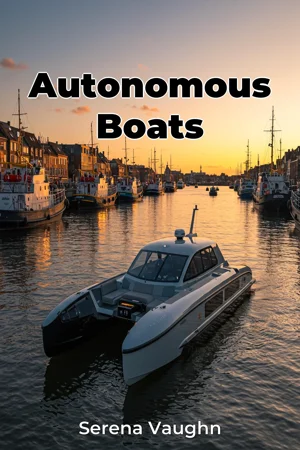
"Autonomous Boats" explores the exciting and rapidly advancing world of self-driving vessels, examining the technologies that enable boats to navigate waterways independently. The book focuses on three core areas: how these boats "see" their environment using sensor technology like LiDAR, how they make decisions using AI algorithms to avoid obstacles, and how they execute those decisions through propulsion and steering. These autonomous systems hold the promise of increased efficiency and safety in maritime operations. The book begins by tracing the historical evolution of maritime automation, from early autopilots to today's unmanned surface vehicles. It then progresses through key aspects of autonomous boat operation, including obstacle avoidance and handling dynamic environmental conditions. Real-world case studies provide insights into the successes and challenges of current autonomous boat projects. Ultimately, the book addresses the ethical, legal, and societal implications of marine automation, making it a valuable resource for anyone interested in the future of maritime technology.
Book Details
ISBN
9788235261779
Publisher
Publifye AS
Your Licenses
You don't own any licenses for this book
Purchase a license below to unlock this book and download the EPUB.
Purchase License
Select a tier to unlock this book
Need bulk licensing?
Contact us for enterprise agreements.