
About This Book
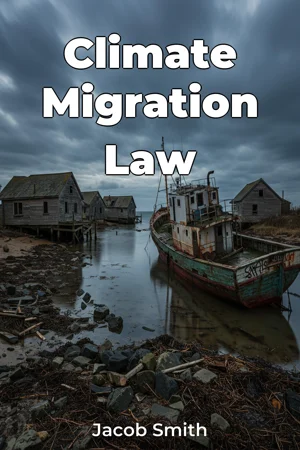
What happens when rising sea levels, desertification, and extreme weather events force entire communities to abandon their homes? *Climate Migration Law* delves into the increasingly urgent legal and policy challenges posed by population displacement caused by climate change. This book offers a comprehensive analysis of the legal frameworks, or lack thereof, surrounding environmental refugees and planned relocation in an era of climate-induced migration. This book addresses three core areas. First, it critically examines the existing international and national legal frameworks to determine whether climate migrants qualify for refugee status or other forms of protection. The analysis considers the limitations of the 1951 Refugee Convention in addressing climate-related displacement, exploring alternative legal pathways and the potential for expanding existing definitions of persecution or vulnerability. Second, the book investigates the legal and ethical dimensions of planned relocation as an adaptation strategy. It analyzes the rights of displaced communities, the responsibilities of governments, and the legal implications of land acquisition, resettlement, and compensation. Third, it explores governance frameworks, including international agreements, national laws, and local policies, needed to manage cross-border and internal climate migration effectively. The current legal landscape struggles to adequately address climate-induced displacement. Traditional legal concepts often fail when applied to environmental migrants, who are not typically fleeing persecution by a specific actor but rather the gradual and pervasive effects of climate change. The central argument is that a new or significantly adapted legal and policy framework is necessary to protect the rights of climate migrants, ensure equitable relocation processes, and promote sustainable adaptation strategies. This book is structured to provide a clear and logical progression of ideas. It begins by introducing the scientific basis of climate-induced migration and its projected impacts. It then moves into an analysis of relevant international and national laws, including human rights law, refugee law, and disaster management law. Case studies from various regions of the world, including low-lying island states, arid regions, and coastal communities, are used to illustrate the legal and practical challenges of climate migration. The book culminates in a discussion of policy recommendations and legal reforms aimed at addressing climate displacement in a just and sustainable manner. The evidence presented is drawn from a range of sources, including international legal instruments, national legislation, court decisions, policy documents, scientific reports, and empirical studies. Primary data comes from interviews with legal experts, policymakers, and affected communities in regions vulnerable to climate change. Methodologies include comparative legal analysis, policy analysis, and qualitative research. This book connects to diverse fields, including environmental science, human rights, and development studies, offering a multidisciplinary perspective on climate migration. It also relates to aspects of international relations, particularly concerning state responsibility and burden-sharing in addressing cross-border displacement. This interdisciplinary approach enriches the analysis and provides a more comprehensive understanding of the complexities involved. A unique aspect of this book is its focus on integrating legal analysis with practical policy recommendations. It moves beyond theoretical discussions to offer concrete guidance for policymakers, legal professionals, and civil society organizations working on climate migration issues. The tone is academic yet accessible, aiming to inform and engage a broad audience. The book is aimed at legal scholars, policymakers, environmental advocates, and anyone interested in the intersection of climate change, human rights, and migration. It is valuable to those seeking a thorough understanding of the legal challenges and opportunities presented by climate-induced displacement. As a non-fiction work in the fields of environment and politics, the book will adhere to rigorous standards of accuracy, objectivity, and evidence-based reasoning. It explores the complexities of climate migration law while acknowledging the limitations of existing legal frameworks and the uncertainties surrounding future climate impacts. The scope of the book is global, examining legal and policy responses to climate migration in different regions of the world. However, it acknowledges that the challenges and solutions will vary depending on local contexts and specific vulnerabilities. The insights and recommendations in this book can be applied in various settings, from international negotiations on climate change to national policy reforms on migration and disaster management. The book also provides guidance for local communities and organizations seeking to adapt to the impacts of climate change and protect the rights of displaced populations. The book addresses ongoing debates surrounding the definition of environmental refugees, the extent of state responsibility for climate displacement, and the ethical implications of planned relocation.
What happens when rising sea levels, desertification, and extreme weather events force entire communities to abandon their homes? *Climate Migration Law* delves into the increasingly urgent legal and policy challenges posed by population displacement caused by climate change. This book offers a comprehensive analysis of the legal frameworks, or lack thereof, surrounding environmental refugees and planned relocation in an era of climate-induced migration. This book addresses three core areas. First, it critically examines the existing international and national legal frameworks to determine whether climate migrants qualify for refugee status or other forms of protection. The analysis considers the limitations of the 1951 Refugee Convention in addressing climate-related displacement, exploring alternative legal pathways and the potential for expanding existing definitions of persecution or vulnerability. Second, the book investigates the legal and ethical dimensions of planned relocation as an adaptation strategy. It analyzes the rights of displaced communities, the responsibilities of governments, and the legal implications of land acquisition, resettlement, and compensation. Third, it explores governance frameworks, including international agreements, national laws, and local policies, needed to manage cross-border and internal climate migration effectively. The current legal landscape struggles to adequately address climate-induced displacement. Traditional legal concepts often fail when applied to environmental migrants, who are not typically fleeing persecution by a specific actor but rather the gradual and pervasive effects of climate change. The central argument is that a new or significantly adapted legal and policy framework is necessary to protect the rights of climate migrants, ensure equitable relocation processes, and promote sustainable adaptation strategies. This book is structured to provide a clear and logical progression of ideas. It begins by introducing the scientific basis of climate-induced migration and its projected impacts. It then moves into an analysis of relevant international and national laws, including human rights law, refugee law, and disaster management law. Case studies from various regions of the world, including low-lying island states, arid regions, and coastal communities, are used to illustrate the legal and practical challenges of climate migration. The book culminates in a discussion of policy recommendations and legal reforms aimed at addressing climate displacement in a just and sustainable manner. The evidence presented is drawn from a range of sources, including international legal instruments, national legislation, court decisions, policy documents, scientific reports, and empirical studies. Primary data comes from interviews with legal experts, policymakers, and affected communities in regions vulnerable to climate change. Methodologies include comparative legal analysis, policy analysis, and qualitative research. This book connects to diverse fields, including environmental science, human rights, and development studies, offering a multidisciplinary perspective on climate migration. It also relates to aspects of international relations, particularly concerning state responsibility and burden-sharing in addressing cross-border displacement. This interdisciplinary approach enriches the analysis and provides a more comprehensive understanding of the complexities involved. A unique aspect of this book is its focus on integrating legal analysis with practical policy recommendations. It moves beyond theoretical discussions to offer concrete guidance for policymakers, legal professionals, and civil society organizations working on climate migration issues. The tone is academic yet accessible, aiming to inform and engage a broad audience. The book is aimed at legal scholars, policymakers, environmental advocates, and anyone interested in the intersection of climate change, human rights, and migration. It is valuable to those seeking a thorough understanding of the legal challenges and opportunities presented by climate-induced displacement. As a non-fiction work in the fields of environment and politics, the book will adhere to rigorous standards of accuracy, objectivity, and evidence-based reasoning. It explores the complexities of climate migration law while acknowledging the limitations of existing legal frameworks and the uncertainties surrounding future climate impacts. The scope of the book is global, examining legal and policy responses to climate migration in different regions of the world. However, it acknowledges that the challenges and solutions will vary depending on local contexts and specific vulnerabilities. The insights and recommendations in this book can be applied in various settings, from international negotiations on climate change to national policy reforms on migration and disaster management. The book also provides guidance for local communities and organizations seeking to adapt to the impacts of climate change and protect the rights of displaced populations. The book addresses ongoing debates surrounding the definition of environmental refugees, the extent of state responsibility for climate displacement, and the ethical implications of planned relocation.
Climate change is causing widespread displacement, and *Climate Migration Law* tackles the urgent legal and policy questions arising from this phenomenon. The book examines whether current international and national laws adequately protect climate migrants, especially considering the limitations of the 1951 Refugee Convention. It further explores the complexities of planned relocation, including the rights of displaced communities and the responsibilities of governments. One intriguing fact is that environmental migrants often don't fit traditional refugee definitions because they flee gradual environmental degradation rather than direct persecution. The book analyzes these issues across three core areas: legal frameworks, planned relocation, and governance. It investigates potential legal pathways for climate migrants, the ethical considerations of resettlement, and the international agreements needed for effective migration management. Case studies illustrate the challenges faced by vulnerable regions, like low-lying islands and arid areas. The book argues for a new or significantly adapted legal and policy framework to safeguard the rights of climate migrants and promote sustainable adaptation. Starting with the science behind climate-induced migration, the book progresses through an analysis of relevant laws and culminates in policy recommendations. It draws on diverse sources, including legal instruments, policy documents, and interviews with experts and affected communities. Ultimately, it seeks to offer practical guidance for policymakers and advocates working to address climate displacement in a just and sustainable manner.
Book Details
ISBN
9788235261755
Publisher
Publifye AS
Your Licenses
You don't own any licenses for this book
Purchase a license below to unlock this book and download the EPUB.
Purchase License
Select a tier to unlock this book
Need bulk licensing?
Contact us for enterprise agreements.