
About This Book
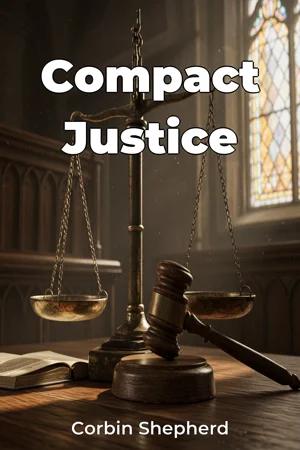
Can justice be swift and still be just? This question lies at the heart of "Compact Justice," a historical and political exploration of legal proceedings that were brief in duration but profound in their impact. This book delves into the historical record to examine instances where legal decisions, arrived at with remarkable speed, have shaped the course of history, redefined legal precedents, and continue to resonate in contemporary legal and political discourse. We will navigate complex issues of law, power, and historical context in our analysis. This book examines the tension between expediency and thoroughness in the pursuit of justice. It explores the historical, political, and social forces that have driven the need for rapid legal resolutions, while also scrutinizing the potential pitfalls of such speed. It is important to understand that legal systems are not static entities. They are constantly evolving in response to societal pressures, technological advancements, and shifts in political ideologies. The central argument of "Compact Justice" is that while efficiency in legal proceedings is desirable, it must never come at the expense of due process, fairness, and the protection of individual rights. The book contends that examining historical instances of "compact justice" offers valuable lessons for modern legal reformers and policymakers seeking to streamline legal processes without compromising fundamental principles of justice. The book is structured to progressively build this argument. First, it introduces the core concepts of "compact justice" and establishes a framework for analyzing historical case studies. The second section explores specific historical examples, from the Salem Witch Trials to landmark Supreme Court cases decided under tight deadlines. Each case study examines the context, the key players, the legal arguments, and the long-term consequences of the rapid decision-making process, as well as their connection to current times. The third section analyzes these examples collectively, identifying recurring patterns, common pitfalls, and potential best practices. Finally, the book concludes by offering practical recommendations for balancing efficiency and justice in contemporary legal systems, particularly in the context of rapidly evolving technologies and increasingly complex social challenges. The evidence presented in "Compact Justice" is drawn from a wide range of primary and secondary sources, including court records, historical documents, legal scholarship, and journalistic accounts. This book utilizes a comparative historical methodology, analyzing and contrasting different instances of "compact justice" across various time periods and legal systems to identify common themes and unique characteristics. "Compact Justice" intersects with several other fields of study. It draws upon historical analysis to understand the context in which rapid legal decisions were made. It connects with political science to examine the influence of power dynamics and political ideologies on legal processes. It engages with sociology to understand the social impact of legal decisions and the role of public opinion in shaping legal outcomes. These interdisciplinary connections enrich the book's analysis, providing a more nuanced and comprehensive understanding of the complexities of "compact justice." This book differentiates itself through its specific focus on brief legal proceedings and their lasting consequences. It moves beyond the typical analysis of major, protracted legal battles to examine the often-overlooked instances where rapid decisions have had profound impacts. This fresh perspective offers new insights into the dynamics of law, power, and justice. The tone and writing style are accessible and informative, intended for a broad audience interested in legal history, political science, and social justice. While grounded in rigorous research, the book avoids overly technical jargon and presents complex legal concepts in a clear and engaging manner. The target audience includes students of law, history, and political science, as well as legal professionals, policymakers, and general readers with an interest in the intersection of law, history, and politics. This book will appeal to anyone seeking a deeper understanding of the challenges and opportunities of achieving justice in a fast-paced and complex world. As a work of historical and political analysis, "Compact Justice" adheres to the conventions of those genres, providing a well-researched, objective, and evidence-based account of the subject matter. The scope of the book is intentionally limited to instances of legal proceedings in Western legal traditions, primarily in the United States and Europe, allowing for a more in-depth analysis of specific cases and legal systems. The insights of "Compact Justice" have practical applications for legal professionals seeking to improve the efficiency of legal processes while upholding principles of fairness and due process. The book's analysis of historical case studies provides valuable lessons for avoiding the pitfalls of rushed decisions and ensuring that justice is not sacrificed in the name of expediency. Finally, "Compact Justice" directly addresses ongoing debates about the role of technology in accelerating legal processes. It contributes to these debates by providing a historical perspective on the challenges and opportunities of "compact justice," offering insights that can inform the development of ethical and effective legal technologies.
Can justice be swift and still be just? This question lies at the heart of "Compact Justice," a historical and political exploration of legal proceedings that were brief in duration but profound in their impact. This book delves into the historical record to examine instances where legal decisions, arrived at with remarkable speed, have shaped the course of history, redefined legal precedents, and continue to resonate in contemporary legal and political discourse. We will navigate complex issues of law, power, and historical context in our analysis. This book examines the tension between expediency and thoroughness in the pursuit of justice. It explores the historical, political, and social forces that have driven the need for rapid legal resolutions, while also scrutinizing the potential pitfalls of such speed. It is important to understand that legal systems are not static entities. They are constantly evolving in response to societal pressures, technological advancements, and shifts in political ideologies. The central argument of "Compact Justice" is that while efficiency in legal proceedings is desirable, it must never come at the expense of due process, fairness, and the protection of individual rights. The book contends that examining historical instances of "compact justice" offers valuable lessons for modern legal reformers and policymakers seeking to streamline legal processes without compromising fundamental principles of justice. The book is structured to progressively build this argument. First, it introduces the core concepts of "compact justice" and establishes a framework for analyzing historical case studies. The second section explores specific historical examples, from the Salem Witch Trials to landmark Supreme Court cases decided under tight deadlines. Each case study examines the context, the key players, the legal arguments, and the long-term consequences of the rapid decision-making process, as well as their connection to current times. The third section analyzes these examples collectively, identifying recurring patterns, common pitfalls, and potential best practices. Finally, the book concludes by offering practical recommendations for balancing efficiency and justice in contemporary legal systems, particularly in the context of rapidly evolving technologies and increasingly complex social challenges. The evidence presented in "Compact Justice" is drawn from a wide range of primary and secondary sources, including court records, historical documents, legal scholarship, and journalistic accounts. This book utilizes a comparative historical methodology, analyzing and contrasting different instances of "compact justice" across various time periods and legal systems to identify common themes and unique characteristics. "Compact Justice" intersects with several other fields of study. It draws upon historical analysis to understand the context in which rapid legal decisions were made. It connects with political science to examine the influence of power dynamics and political ideologies on legal processes. It engages with sociology to understand the social impact of legal decisions and the role of public opinion in shaping legal outcomes. These interdisciplinary connections enrich the book's analysis, providing a more nuanced and comprehensive understanding of the complexities of "compact justice." This book differentiates itself through its specific focus on brief legal proceedings and their lasting consequences. It moves beyond the typical analysis of major, protracted legal battles to examine the often-overlooked instances where rapid decisions have had profound impacts. This fresh perspective offers new insights into the dynamics of law, power, and justice. The tone and writing style are accessible and informative, intended for a broad audience interested in legal history, political science, and social justice. While grounded in rigorous research, the book avoids overly technical jargon and presents complex legal concepts in a clear and engaging manner. The target audience includes students of law, history, and political science, as well as legal professionals, policymakers, and general readers with an interest in the intersection of law, history, and politics. This book will appeal to anyone seeking a deeper understanding of the challenges and opportunities of achieving justice in a fast-paced and complex world. As a work of historical and political analysis, "Compact Justice" adheres to the conventions of those genres, providing a well-researched, objective, and evidence-based account of the subject matter. The scope of the book is intentionally limited to instances of legal proceedings in Western legal traditions, primarily in the United States and Europe, allowing for a more in-depth analysis of specific cases and legal systems. The insights of "Compact Justice" have practical applications for legal professionals seeking to improve the efficiency of legal processes while upholding principles of fairness and due process. The book's analysis of historical case studies provides valuable lessons for avoiding the pitfalls of rushed decisions and ensuring that justice is not sacrificed in the name of expediency. Finally, "Compact Justice" directly addresses ongoing debates about the role of technology in accelerating legal processes. It contributes to these debates by providing a historical perspective on the challenges and opportunities of "compact justice," offering insights that can inform the development of ethical and effective legal technologies.
"Compact Justice" examines the complex relationship between speed and fairness in legal proceedings, questioning whether justice can truly be both swift and just. It delves into historical cases where rapid legal decisions have dramatically shaped history, highlighting how these instances continue to influence contemporary legal and political discussions. The book uniquely focuses on these often-overlooked cases, diverging from analyses of lengthy legal battles to offer fresh insights into law, power, and justice. The book explores how societal pressures and political ideologies can drive the need for quick legal resolutions, while simultaneously scrutinizing potential risks to due process. For instance, the book analyzes historical examples ranging from the Salem Witch Trials to fast-tracked Supreme Court cases, illustrating that while efficiency is desirable, it must not compromise individual rights. Structured progressively, the book first introduces the concept of "compact justice," then examines historical cases, analyzes recurring patterns, and concludes with practical recommendations for today's legal systems. Drawing from court records, historical documents, and legal scholarship, the book argues that lessons from the past can inform modern legal reform. Ultimately, "Compact Justice" presents a compelling case for balancing efficiency and justice in a rapidly evolving world.
Book Details
ISBN
9788235261748
Publisher
Publifye AS
Your Licenses
You don't own any licenses for this book
Purchase a license below to unlock this book and download the EPUB.
Purchase License
Select a tier to unlock this book
Need bulk licensing?
Contact us for enterprise agreements.