
About This Book
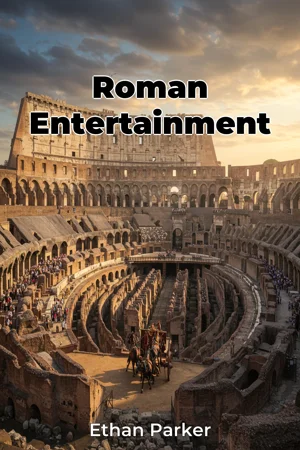
Have you ever wondered what captivated the citizens of Rome? "Roman Entertainment" explores the diverse forms of spectacle that shaped Roman society, offering insights into the values, beliefs, and power structures of this ancient civilization. This book delves into the heart of Roman culture, examining gladiator contests, chariot races, and theatrical productions, unveiling their profound significance beyond mere amusement. Understanding these entertainments provides a crucial lens through which to examine Roman social dynamics, political maneuvering, and the construction of identity. This book argues that Roman entertainment was not merely a diversion, but a carefully constructed system of social control, political propaganda, and cultural expression. The entertainments served as a powerful tool for emperors and elites to maintain order, project authority, and reinforce social hierarchies. By analyzing the evolution and mechanics of these spectacles, the book reveals the complex interplay between performers, audiences, and the ruling class. "Roman Entertainment" is structured to provide a comprehensive understanding of this subject. It begins by introducing the historical context and the socio-political landscape of the Roman Republic and Empire. It then delves into the specifics of each major form of entertainment: gladiatorial combat, tracing its origins, evolution, and the diverse types of gladiators and their training; chariot races, exploring the organization of the races, the factions involved, and the social significance of victory; and theatrical performances, analyzing the different genres of plays, the actors, and the audiences. The book also discusses less prominent, but equally important forms of entertainment, such as public executions, animal hunts (venationes), and athletic competitions. It culminates by synthesizing these various aspects, illustrating how they collectively contributed to the Roman identity and the maintenance of social order. The book draws upon a wide range of primary sources, including archaeological evidence from amphitheaters and theaters, inscriptions, mosaics, and literary accounts from Roman writers such as Cicero, Seneca, and Pliny. Secondary scholarly research in classical history, archaeology, and performance studies further supports its analysis. The book also examines the ethical debates surrounding these entertainments, incorporating the perspectives of those who criticized or opposed them. "Roman Entertainment" connects to several academic disciplines, including history, sociology, and performance studies. Its insights into crowd psychology, social stratification, and the use of spectacle as a political tool are relevant to understanding contemporary society. The book adopts a balanced and nuanced approach, acknowledging the brutality and violence inherent in some forms of Roman entertainment while also recognizing their artistic and cultural value. Targeted towards history enthusiasts, students of classical civilization, and anyone interested in understanding the roots of modern entertainment, this book offers valuable insights into the world of ancient Rome. It is presented in an accessible and engaging style, avoiding overly technical jargon while maintaining academic rigor. The scope of this book is intentionally limited to the major forms of public entertainment in Rome and its provinces during the Republic and Empire. While it acknowledges the existence of other forms of entertainment, such as private banquets and religious festivals, these are not the primary focus. The information presented can be applied practically to enhance understanding of historical films, literature, and cultural sites related to ancient Rome. The book will also address ongoing debates about the interpretation of gladiatorial combat and its role in Roman society.
Have you ever wondered what captivated the citizens of Rome? "Roman Entertainment" explores the diverse forms of spectacle that shaped Roman society, offering insights into the values, beliefs, and power structures of this ancient civilization. This book delves into the heart of Roman culture, examining gladiator contests, chariot races, and theatrical productions, unveiling their profound significance beyond mere amusement. Understanding these entertainments provides a crucial lens through which to examine Roman social dynamics, political maneuvering, and the construction of identity. This book argues that Roman entertainment was not merely a diversion, but a carefully constructed system of social control, political propaganda, and cultural expression. The entertainments served as a powerful tool for emperors and elites to maintain order, project authority, and reinforce social hierarchies. By analyzing the evolution and mechanics of these spectacles, the book reveals the complex interplay between performers, audiences, and the ruling class. "Roman Entertainment" is structured to provide a comprehensive understanding of this subject. It begins by introducing the historical context and the socio-political landscape of the Roman Republic and Empire. It then delves into the specifics of each major form of entertainment: gladiatorial combat, tracing its origins, evolution, and the diverse types of gladiators and their training; chariot races, exploring the organization of the races, the factions involved, and the social significance of victory; and theatrical performances, analyzing the different genres of plays, the actors, and the audiences. The book also discusses less prominent, but equally important forms of entertainment, such as public executions, animal hunts (venationes), and athletic competitions. It culminates by synthesizing these various aspects, illustrating how they collectively contributed to the Roman identity and the maintenance of social order. The book draws upon a wide range of primary sources, including archaeological evidence from amphitheaters and theaters, inscriptions, mosaics, and literary accounts from Roman writers such as Cicero, Seneca, and Pliny. Secondary scholarly research in classical history, archaeology, and performance studies further supports its analysis. The book also examines the ethical debates surrounding these entertainments, incorporating the perspectives of those who criticized or opposed them. "Roman Entertainment" connects to several academic disciplines, including history, sociology, and performance studies. Its insights into crowd psychology, social stratification, and the use of spectacle as a political tool are relevant to understanding contemporary society. The book adopts a balanced and nuanced approach, acknowledging the brutality and violence inherent in some forms of Roman entertainment while also recognizing their artistic and cultural value. Targeted towards history enthusiasts, students of classical civilization, and anyone interested in understanding the roots of modern entertainment, this book offers valuable insights into the world of ancient Rome. It is presented in an accessible and engaging style, avoiding overly technical jargon while maintaining academic rigor. The scope of this book is intentionally limited to the major forms of public entertainment in Rome and its provinces during the Republic and Empire. While it acknowledges the existence of other forms of entertainment, such as private banquets and religious festivals, these are not the primary focus. The information presented can be applied practically to enhance understanding of historical films, literature, and cultural sites related to ancient Rome. The book will also address ongoing debates about the interpretation of gladiatorial combat and its role in Roman society.
"Roman Entertainment" unveils the spectacles that shaped ancient Roman society, from gladiatorial contests to theatrical productions, revealing how these events reflected and reinforced Roman values and power structures. These entertainments were more than mere amusement; they were a complex system of social control and political propaganda, used by emperors and elites to maintain order and project authority. For instance, gladiatorial combat, while brutal, showcased the Roman ideals of courage and discipline, while chariot races became a passionate display of civic pride and rivalry, with factions fiercely supported by different segments of the population. The book explores the evolution of these entertainments across the Roman Republic and Empire, delving into the specifics of each major form, including their organization, performers, and audiences. Drawing upon archaeological evidence and literary accounts, "Roman Entertainment" examines how these spectacles collectively contributed to Roman identity and the maintenance of social order. It emphasizes the profound impact of these events on Roman social dynamics, political maneuvering, and cultural expression, offering a comprehensive view of this fascinating aspect of world history.
Book Details
ISBN
9788235261496
Publisher
Publifye AS
Your Licenses
You don't own any licenses for this book
Purchase a license below to unlock this book and download the EPUB.
Purchase License
Select a tier to unlock this book
Need bulk licensing?
Contact us for enterprise agreements.