
About This Book
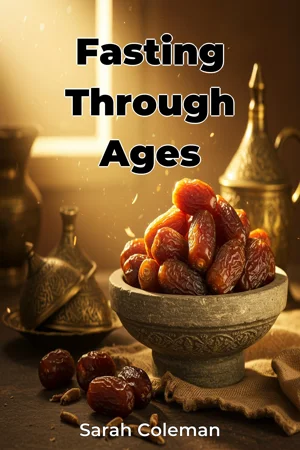
Why have humans, across vastly different cultures and eras, chosen to abstain from food? "Fasting Through Ages" explores this enduring practice, delving into its profound historical and cultural significance, from its roots in ancient religious rituals to its modern adaptation as a tool for health and wellness. This book examines fasting through the lenses of religion, history, and anthropology to reveal its multifaceted impact on human societies. The central argument of "Fasting Through Ages" is that fasting, far from being a mere act of deprivation, has served as a powerful catalyst for spiritual transformation, social cohesion, and, increasingly, physical well-being. It posits that the motivations, methods, and meanings associated with fasting have evolved significantly over time, reflecting shifting cultural values and scientific understanding. The book’s importance lies in its interdisciplinary approach, offering a comprehensive overview that bridges the gap between ancient customs and contemporary practices. The book unfolds in three major parts. First, it introduces the foundational concepts of fasting, categorizing different types of fasting practices across various religious traditions, including Christianity, Islam, Judaism, Buddhism, and Hinduism. It details the historical context surrounding the emergence of these practices, exploring their roles in spiritual purification, atonement, and the cultivation of discipline. Second, the book transitions into an analysis of fasting within broader historical and social contexts, examining its use as a form of political protest, social control, and medical treatment throughout history. Drawing on anthropological research, it highlights how fasting rituals have varied across cultures, reflecting diverse beliefs about the human body, the supernatural, and the relationship between individuals and their communities. Third, the book examines the modern resurgence of fasting as it delves into contemporary trends, such as intermittent fasting and other dietary practices, backed by scientific studies concerning its effects on weight management, metabolic health, and longevity. It elucidates how these modern approaches, while often divorced from their original religious contexts, still tap into the fundamental human desire for self-control and well-being. Evidence presented within "Fasting Through Ages" is drawn from a variety of sources, from ancient religious texts and historical chronicles to contemporary scientific studies and anthropological field reports. It analyses primary sources, such as religious scriptures and personal accounts of fasting experiences, alongside secondary scholarship in the fields of religious studies, history, anthropology, and nutrition science. The book also synthesizes data from clinical trials and epidemiological studies to provide a balanced perspective on the potential benefits and risks of modern fasting practices. "Fasting Through Ages" connects to other fields such as sociology, political science, and medicine, enriching the insights it offers. By exploring the social dynamics of fasting, it examines how these practices can reinforce social hierarchies or challenge existing power structures. It investigates instances where fasting has been used as a form of nonviolent resistance. It also engages with contemporary medical debates about the efficacy and safety of various fasting protocols, providing readers with a nuanced understanding of the scientific evidence. This book is aimed at a broad audience, including readers interested in religion, history, cultural studies, and health and wellness. It provides a unique perspective by not only focusing on the well-documented religious aspects of fasting but also by illustrating its social and political implications as fasting evolved throughout the ages. While the book encompasses a wide range of fasting practices across different cultures and eras, it does not delve into the specific details of every religious or cultural tradition. Instead, it focuses on identifying common themes and patterns, offering a broad overview of the phenomenon of fasting throughout human history. Readers will gain a deeper appreciation of the complex and multifaceted nature of fasting, its enduring appeal, and its potential to shape human lives and societies.
Why have humans, across vastly different cultures and eras, chosen to abstain from food? "Fasting Through Ages" explores this enduring practice, delving into its profound historical and cultural significance, from its roots in ancient religious rituals to its modern adaptation as a tool for health and wellness. This book examines fasting through the lenses of religion, history, and anthropology to reveal its multifaceted impact on human societies. The central argument of "Fasting Through Ages" is that fasting, far from being a mere act of deprivation, has served as a powerful catalyst for spiritual transformation, social cohesion, and, increasingly, physical well-being. It posits that the motivations, methods, and meanings associated with fasting have evolved significantly over time, reflecting shifting cultural values and scientific understanding. The book’s importance lies in its interdisciplinary approach, offering a comprehensive overview that bridges the gap between ancient customs and contemporary practices. The book unfolds in three major parts. First, it introduces the foundational concepts of fasting, categorizing different types of fasting practices across various religious traditions, including Christianity, Islam, Judaism, Buddhism, and Hinduism. It details the historical context surrounding the emergence of these practices, exploring their roles in spiritual purification, atonement, and the cultivation of discipline. Second, the book transitions into an analysis of fasting within broader historical and social contexts, examining its use as a form of political protest, social control, and medical treatment throughout history. Drawing on anthropological research, it highlights how fasting rituals have varied across cultures, reflecting diverse beliefs about the human body, the supernatural, and the relationship between individuals and their communities. Third, the book examines the modern resurgence of fasting as it delves into contemporary trends, such as intermittent fasting and other dietary practices, backed by scientific studies concerning its effects on weight management, metabolic health, and longevity. It elucidates how these modern approaches, while often divorced from their original religious contexts, still tap into the fundamental human desire for self-control and well-being. Evidence presented within "Fasting Through Ages" is drawn from a variety of sources, from ancient religious texts and historical chronicles to contemporary scientific studies and anthropological field reports. It analyses primary sources, such as religious scriptures and personal accounts of fasting experiences, alongside secondary scholarship in the fields of religious studies, history, anthropology, and nutrition science. The book also synthesizes data from clinical trials and epidemiological studies to provide a balanced perspective on the potential benefits and risks of modern fasting practices. "Fasting Through Ages" connects to other fields such as sociology, political science, and medicine, enriching the insights it offers. By exploring the social dynamics of fasting, it examines how these practices can reinforce social hierarchies or challenge existing power structures. It investigates instances where fasting has been used as a form of nonviolent resistance. It also engages with contemporary medical debates about the efficacy and safety of various fasting protocols, providing readers with a nuanced understanding of the scientific evidence. This book is aimed at a broad audience, including readers interested in religion, history, cultural studies, and health and wellness. It provides a unique perspective by not only focusing on the well-documented religious aspects of fasting but also by illustrating its social and political implications as fasting evolved throughout the ages. While the book encompasses a wide range of fasting practices across different cultures and eras, it does not delve into the specific details of every religious or cultural tradition. Instead, it focuses on identifying common themes and patterns, offering a broad overview of the phenomenon of fasting throughout human history. Readers will gain a deeper appreciation of the complex and multifaceted nature of fasting, its enduring appeal, and its potential to shape human lives and societies.
"Fasting Through Ages" explores the historical and cultural significance of fasting, revealing its role beyond mere deprivation. The book argues that fasting has been a powerful force for spiritual transformation and social cohesion across diverse societies. From ancient rituals in Christianity, Islam, Judaism, Buddhism, and Hinduism to its modern use for health and wellness, fasting reflects shifting cultural values and scientific understanding. Did you know that fasting has also been used as a form of political protest and social control throughout history? The book progresses by first categorizing types of fasting practices across religious traditions, then analyzing its historical and social contexts, and finally examining the modern resurgence of intermittent fasting. It draws from ancient religious texts, historical chronicles, contemporary scientific studies, and anthropological field reports. By bridging ancient customs with contemporary practices, "Fasting Through Ages" offers a comprehensive overview of fasting's enduring appeal and its multifaceted impact on human lives.
Book Details
ISBN
9788235261465
Publisher
Publifye AS
Your Licenses
You don't own any licenses for this book
Purchase a license below to unlock this book and download the EPUB.
Purchase License
Select a tier to unlock this book
Need bulk licensing?
Contact us for enterprise agreements.