
About This Book
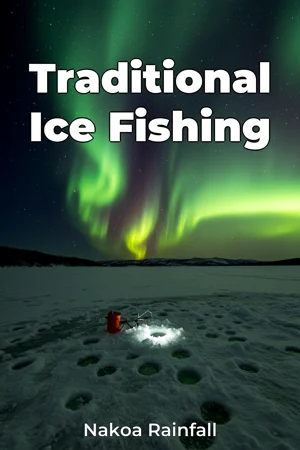
How did ancient ingenuity ensure survival in one of Earth's most challenging environments? "Traditional Ice Fishing" explores the sophisticated techniques developed by indigenous Arctic communities to thrive through ice fishing. This book is essential for understanding how cultural adaptation and environmental knowledge converge to overcome adversity. This book delves into three principal areas: the historical evolution of ice fishing techniques, the intricate designs and construction of handmade fishing tools, and the profound ecological knowledge that underpins sustainable harvesting practices. These topics are vital because they reveal not only how indigenous peoples survived, but also offer insights into environmental stewardship and the delicate balance between human activity and natural resources. The historical context is rooted in millennia of adaptation to the Arctic climate. Understanding the resourcefulness required to survive in such a harsh environment necessitates examining the social structures, belief systems, and knowledge transmission methods of these communities. Readers will gain a background in Arctic geography, climate patterns, and the basic principles of fish biology. The central argument of "Traditional Ice Fishing" is that indigenous Arctic communities developed highly specialized, sustainable ice fishing practices born from deep ecological understanding and passed down through generations. This argument challenges the stereotypical view of simple survival and highlights the complex interaction between culture, environment, and technology. This is particularly relevant in an era facing climate change and a growing need for sustainable resource management. The book begins by introducing foundational concepts such as Arctic ecology, indigenous knowledge systems, and the history of human habitation in the Arctic. It then develops these ideas through specific case studies of different indigenous groups and their unique fishing methods. Chapters will explore the design and function of handmade tools, including ice chisels, fishing lines, and lures crafted from natural materials. Another section details the observation of fish behavior, ice conditions, and seasonal changes to optimize fishing efforts. The book culminates by analyzing the sustainability of these practices and their relevance to contemporary resource management. The book relies on a combination of ethnographical studies, archaeological findings, and traditional ecological knowledge gathered from indigenous communities. Unique data sources include oral histories, museum collections of fishing tools, and scientific analyses of fish populations in Arctic regions. Interdisciplinary connections enrich the argument by linking anthropology, environmental science, and engineering. Anthropological insights help understand the cultural significance of fishing, environmental science provides ecological context, and engineering principles explain the design and function of fishing tools. A unique aspect of "Traditional Ice Fishing" is its focus on the ingenuity and adaptability of indigenous technologies. It moves beyond a purely historical account to offer a detailed analysis of the underlying principles that made these practices successful. The tone is informative and respectful, aiming to present a balanced view of both the traditional knowledge and scientific understanding of Arctic ecosystems. The writing style is accessible to a broad audience, avoiding overly technical jargon while maintaining scholarly rigor. The book is intended for readers interested in indigenous cultures, environmental history, sustainable resource management, or Arctic studies. It will also appeal to those seeking practical knowledge of traditional fishing techniques. As a non-fiction work, "Traditional Ice Fishing" adheres to standards of accuracy, objectivity, and comprehensive research. It aims to provide a thorough and well-supported account of its subject matter. The book's scope is limited to the ice fishing practices of indigenous Arctic communities, focusing primarily on groups in North America and Eurasia. While it acknowledges the diversity of Arctic cultures, it does not attempt to provide an exhaustive survey of all indigenous groups or all types of fishing. The knowledge presented in "Traditional Ice Fishing" has practical applications for modern fisheries management, sustainable technology development, and cross-cultural understanding. By examining the successes and challenges of traditional practices, we can gain valuable insights into creating more sustainable and equitable approaches to resource use. While the effectiveness of traditional methods is generally acknowledged, debates exist around the integration of traditional knowledge with modern scientific management practices. The book will explore these debates and offer a nuanced perspective.
How did ancient ingenuity ensure survival in one of Earth's most challenging environments? "Traditional Ice Fishing" explores the sophisticated techniques developed by indigenous Arctic communities to thrive through ice fishing. This book is essential for understanding how cultural adaptation and environmental knowledge converge to overcome adversity. This book delves into three principal areas: the historical evolution of ice fishing techniques, the intricate designs and construction of handmade fishing tools, and the profound ecological knowledge that underpins sustainable harvesting practices. These topics are vital because they reveal not only how indigenous peoples survived, but also offer insights into environmental stewardship and the delicate balance between human activity and natural resources. The historical context is rooted in millennia of adaptation to the Arctic climate. Understanding the resourcefulness required to survive in such a harsh environment necessitates examining the social structures, belief systems, and knowledge transmission methods of these communities. Readers will gain a background in Arctic geography, climate patterns, and the basic principles of fish biology. The central argument of "Traditional Ice Fishing" is that indigenous Arctic communities developed highly specialized, sustainable ice fishing practices born from deep ecological understanding and passed down through generations. This argument challenges the stereotypical view of simple survival and highlights the complex interaction between culture, environment, and technology. This is particularly relevant in an era facing climate change and a growing need for sustainable resource management. The book begins by introducing foundational concepts such as Arctic ecology, indigenous knowledge systems, and the history of human habitation in the Arctic. It then develops these ideas through specific case studies of different indigenous groups and their unique fishing methods. Chapters will explore the design and function of handmade tools, including ice chisels, fishing lines, and lures crafted from natural materials. Another section details the observation of fish behavior, ice conditions, and seasonal changes to optimize fishing efforts. The book culminates by analyzing the sustainability of these practices and their relevance to contemporary resource management. The book relies on a combination of ethnographical studies, archaeological findings, and traditional ecological knowledge gathered from indigenous communities. Unique data sources include oral histories, museum collections of fishing tools, and scientific analyses of fish populations in Arctic regions. Interdisciplinary connections enrich the argument by linking anthropology, environmental science, and engineering. Anthropological insights help understand the cultural significance of fishing, environmental science provides ecological context, and engineering principles explain the design and function of fishing tools. A unique aspect of "Traditional Ice Fishing" is its focus on the ingenuity and adaptability of indigenous technologies. It moves beyond a purely historical account to offer a detailed analysis of the underlying principles that made these practices successful. The tone is informative and respectful, aiming to present a balanced view of both the traditional knowledge and scientific understanding of Arctic ecosystems. The writing style is accessible to a broad audience, avoiding overly technical jargon while maintaining scholarly rigor. The book is intended for readers interested in indigenous cultures, environmental history, sustainable resource management, or Arctic studies. It will also appeal to those seeking practical knowledge of traditional fishing techniques. As a non-fiction work, "Traditional Ice Fishing" adheres to standards of accuracy, objectivity, and comprehensive research. It aims to provide a thorough and well-supported account of its subject matter. The book's scope is limited to the ice fishing practices of indigenous Arctic communities, focusing primarily on groups in North America and Eurasia. While it acknowledges the diversity of Arctic cultures, it does not attempt to provide an exhaustive survey of all indigenous groups or all types of fishing. The knowledge presented in "Traditional Ice Fishing" has practical applications for modern fisheries management, sustainable technology development, and cross-cultural understanding. By examining the successes and challenges of traditional practices, we can gain valuable insights into creating more sustainable and equitable approaches to resource use. While the effectiveness of traditional methods is generally acknowledged, debates exist around the integration of traditional knowledge with modern scientific management practices. The book will explore these debates and offer a nuanced perspective.
"Traditional Ice Fishing" explores the remarkable ingenuity of Indigenous Arctic communities and their sophisticated techniques for surviving in one of Earth's harshest environments. The book highlights how deep environmental knowledge and sustainable harvesting practices allowed these communities to thrive for millennia. It offers a detailed look at the evolution of ice fishing, revealing how traditional methods were not merely about survival but also reflected a profound understanding of Arctic ecology. For example, the design of handmade fishing tools, crafted from natural materials, demonstrates an intimate knowledge of fish behavior and ice conditions. The book examines the historical context, tool designs, and ecological knowledge that underpin these sustainable practices. Beginning with foundational concepts like Arctic ecology and Indigenous knowledge systems, the narrative progresses through case studies of different groups and their unique fishing methods. The study emphasizes the complex interplay between culture, environment, and technology, challenging simplistic views of survival and offering insights into sustainable resource management relevant to contemporary challenges. Ultimately, "Traditional Ice Fishing" demonstrates that these ancestral techniques offer valuable lessons for modern fisheries management and sustainable technology. By focusing on ingenuity and adaptability, the book provides a balanced view of traditional knowledge and scientific understanding, appealing to readers interested in history, nature, and Arctic studies.
Book Details
ISBN
9788235261410
Publisher
Publifye AS
Your Licenses
You don't own any licenses for this book
Purchase a license below to unlock this book and download the EPUB.
Purchase License
Select a tier to unlock this book
Need bulk licensing?
Contact us for enterprise agreements.