
About This Book
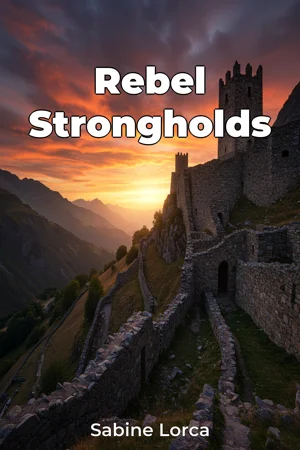
How have seemingly outmatched groups managed to defy established powers? "Rebel Strongholds" delves into the strategic creation and enduring defense of fortified spaces by rebel forces throughout history. This book examines how these strongholds became pivotal not only for physical survival, but as centers of power, resistance, and eventual political leverage. Understanding the dynamics of rebel strongholds is crucial for comprehending the strategies of unconventional warfare, the evolution of political dissent, and the limitations of conventional military power. "Rebel Strongholds" explores three primary themes: the selection and modification of terrain for defensive advantage, the social and economic organization required to sustain a stronghold, and the psychological impact of a successful, defended rebel territory on both the insurgents and their adversaries. The book argues that the creation and maintenance of rebel strongholds represent a complex interplay of military strategy, social engineering, and psychological warfare, challenging traditional notions of state power and territorial control. The book situates these strongholds within a broad historical context, examining case studies ranging from ancient resistance movements to modern insurgencies. It considers the social conditions that give rise to rebellion and the practical challenges of establishing secure bases of operation in the face of superior military force. No specific prior knowledge is needed, although familiarity with basic historical concepts will prove useful. The book unfolds in a structured manner. First, it introduces the fundamental concepts of rebel strongholds, defining the key elements that differentiate them from conventional military fortifications. The discussion explores the strategic thinking involved in selecting a location, the practical considerations of defense, and the symbolic importance of creating a space outside the control of the established authority. Next, the book analyzes specific case studies, grouped thematically to highlight different aspects of stronghold construction and defense. One section analyzes strongholds established in geographically challenging environments, such as mountainous regions or dense forests, focusing on how rebels exploited natural features for defensive advantage. Another section examines strongholds built in urban settings, emphasizing the role of social networks and clandestine support in sustaining resistance. A final section focuses on the internal dynamics of strongholds, examining how rebels organized their societies, managed resources, and maintained morale in the face of constant threats. The book draws upon diverse sources, including military records, archaeological findings, eyewitness accounts, and anthropological studies of contemporary insurgencies. It employs a comparative approach, highlighting common themes and divergent strategies across different historical contexts. The study of rebel strongholds connects to several other fields, including military history, political science, and sociology. It provides insights into the dynamics of asymmetric warfare, the nature of state-society relations, and the psychology of resistance movements. "Rebel Strongholds" offers a unique perspective by focusing on the spatial dimension of rebellion. It moves beyond traditional accounts of military campaigns and political movements to examine the concrete spaces where resistance takes root and thrives. Written in a clear and accessible style, "Rebel Strongholds" is intended for a broad audience, including students of history, military enthusiasts, and anyone interested in the dynamics of social and political conflict. The book's scope is limited to the study of physical strongholds and the immediate social and political context surrounding their creation and defense. It does not delve into the broader ideological or philosophical debates that may underlie the rebellions in question. The lessons learned from the study of rebel strongholds have real-world applications for policymakers, military strategists, and humanitarian organizations. Understanding how rebel groups establish and defend territory is essential for designing effective counterinsurgency strategies, negotiating peace agreements, and providing aid to populations affected by conflict. By examining the historical record of rebel strongholds, this book offers a fresh perspective on the enduring struggle between power and resistance, challenging conventional wisdom and raising important questions about the nature of authority and the limits of military force.
How have seemingly outmatched groups managed to defy established powers? "Rebel Strongholds" delves into the strategic creation and enduring defense of fortified spaces by rebel forces throughout history. This book examines how these strongholds became pivotal not only for physical survival, but as centers of power, resistance, and eventual political leverage. Understanding the dynamics of rebel strongholds is crucial for comprehending the strategies of unconventional warfare, the evolution of political dissent, and the limitations of conventional military power. "Rebel Strongholds" explores three primary themes: the selection and modification of terrain for defensive advantage, the social and economic organization required to sustain a stronghold, and the psychological impact of a successful, defended rebel territory on both the insurgents and their adversaries. The book argues that the creation and maintenance of rebel strongholds represent a complex interplay of military strategy, social engineering, and psychological warfare, challenging traditional notions of state power and territorial control. The book situates these strongholds within a broad historical context, examining case studies ranging from ancient resistance movements to modern insurgencies. It considers the social conditions that give rise to rebellion and the practical challenges of establishing secure bases of operation in the face of superior military force. No specific prior knowledge is needed, although familiarity with basic historical concepts will prove useful. The book unfolds in a structured manner. First, it introduces the fundamental concepts of rebel strongholds, defining the key elements that differentiate them from conventional military fortifications. The discussion explores the strategic thinking involved in selecting a location, the practical considerations of defense, and the symbolic importance of creating a space outside the control of the established authority. Next, the book analyzes specific case studies, grouped thematically to highlight different aspects of stronghold construction and defense. One section analyzes strongholds established in geographically challenging environments, such as mountainous regions or dense forests, focusing on how rebels exploited natural features for defensive advantage. Another section examines strongholds built in urban settings, emphasizing the role of social networks and clandestine support in sustaining resistance. A final section focuses on the internal dynamics of strongholds, examining how rebels organized their societies, managed resources, and maintained morale in the face of constant threats. The book draws upon diverse sources, including military records, archaeological findings, eyewitness accounts, and anthropological studies of contemporary insurgencies. It employs a comparative approach, highlighting common themes and divergent strategies across different historical contexts. The study of rebel strongholds connects to several other fields, including military history, political science, and sociology. It provides insights into the dynamics of asymmetric warfare, the nature of state-society relations, and the psychology of resistance movements. "Rebel Strongholds" offers a unique perspective by focusing on the spatial dimension of rebellion. It moves beyond traditional accounts of military campaigns and political movements to examine the concrete spaces where resistance takes root and thrives. Written in a clear and accessible style, "Rebel Strongholds" is intended for a broad audience, including students of history, military enthusiasts, and anyone interested in the dynamics of social and political conflict. The book's scope is limited to the study of physical strongholds and the immediate social and political context surrounding their creation and defense. It does not delve into the broader ideological or philosophical debates that may underlie the rebellions in question. The lessons learned from the study of rebel strongholds have real-world applications for policymakers, military strategists, and humanitarian organizations. Understanding how rebel groups establish and defend territory is essential for designing effective counterinsurgency strategies, negotiating peace agreements, and providing aid to populations affected by conflict. By examining the historical record of rebel strongholds, this book offers a fresh perspective on the enduring struggle between power and resistance, challenging conventional wisdom and raising important questions about the nature of authority and the limits of military force.
"Rebel Strongholds" explores how seemingly weaker groups throughout history have defied established powers by creating and defending fortified spaces. These rebel strongholds become more than just military fortifications; they evolve into centers of power, resistance, and even political leverage. The book argues that understanding these strongholds is vital for grasping unconventional warfare strategies and the limitations of traditional military power. Did you know that the success of a rebel stronghold often hinges as much on social organization and resource management as it does on military tactics? The book also examines how these spaces impact the psychology of both the rebels and their adversaries. The book progresses by first defining what constitutes a rebel stronghold, differentiating it from conventional military fortifications. It then delves into case studies, grouped thematically to highlight different aspects of stronghold construction and defense. For example, some strongholds exploit challenging geographic environments like mountains or forests, while others thrive in urban settings through social networks. This approach offers a unique perspective by focusing on the spatial dimension of rebellion, moving beyond traditional accounts to examine the concrete spaces where resistance takes root.
Book Details
ISBN
9788235261380
Publisher
Publifye AS
Your Licenses
You don't own any licenses for this book
Purchase a license below to unlock this book and download the EPUB.
Purchase License
Select a tier to unlock this book
Need bulk licensing?
Contact us for enterprise agreements.